Yesterday, entertainment lost a massive and not-nearly-appreciated-enough talent. Teri Garr was a brilliant actor. Although mostly known for her comedic roles–“Mr. Mom”, “Tootsie”, and “Young Frankenstein” among them–I first discovered her in a small but decidedly dramatic part in the 1974 masterpiece, “The Conversation”. That aspect of her gift was equally on display in “Close Encounters of the Third Kind” and “The Black Stallion”. To understand the respect she must have garnered in the industry, you need look no further than the impressive roster of directors who cast her: Coppola, Spielberg, Hughes, Pollack, Brooks. The list goes on.
Her loss hit me at home not only because I’m a huge fan of her body of work but because the cause of her death was a supposedly non-fatal “scum-sucking pig of a disease” (her words), multiple sclerosis, which I also have. It makes me cherish each day more and trust God more for the future.
Everyone has verbal tics that pepper their conversation. There’s no shame in that. The two most prevalent in my speech are “I mean”—this happens to be a favorite among professional athletes as well, so I’m in good company—and “well”. The latter, I’ve noticed, is most often the opening of (too) many of my sentences. (The other common sentence kickoff is the useless syllable “so”. Pay attention and you’ll hear it everywhere.) It’s always been a mystery why I start so many of my statements with “well”.
Until now.
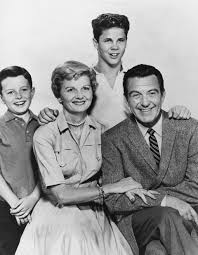
Like so many Boomers, I grew up on innocent, quaint, simple, yet outrageously funny TV fare such as “The Andy Griffith Show”, “The Dick van Dyke Show”, and the Citizen Kane of 60’s sitcoms, “Leave it to Beaver”. It was mostly in syndication by the time I came to truly appreciate it. I appreciate it even more now. While LitB (as us trendy Boomers call it) has been mostly written off as hopelessly naive, simpleminded, and outdated, it remains (to my mind) crazy funny and more edgy than most people give it credit for. Hey, it’s still streaming over 60 years later. That’s gotta count for something.
More to the point… (What was the point, anyway? Oh, yeah!) I was watching LitB a little while back and noticed that both Wally and The Beaver start most of their sentences the same way! To be more precise, they start them with a strangely abbreviated version of the word by saying, “W’l”. It’s not clear why they eliminated the “e” and second “l”. (Or was it the first “l”? No matter.) Perhaps they wanted to shorten the dialog so they could use the extra few seconds to shoehorn in another commercial or two.
Regardless, I’m pretty sure I picked up the whole “well”/”w’l” thing from that show. Along with some solid parenting skills and a lot of laughs.
In case you haven’t noticed (you haven’t, have you!) I’m increasing the frequency of these posts. This is neither for lack of anything better to do on my part or a sudden heightened demand on yours. There are just too darn many things in my backlog to write about. And you are my unfortunate victims. Sorry.
Typos are everywhere. I can’t think of a single book that didn’t have at least one. And I read a lot of books. In fact, a recent novel by one of my favorite authors had at least two. Heck, my books (You know, the ones listed here. 🙂 Ironically, a typo in one of those titles caused Amazon to list it twice! Can you find it?) barely have that many. One of my favorite examples is in the written word in the middle of a movie. You can read about that one in this post.
Sometimes, it’s not clear whether an error is a typo or whether it’s just ignorance of the English language. Here’s a prime example from an article about a local community, which bragged that it…
…is infamous for its support of our local artists, writers, and musicians.
In a world where literally and metaphorically have become synonyms, why not famous and infamous? (I know those two aren’t antonyms or even mutually exclusive, e.g. Trump, but hopefully you get the point. They’re way different.)
The most common typo, however, the grandaddy of them all (and as a grandaddy, I assure you I know what I’m talking about) is the substitution of “you” for “your”. This mistake is virtually (not literally) omnipresent in cyberspace. I swear I don’t read an email, blogpost or even legitimate article that doesn’t have this failure. The most recent I can remember is this comment I saw on an article I read not too long ago:
Thanks for writing you article.
I don’t recall if the article itself had the error. I hope so.
In this previous post, I pointed out the absurdity of the overuse of the virtually meaningless word “amazing”. It’s everywhere and serves as a putdown as easily as it does a buildup. Case in point:
In a very bad movie I recently watched (yeah, I watch a lot of bad movies), the following line was delivered by a person who had just learned of a loved one’s acceptance into a prestigious college:
“That’s amazing! I’m not surprised, though.”
She was amazed but not surprised. How does that work? To add to the inanity, another character, upon hearing the same news, says, “That’s incredible!”
The same news is incredible and amazing but not surprising. Furthermore, it’s also a nasty, though thinly disguised insult. If someone is amazed and/or surprised at your success, it means they weren’t expecting it, i.e. you’re a loser.
Who writes, and worse, who approves these scripts???
[As a follower of Jesus, I’m even more disheartened by the devaluation of the word “amazing”. The classic and wonderful hymn “Amazing Grace” loses much of its impact when the adjective is rendered impotent.]

 Scribbling in the Sand