Joe Versus the Volcano

This is a brief ode to what is, in my opinion, one of the most underappreciated films in history.

JoeVtitleI’ve watched “Joe Versus the Volcano” perhaps twenty to thirty times. I wouldn’t be exaggerating if I said that I enjoy it more each time I view it. Most movies can’t hold up to multiple viewings. As we lose interest in the story and characters, our attention wanders to reveal gaps in logic, bad lines, and other assorted flaws.

Not so with “Joe”.

I bribed them to sing a song that would drive us insane and make our hearts swell and burst.

Here’s a movie that somehow presents profound philosophical questions about life and death, God and meaning, yet still manages to be outrageously funny. The scenes between Joe Banks and his boss, Mr. Waturi, could be a movie on their own. (There’s something strangely familiar about that workplace. I think I worked there. In fact, I think most of us have.)

I know he can get the job, but can he do the job?

The performances, by one of the more eclectic casts you’ll ever see, are uniformly wonderful. It marks the first pairing of what could be this generation’s Tracy and Hepburn: Tom Hanks and Meg Ryan. Ms. Ryan gives three of her best performances. Lloyd Bridges, Dan Hedaya, Robert Stack, Abe Vigoda, Ossie Davis. Great, great, great, great, great.

My father says that almost the whole world is asleep. Everybody you know. Everybody you see. Everybody you talk to. He says that only a few people are awake and they live in a state of constant total amazement.

The best performance of all, however, is by a guy named Barry McGovern, whose role is listed simply as “luggage salesman.” I would have given that guy an Oscar.

Very exciting… as a luggage problem!

Even the music is terrific. The Rascals, Del Vikings, and Sergio Mendes all in one movie? So great. Best of all is Eric Burdon’s passionately brilliant version of “16 Tons” that introduces the film.

Nobody knows anything, Joe. We’ll take this leap, and we’ll see. We’ll jump, and we’ll see. That’s life, right?

In closing, I’ll add that the film’s writer/director (a true auteur), John Patrick Shanley, is one of the most gifted artists of our time. As evidence, he also wrote “Moonstruck” and “Doubt” (play and film). That’s good stuff.

Dear God, whose name I do not know – thank you for my life. I forgot how BIG… thank you. Thank you for my life.

I could go on and, if you were here before me, I would. Better, I’d suggest we watch it. It won’t be the last time for me.

I have no response to that.

Joe&Moon

Patricia: I wonder where we’ll end up?
Joe: Away from the things of man, my love. Away from the things of man.

Spewing chunks

nopicSpeaking of uncomfortable content, which you might recall I was in my last post, what’s the deal with all the puke in movies recently? I thought it was just me. It seemed as if every movie I watched had someone barfing up their innards. Like the F-bomb issue, it was unrelated to genre or (lack of) consumer demand.

Then I saw an online discussion of the phenomenon. Others had noticed it, too. I was relieved. But only a little.

There’s nothing inherently wrong with occasionally spewing a few chunks on screen, especially if it fits. Pregnant women often throw up in early stages of pregnancy. A stomach bug is bound to bring back breakfast and a few snacks.

But every movie?? If anyone is even slightly off-center about something, here come the chunks. Confused? Dizzy? Angry? Depressed? That’s all it takes to lose lunch these days. In the aforementioned discussion, someone made the claim that every movie nominated for a Best Picture Oscar this year had a puke scene. I can’t verify that because I haven’t seen them all, but every one I saw towed the retch line.

This isn’t reality because people don’t puke that often. It isn’t commercially necessary because nobody goes to the movies saying, “Man, I hope someone hurls in this one!” It’s not edgy because it’s mainstream.

So why all the regurgitation? There can be only one reason and it’s the same reason young kids take up smoking, swearing, and stealing: Everybody’s doing it. You’d think artistes would want to rise above the morass of the mundane and stick it to the status quo.

You’d be wrong.

They’re lemmings just like the rest of us. Monkey see, monkey puke.

I can deal with this. I just ignore it, since it doesn’t add anything to the story. What worries me is what’s next. What about when it becomes cool to show people with diarrhea? That episode was in a major movie last year. And the dumper was nominated for an acting award. Could the Hershey Squirts be the next offensive trend? Unlikely because the movie was a flop, but you never know.

Nose-picking is a likely candidate. Starts innocently enough but before you know it, they’re drawing blood as they strip mine for nose gold. Great visual. Hawking loogies, fingernail (and toenail!) biting, squeezing zits. There’s a deep well of unsociable behavior to draw from.

All this talk has made me sick to my stomach. I gotta…


I thought this was a new trend. Sadly, this guy noticed it eight years ago. It must be getting that much worse.

Defusing the bombs

fbombSomeone wiser than me (that’s covers pretty much everyone) once observed that no one ever left a movie theater saying, “Yeah, it was a good movie. I just wish there had been more swearing.” Plenty of audience members yearn for more violence or lurid sexual content, but swearing is not really in that great demand.

I guess the market is saturated.

This topic came to mind recently when I read an online discussion among screenwriters wondering whether the whole F-bomb thing had gotten out of hand. The discussion was initiated by someone who questioned whether movies rely too much on that popular profanity to convince viewers of the film’s edginess.

Funny thing about that. F-bombs have been defused merely by their ubiquity. They aren’t spoken only by nasty thugs in edgy movies or shady characters in bleak noir films. They’re in goofy comedies, historical epics, and science fiction. They’re in everything! We’ve been carpet F-bombed. As a result, the very effect they supposedly serve is gone. It’s just another cliché. A cliché no one questions.

Let’s think about it. If a character in a movie said any other word as often as Robert De Niro or Chris Rock use The Big One in an average movie, no one would take them seriously. The argument is that this is the way people talk. Which people? I don’t know them, and I’ve been in some pretty rough environments. In my experience, the number of times a person uses that word is inversely proportional to the IQ of the speaker.

Besides, film characters aren’t written to speak the way people really speak. The “um”s, “uh”s, and “er”s are generally banished because they’re boring, just as excessive swearing has become boring. Suppose, for example, a character said the word “like” as often as many people do today, say, like this. That dialog would be unlistenable. It would never pass development muster.

So we’re on our way to completely declawing another obscenity. We’ve seen it before. When I was growing up, there were still older people who remembered where the word “screw” came from. If we innocent children referred to something as “screwed up”, we were shushed or, if we were unlucky, went on a soap diet. We had no idea why. Today no one bats an eyelash at screw, which means essentially the same thing as… well, you know.

For better or worse, our culture is in the midst of the dilution of another cuss word: suck. No one said this when I was young. It was a “swear word”. Like the other no-say-ems, it referred to a sexual act. Now it means… well, it means nothing. And everyone says it with impunity, from children to parents to ministers to teachers. It’s just another word.

Crap, heck, darn, shoot, screw. The euphemism backlog is growing as the “real” swears fade into impotence. I’m not sure if all this is good news or bad. Are we lowering the standards of the language or are we gradually removing the words that hurt?

I don’t friggin’ know.


Addendum: OK, just so you know it’s not only narrow-minded bloggers like me who think this way, here’s a quote from a recent newsletter from Richard Walter, chairman of the UCLA screenwriting program:

“The downside to writers having the freedom to write whatever they want is that it allows us also to write as badly as we want. The relentless exploitation of vulgarity is supposed to foster a sense of authenticity. In fact, however, it usually achieves precisely the opposite: heavy-handedness, thudding self consciousness, and a tone that is overbearingly shrill.”

To which I say, “Amen, Professor Walter.”

Frog Pond Skater

This week is all trivia, all the time. Thus, my time for writing is severely constricted. To save time, I’m reposting something that first appeared on my other blog nearly five years ago.

This short story was written several more years before I first posted it.  I’ll give the same disclaimer I did then: If you think it stinks, we can all pretend I’ve become a better writer since.

The story is called “Frog Pond Skater”.

frog-pond


A Childe Hassam sunset descended upon Boston Common, the surrounding towers outlined in a golden haze.  She approached the skating rink – already overflowing with rosy-cheeked children struggling to stay erect while socially-challenged teens fell in each other’s paths – with a poise that was well studied but forced, already wearing thin even at her young age.  She seemed to be chased through the gate, leaving her three dollars with the attendant and barely acknowledging the greeting that came from within the badly weathered booth.

Some of the youngest skaters saw her arrival and chirped with glee in anticipation.  Not a few muffled laughs were also mixed in but if she heard them, she didn’t let on.  Her fingers laced her skates with the deftness and care of a surgeon.  She left her shoes at the rink’s gate.  Though they would be unattended, she never gave another thought to their safety.  There was no tentative step as her left skate hit the ice.  Where others tiptoed to a safe starting place, her first motion was a perfect glide already in synch with the whirlpool of skaters that had begun at ten that morning and would continue unceasing but endlessly changing for several more hours.

She was as different from the rest of the skaters as she was a mystery to them.  What was this statuesque beauty with the perfect form and designer outfit doing amongst the tourists and assorted riffraff of the city?  Her subtly muscular body moved with the grace of light.  Those who were not in awe of her were trying to suppress an envy that was without pity.  In vain, women did their best to distract the attentions of their partners back to themselves.

The girl, oblivious to the stares and glares of the onlookers, made a couple of turns around the rink before, now fully warmed up, she headed for the eye of the skating storm.  Many of the children stopped their revolutions as well; this was the time they had been waiting for.

The girl paused in the center for a moment as if she didn’t wish to continue.  There seemed to be a struggle within her.  With a deep sigh of resignation, she threw her arms out and with a single move began a slow spin that increased in speed as she pulled her arms closer to her body.  A voice in her head screamed at her to go faster.  She must go faster if she was to get it right and faster she went.  Still, the axis of her spin never wavered and it seemed as if she was rooted to a single molecule of the ice.

The children, some of whom witnessed this sight every week, were no less impressed by it, their mouths open in naive adoration.  They were at least as amazed that she didn’t simply fly away like a missile or drill straight through the thin veneer of ice and the concrete slab beneath it, so fast was her turning.

She didn’t slow down as she gracefully raised and lowered her hands in perfect time.  Finally she threw her head back and extended her arms, reducing her speed to the point where her facial expression could once more be seen.  She wore the same joyless countenance that had clouded her face since she had arrived.  Most who observed it discounted it as nothing more than professional smugness, but if any took the time to look beneath the facade, her pain was evident.

The skater returned to the rotating mass of visitors, blending in as best she could.  Some of the children followed her, hoping to glean some of her magic.  They could see the muscles in her legs ripple under her tight leggings belying the ease with which she glided effortlessly over the ice.  Her movements were as smooth as the ice itself had been when it was first laid down, before it had been carved so violently by the hundreds of skaters who left their marks with their blades, hands, knees, and bottoms.  If it had occurred to her, she might have winced at the irony of this, if she considered how her life had once shined but was now also scarred, though much more permanently.

As if the thought itself threatened to invade her mind, she distracted herself by heading back to the rink’s center.  This time she didn’t hesitate before spreading her legs, toes pointing outward, leaning into the large circle she traced in the ice.  She leaned so far that the children thought that surely her defiance of the law of gravity would bring her face down onto the frozen surface.  When she straightened up, leaned back, and reversed the circle, the children sighed with relief.  Although they had seen her perform the maneuver many times, they watched her like they watched a much-loved movie, clinging to the suspense in spite of the fact that they knew the ending was a happy one.

The skater left the center stage as quickly and easily as she had entered it.  She may have been contemplating her next move or she may not have been thinking at all, but she never saw the teenage boy who was flailing his arms trying to keep from stumbling as he cut across the steady flow of skaters in the perpetual circle.

The boy was actually moving backward when he slammed into her broadside with his full weight.  Her legs came out completely from beneath her as she fell to her right.  She never had a chance to put her arms out to stop the fall and the side of her face hit the wooden fence that enclosed the rink.  The circle’s momentum never slowed.  A few of the people saw the girl fall but an hour didn’t pass at the Frog Pond without several such spills and they paid little attention.  The children were stunned.  The girl herself was stunned.  She hadn’t felt the cold of the ice on her skin in many years.  She sat for a long time as the pain began to overcome the initial shock.  She put her finger to her cheekbone and felt her warm blood as it slowly dripped down her face, mingling with the tear that was falling from her eye.  She had nothing to wipe her face with and she was not inclined to do so anyway.  Her body shuddered once and she lifted herself to her feet with great effort.

As she made her way to the exit, one little girl watched her slow progress and noiseless tears fell freely from the eyes that only seconds before were wide with wonder and delight.  The skater unlaced her skates with far less aplomb than she had tied them.  She put her shoes back on and as she walked slowly away, she never gave another thought to the safety of her skates, left unattended at the gate.

Born to be broken

IMG_20150330_200252587The old adage says rules are meant to be broken. There’s no shortage of “rules” for writing. Those commandments are intended to aid in the writing process. They might be helpful if only they weren’t moving targets. I’ve written before about the difficulty of writing. Trying to remain upright on the shifting sands of unstable standards doesn’t make it any easier.

Go ahead. Try to get a group of authors to agree on the tenets that are most useful to guide the writing process. You’re likely to get a protracted religious argument for your trouble.

Here are a few of the most well-known non-negotiables that are constantly being negotiated:

  • Write every day.
  • Write what you know.
  • The road to hell is paved with adverbs.
  • Use sparse language, i.e. “less is more”.
  • To write well, you must read a lot.

For every writer who subscribes to one of these statutes, there’s probably one or more who eschew it. For example, I was at a book reading by a highly regarded, best-selling author who, when asked what other authors he read, claimed not to read other authors in order to avoid being unduly influenced by them. So much for reading to become a good writer.

With all due respect to adverb-phobic Stephen King, who deserves a great deal of respect indeed, I don’t have any problem with adverbs as a reader. In fact, I kinda like them. So why avoid them? If you’re writing a book for Mr. King, I guess. But why leave any tool in the toolbox unused? They’re there for a reason.

Fundamentalism is generally condemned in other spheres, but it’s alive and well in the writing world.

And the “write what you know” dictum would be better expressed as “write what you care about.” You can always gain knowledge about a topic. It’s no easy task to develop enough passion to write well about something about which you are otherwise indifferent.

John Fox, manacled hand and foot by his pirate captorsIf you’ve read enough about writers writing, you’ve undoubtedly come across the ones who claim they don’t know where their characters are going to take the story. Those lifeless entities are independent actors with wills of their own. I guess that’s possible, but is it mandated somewhere? Some would have you believe that it is or that at least it’s a hallmark of a higher level of fiction. I don’t think so. No less an authority than Vladimir Nabokov says he has no use for that tactic when he says, “My characters are galley slaves.” No surprises for Mr. Nabokov, thank you.

This confusion first confronted me when I was trying to master screenwriting. The rules to screenwriting are many, absolute, and quite specific. The only problem is, accomplished screenwriters break them as a matter of course. One decree beyond discussion is: Don’t describe what can’t be shown on the screen. For example, a script can’t say in its descriptive text, “Joe was nervous about the interview.” Fine. At a lecture at the Austin Film Festival (the screenwriter’s Mecca), a man who is arguably the most successful screenwriter of this generation, told all of us rapt listeners that he does it all the time.

AFF produced a nice little book of excerpts from various talks given at the festival over the years. “On Story” has lots of advice for writing the next great movie. Unfortunately, much of the advice is conflicting.

This is one of the reasons I question a prime directive of screenwriting education: Read scripts. A problem with that advice is that screenwriters don’t follow “the rules” we’re supposed to learn, so we’re likely to learn the wrong way. Also, most scripts we have access to are “shooting scripts” filled with camera angles and other technical directions that don’t belong in submitted scripts.

What’s a struggling writer to do? Obey the rules (“Do as I say, don’t do as I do.”) until you break in. Then you can do anything you want. Another way of saying it is, “Write something great and you have permission to write whatever you want.” I think of it as learning a secret handshake. Based on what I’ve seen and read, once you’re in the club, the rules no longer apply.

Fair enough. If I want to play their game, I’ll do my best to play by their rules.

Mr. Burdick’s Burden

Hello, my name is Rick C and I’m a bookaholic.

It’s true. There is always at least one book I’m making my way through, sometimes a few at a time. My backlog of to-be-read books is out of control. I’ll read pretty much any genre, but there’s one I miss terribly. Children’s picture books are among my favorite reading matter.

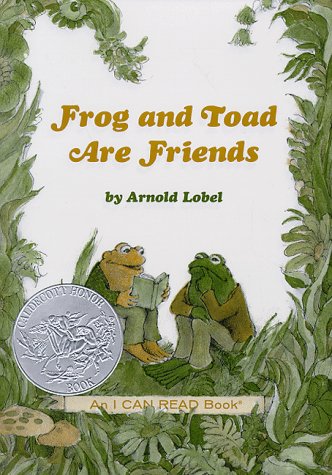
FrogToadArnold Lobel, Don and Audrey Wood, Rosemary Wells, Peter Spier, James Stevenson, as well as old reliables like Dr. Seuss and Maurice Sendak. They’re my Tolstoy, Hemingway, and Faulkner. I miss having little children around to read to and it runs contrary to the societal norm for a man to read “Frog and Toad Are Friends” in public. Not that I haven’t done it anyway.

burdickNo list of children’s author/illustrators would be complete without the remarkable Chris van Allsburg, best known for his “The Polar Express”, as well as other great books that were made into mediocre movies. One of his books was an enigmatic masterpiece called, “The Mysteries of Harris Burdick”. Each page of the book consists of a magical (and sometimes downright creepy) illustration. On each facing page was written a single line from the book from which the picture was supposedly drawn (pun intended).

According to the book’s introduction, the collection of drawings and accompanying texts were dropped off at a publisher by a mysterious author named Harris Burdick, who never returned to pick them up.

All that verbiage was simply to lead up to an idea I’ve come up with for some blog posts. Since the extent of my backlog of writing ideas outstrips even that of my reading list, what better model to follow than Mr. Burdick’s? I can’t draw to save my life – hope to God I never have to – so I’ll write short snippets from stories that don’t exist, that I have ideas for but have no hope of ever pursuing. Consider them writing prompts on steroids. Maybe they are.

Confused as much as distressed, he watched the ship disappear beneath the waves, foam and oil bubbling to the surface, marking its interment. No one could possibly have survived the explosion that ended the vessel’s journey long before it reached its destination.

He still clung to the life preserver he’d carried with him when he leapt into the water just moments before the blast. The old man he’d dived in to save had certainly looked like he might drown out here, miles from any known shore. The prospect of playing the hero in front of the crowd of onlookers standing on the deck, some of whom were attractive young women, had triggered a shot of adrenaline that made him perform an act that was as uncharacteristic of him as the peaceful, beckoning look was on the face of the old man.

Now the ship was gone, the sea slowly settling from turbulent to placid. What had happened to that man?

YABD

Yet Another Brain Dump.

Since I don’t have much time to write this week and since I did an extra post last week and since I haven’t popped the idea stack for more than three months, I’m going to do it now. Here’s another brain dump of thoughts that have piled up lately. Nothing life-changing or earth-shaking. Maybe Head-shaking, though.

Here’s a little news item you might have missed:

The [Boston Red Sox] officially released minor league lefthander Cody Kukuk, who was arrested in November on a robbery charge in his native Kansas. Kukuk was given an $800,000 bonus after being selected in the seventh round of the 2011 draft.

The kid got an 800K signing bonus and was on his way to a big league career and he commits robbery. Huh? Reminds me of the even more amazing story a couple years ago, involving a football player making half a million bucks a year who was arrested for shoplifting a cologne sample and two pair of underwear worth a total of $123.50.

Wow.

I hope we hurry up development of the driverless car, cuz from what I’m seeing on the road, no one’s paying attention when they drive anyway.

From the “Who Invented This Language Anyway?” department:  The words overlook and oversee are opposites yet flammable and inflammable mean the same thing.

True confession: Wonder no longer. I wrote the book of love

Why do people record messages on their cell phones that say, “I can’t come to the phone right now”? Isn’t the whole point of a cell phone that you don’t have to come to the phone? What did I miss?

I thought it was a short-lived fad, but it seems books and movies about zombies and vampires simply refuse to die. I guess I shouldn’t be surprised.

Have you seen the movie about the guy who used to be a criminal who tried to go straight but was forced by some bad guys to do one last job? Which movie was that you ask? Just about all of them.

It’s about 10 degrees outside. I heat my house to 70. And I have a big box I store food in that cools down to below freezing. Am I the only one who sees a problem here?

??????????A business in Santa Barbara: Ye Olde Deli and Thai Food. That’s covering all your bases. Oh yeah, and as you can see in the photo to the right, you can also get Boba Bubbles in your Olde Thai Deli drink.

That’s all I have time for. I have to go to my cell phone.

Depressing movie antidote

This post is out of turn, but I couldn’t resist. I was soooooo depressed after watching the movie I described in my previous post, I’ve been out of sorts all week.

If you see a movie that is so gloomy, so bleak, so joyless that it saps all your hope, you have to do something about it. An antidote is needed. Last night, I had it.

At the opposite end of the mood spectrum, and a sure cure to the movie blues, is one of my favorite guilty pleasures: “Bill & Ted’s Excellent Adventure”.

bill&ted

I really do love this movie. Not just because it was the perfect remedy for my movie melancholy. It’s just wicked funny. I smile through the whole movie… except for those parts when I laugh out loud. Mind you, I’ve seen it a few dozen times. I could recite most of the lines in the film. (“Strange things are afoot at the circle K.”) There are no surprises in it for me, but I laugh all the same.

For those who think I’ve lost all sense of good taste, let me point out a few cogent facts:

  1. The movie is hysterical.
  2. The entire concept is so absurd, it’s genius. It’s easily one of the most unique premises in film history.
  3. It’s the only credible movie about time travel because it treats the concept with the complete lack of credibility it deserves.
  4. Most thinking people will agree that this movie is by far the high point of Keanu Reeves’ career.

If you’ve suffered through “Birdman”, “Whiplash”, “Foxcatcher”, or the cause of my malady, “Olive Kitteridge”, do yourself a favor and watch Bill & Ted as soon as possible.

Consider it a prescription.


Note: If you can wait until mid-April, read about another antidote here. I promise it will be uplifting!

Bummer people – they deliver

depressedDepression is rampant in our culture. Growing up, all I knew about depression was the unemployment and soup lines. It was something my teachers and older people talked about. Now it seems everyone is depressed. If you aren’t downing Prozac, Lexapro, or Zoloft by the fistful, you aren’t trending.

Depression is real. I don’t want to diminish that fact. It’s a serious medical condition that can be fatal. Medication is often a valuable tool to combat its ravages. That being said, I’m of the opinion that there are non-pharmaceutical approaches that could either lessen its effects or – who knows? – relieve it completely for some milder cases. The prescription I’m suggesting here is – excuse the esoteric medical jargon: avoiding depressing stuff. (Note: I’m not saying this as a cure, but why feed the flame?)

This weekend I watched an incredibly depressing movie. Worse, it was a depressing mini-series. Four hours of non-stop misery. Eventually I had to minimize the pain by fast-forwarding through some of it. If I’d watched it to the end (at normal speed) I couldn’t be held responsible for my actions. And if I were already depressed? I just thank God I wasn’t.

2015OscarsWhy are so many movies depressing? Look at the Oscar nominees: Birdman, Whiplash, American Sniper, and Boyhood are a sad group. Don’t subject yourself to any of them if you’re trying to keep your mood upbeat. The others are either less so or I just don’t know enough about them to judge. They could be wallowing in the slough of despond with Foxcatcher, Still Alice, Gone Girl, and the rest of that lot for all I know.

Not a “Sound of Music” in the bunch.

I’m not saying we should have a non-stop parade of “happy, happy, joy, joy” fluff, but couldn’t we at least have one every now and then? Is life so joyful that we are well-advised to dampen everyone’s moods lest they overdose on excess happiness and levity?

Let me suggest that it’s the other way around. Life is so depressing for so many that, instead of feeding that, we should consider ways to counteract it. Making more positive movies is one possibility. I’m no lone curmudgeon in this opinion. A couple of years ago I heard a talk by film producer Lindsay Doran (Sense and Sensibility, Stranger than Fiction) in which she mentioned this issue. This NY Times article gives an overview of her talk. (It’s worth a read for this and her other fascinating insights.)

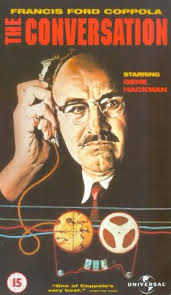
conversationI’m not talking about “happy endings” in the classic fairy tale sense. Just lighten up a bit now and then, please. There’s a place for dark films. One of my favorite films of all time is also one of the darkest: “The Conversation” is a brilliant piece of paranoid pleasure. On the opposite end of the bleakness spectrum is another of my favorites: “The Princess Bride”. It actually has a fairy tale ending. You won’t find many movies as different as those two, connected only by their genius.

It’s not just about the number of dark, hopeless, depressing movies there are. With so many Oscar nominees falling into that category it gives the impression that a positive movie can’t be good. Joy can’t be taken seriously. When is the last time a performer in a comedy won an acting prize? Is comic acting really so effortless that it can be dismissed? The award mavens would have you think so. (Personal note: It ain’t.)

This, of course, reinforces the problem. People want to make movies that others take seriously, which means they must make serious and, if possible, morbid movies.

Look at the top grossing movies for 2014 and you’ll see a different picture. For the most part, people are paying to see more positive movies. If dollars drive the movie industry, how to explain this gap?

Saint Paul once said:

…whatever is true, whatever is noble, whatever is right, whatever is pure, whatever is lovely, whatever is admirable–if anything is excellent or praiseworthy–think about such things.

Just don’t expect to get them too often at the movies.

Making lemonade

PastedGraphicTagline-1With ten screenplays written and none sold or produced, you might think I’d be frustrated and angry. You’d be half right: It sure is frustrating. But angry? No point to that. Anger is a masking emotion and I’ve got nothing to mask. Most of the scripts I’ve written were more like learning experiences than realistic attempts to “break in.” I’ve learned a ton, thus improving my scripts and advancing my skills.

So what do I do with all those lemons? Make lemonade. And you can have a sip.

For the second time, I’m staging a reading of one of my screenplays. It’s not just for marketing purposes or ego gratification. This event will be a fundraiser for two causes, one near and dear to my heart – Haiti – and the other very near my brain but very far from my heart: MS.

The first time I held one of these readings, also a learning experience and also a fundraiser, we raised almost $700 to serve as a micro-loan to a young entrepreneur in Haiti. The actual reading is on line in two parts. If you’re interested in watching the reading, the first part is here. I leave finding the second half as an exercise to the viewer.

The full official announcement for this event can be found here, but most of the details are below:

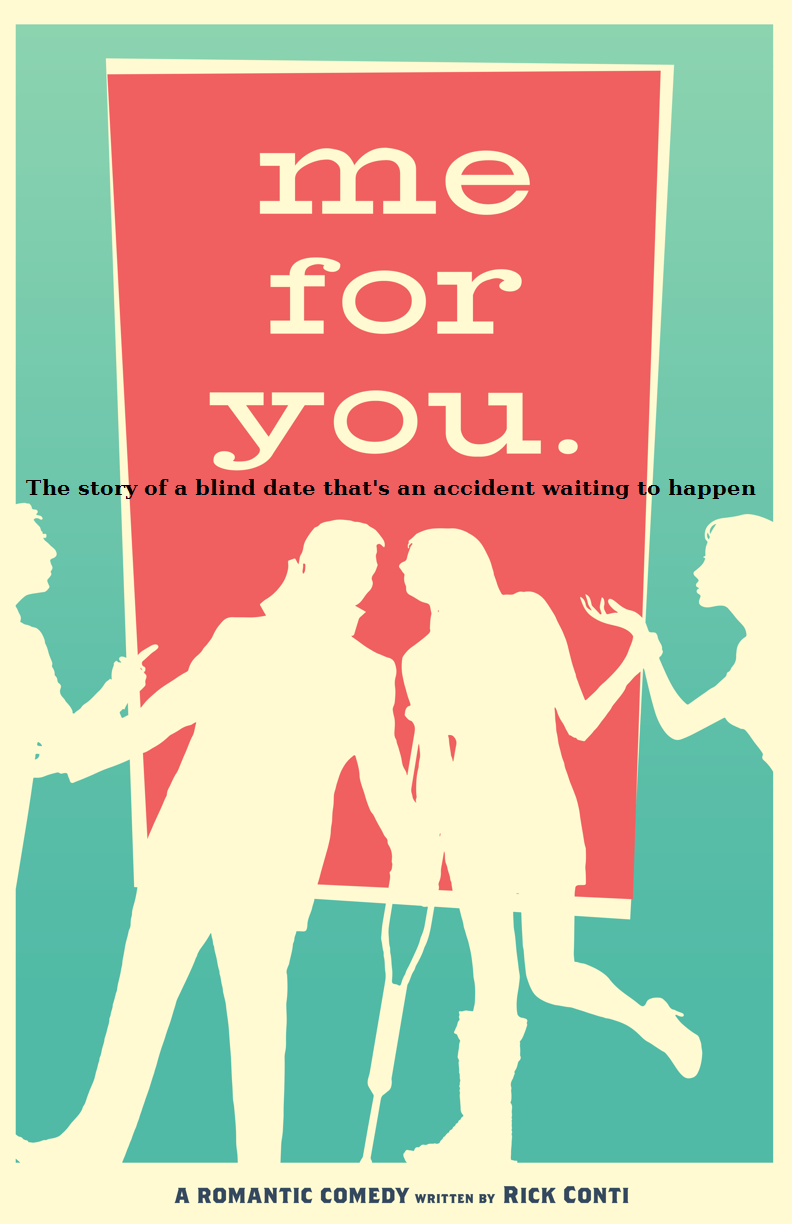
On Saturday night, April 18, at 7 PM, at the Chelmsford Center for the Arts, there will be a “staged reading” of my original PG-rated romantic comedy, “Me for You”. The cost is only $10 and includes chances to win cool movie-related door prizes. Snacks will be available for sale.

Staged readings are common in the film development process as a way to promote unproduced screenplays. This script will be read live by actors in the intimate setting of the CCA Cabaret Cafe. You get a fun evening at the “movies”, help two great causes, and, if the script ever gets produced, get bragging rights as previewers.


If that’s not enough to get your philanthropic blood pumping, here are two more opportunities to help support Haiti and fight MS:

Servants for Haiti Trivia Night and Silent Auction

TriviaNightLogoSmallThis year marks the 6th annual edition of this exciting event. The trivia is a blast – with yours truly (truly!) as the trivia jockey – and the silent auction is a collection of incredible buys, some one-of-a-kind. Funds raised this evening will benefit SFH‘s Biznis Pam program, which trains Haitian woman how to start and maintain their own businesses. Then they provide micro-loans to get the budding entrepreneurs going.

This is a great program that deserves our help. Join me on Friday April 10, 2015, at 7 PM. For complete details, click here.

Bike MS: Ride the Vineyard 2015

MSMVThis is a combination of three of my favorite things: Martha’s Vineyard, cycling, and raising money to crush MS. You can be part of this event by donating money to my ride or to my team.

To donate to my ride, click here.

To support my whole team, click here.

If you want to go further in your commitment, you can ride with us. Register and join our team: The Vineyard Square Wheelers. Ride on!