Happy Birthday, Lew

Lew Hunter was one-of-a-kind.

I don’t have many acquaintances who are listed in Wikipedia. Lew was one of them, and deservedly so. After a successful stint as a TV network executive, he became one of the premier screenwriting instructors in the industry. Lew taught at UCLA for many years before becoming chairman of the school’s screenwriting department, an honor he held in Emeritus after his retirement. The aforementioned Wikipedia article quotes none other than Steven Spielberg as calling him, “the best screenwriting teacher going.”

Lew was recognized not only as one of the best teachers of the art but as one of the most positive and approachable people in the industry. One of the professors on his staff told me, “Lew is my friend, my father, my brother, my colleague—the greatest!” It was after his “retirement” that I had the opportunity to learn under his tutelage. (He could never truly retire because he loved his work and students so much.) For a while, he and his wife traveled the country in their van holding screenwriting seminars wherever he was wanted. That’s when I met him and he became, whether he knew it or not, my mentor in screenwriting and writing in general. He ended every communication with his admonition to “Write on!” He made anyone who worked with him want to do so.

He also held what he called “screenwriting colonies” at his Nebraska home. I had the privilege and honor of attending one of those and spending significant time with the man and his family. In a business where “cutthroat” and “sleazy” are commonly used adjectives to describe people in that community, he was an anomaly. A truly loving, inspirational figure that people flocked to, not just for his expertise but for his optimism and spirit. He was a one man cheering section.

We last spoke in 2020. As usual, he was gracious, helpful, and inspiring. He died of Covid in 2023. I miss him, his assistance, his sense of humor, and his encouragement more than I can say. Today is his birthday. What can I do to honor him except to…


Write on!

Kill the cat

(Don’t worry, cat-lovers. This isn’t the mad ravings of a felinocidal maniac. There are cat people in my family I’d have to answer to, including the one who trained his cat to turn on the lights.)

Have you ever had the feeling that something wasn’t right but you lacked the confidence to mention it to others because you thought it was just you? I had that sense about movies. They’re running together, each one hard to distinguish from another. The only differentiators are the kinds of superpowers the protagonist has, the planet (or dimension) the aliens are from, or the evil-empire-of-the-month whence arise the powers that are going to wipe out the free world as we know it.

It’s deja vu all over again. Same story, different characters. Is it just me?

As a screenwriter, I had a theory. There are dozens of different philosophies out there about structuring screen stories. As the brilliant screenwriter William Goldman (“Princess Bride”, “Butch Cassidy and the Sundance Kid”, etc.) succinctly puts it: “Screenplays are structure.” In his “Poetics”, Aristotle started it all with the simple three-act structure. Some version of that structure has since been applied to stories of all forms: books, plays, movies, fireside ghost tales, and everything in between.

savethecatIn the screenwriting world, there have been dozens, perhaps hundreds, of refinements suggested to that basic structure. I’ve studied many of them – McKee, Vogler, Truby, Field, Hunter, and more. They range from flexible to downright Draconian. The most rigid of all was laid out in a book called “Save the Cat”, by the late screenwriting guru, Blake Snyder. My theory was that too many modern screenwriters had bought his formula down to the last beat.

I was right. At least, I have some agreement out there.

prefabA couple of days ago, I stumbled on this article from Slate. The author confirms my worst suspicions and fears. (Unfortunately, because the article is over a year old, some of the links in it are dead-ends.) According to this article, in complete agreement with my personal experience (and probably yours), many modern movies are actually prefab creations, like 60’s tract houses. The STC philosophy breaks a film into 15 “beats” that must be hit. That’s one predetermined action that will occur every six minutes in a 90 minute movie. There isn’t a lot of flexibility there. You can read the article to get a better understanding and at the same time seal your cynicism.

For this reason, I’ve pretty much stopped viewing Hollywood blockbusters. They’re all as bankrupt as their namesake video chain. The funny thing is that I’m not missing anything. By seeking out smaller, character-driven films rather than tentpole behemoths that measure their budgets in the hundreds of millions, I’m seeing better films.

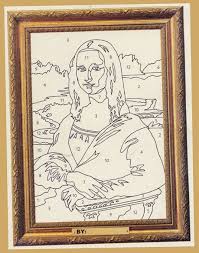
bynumbersAs someone trying to sell screenplays, it would behoove me to sell my creative soul and buy into this paint-by-numbers philosophy. While I agree that the structure of a screenplay is critical, I’d rather not write at all than churn out plug’n’play, cookie cutter, straight-off-the-assembly-line widgets that will be gone and forgotten in a month anyway. I might be cutting my own throat commercially, but I’ll retain as much of my dignity as any screenwriting hopeful can.