Every year, libraries around the country commemorate (“celebrate” hardly seems like the appropriate word) banned books weeks and months. Everybody knows book banning and burning is the exclusive province of the far right fascistic wackazoids, right? Not exactly. As Ray Bradbury observed in his Coda to “Fahrenheit 451”, possibly the magnum opus on the topic:
There is more than one way to burn a book. And the world is full of people running about with lit matches. Every minority, be it Baptist/Unitarian, Irish/Italian/Octogenarian/Zen Buddhist, Zionist/Seventh-Day Adventist, Women’s Lib/Republican, Mattachine/FourSquareGospel feels it has the will, the right, the duty to douse the kerosene, light the fuse.
Mr. Bradbury knows whereof he speaks as does his fictional Fire-Captain Beatty. After all, that’s his job, burning books. He has allies of all stripes everywhere.
Case in point: Imagine my surprise when I sat down to read a book about a quaint bookstore near Lucca, Italy, home of my forebears, only to discover the liberal feminist author, while decrying the practice of burning books in general, has no problem with it in specific cases. The specific case she not only accepts but endorses is regarding books she has a problem with. Oh, that’s original.
The book in question in her case is the Bible, arguably the most loved and hated literary work in all history. She has taken it upon herself to decide that the book should be removed from the face of the earth, one copy at a time.
How wonderful it would be to steal the books that can muddle people’s values and throw them into the fireplace!
Evidently her opinion that the Bible “muddles people’s values” justifies eliminating a book that has not only created most people’s values, but has been a comfort to billions. But this author says that’s not good enough for her. She says burn’em, so they’re thrown into the fire, a la every autocrat who has ever trod too heavily on this planet.
She had at least one ally/inspiration who actually did it. He stole copies of the Bible wherever he found them, including from friends’ libraries, brought them home and put them to the torch. Why? Because the God he didn’t believe in in the first place refused to answer his prayers. There’s so much inconsistency in that, it’s hard to know where to begin. So I won’t.
I’ll be the first to admit that people have misused the Bible for their own destructive non-Biblical purposes throughout history. The same can be said of a lot of literature. Burn’em all, right? As a liberal, maybe you oughtta start with Ayn Rand. She’s responsible for much of what’s wrong with (at least) the US, IMHO. I’ll bet you’ll find plenty more kindling where she came from.
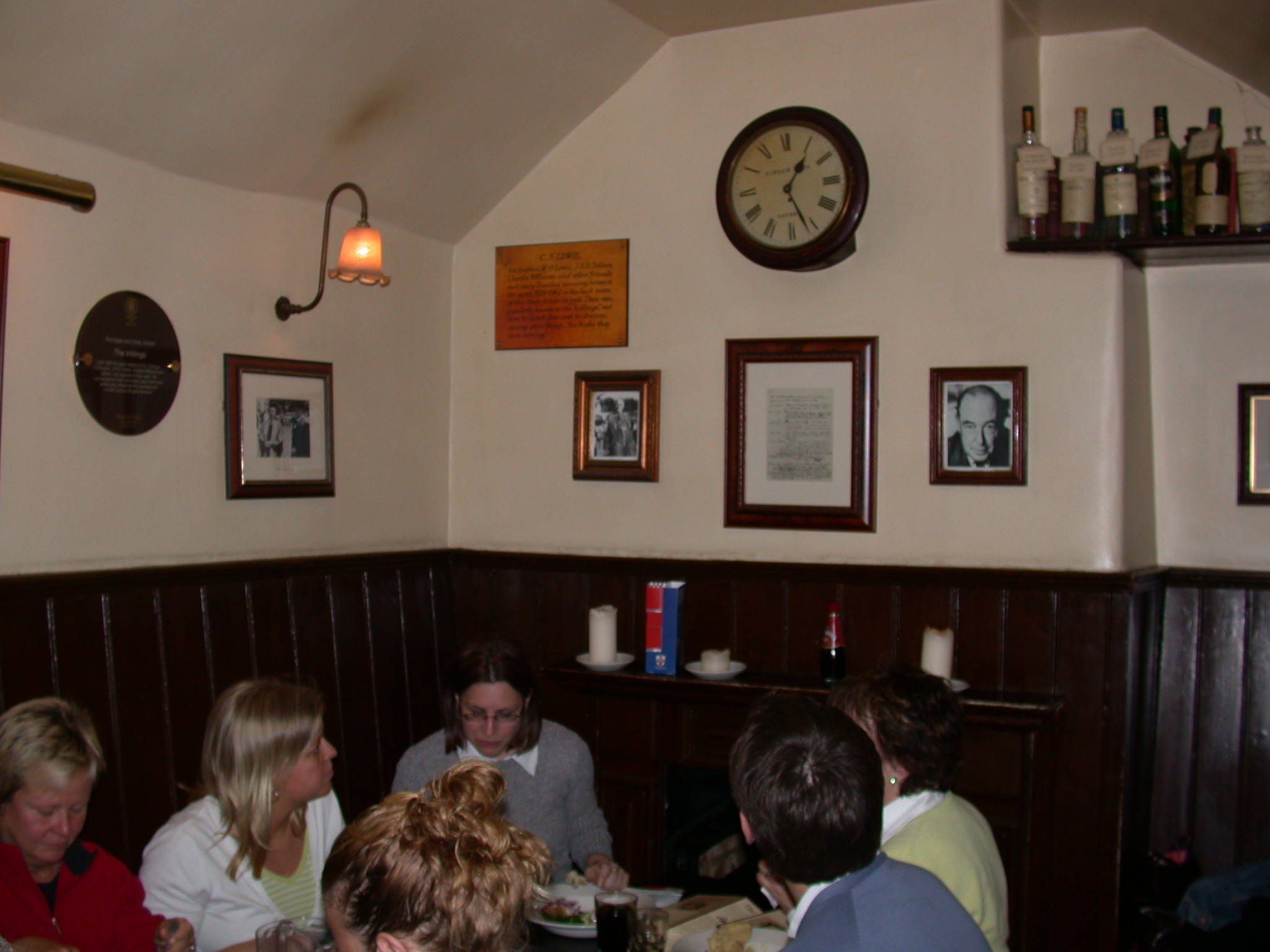
Hey, if you’re going to broil the Bible, why not also cook the books it inspired? There goes “Brothers Karamazov”, “Pilgrim’s Progress”, “Ben-Hur”, and countless others. Feel free to combust a couple of my favorite writers while you’re at it, Anne Lamott and Frederick Buechner. You have the blaze going anyway, so you might as well toss in some Tolkien and C. S. Lewis. Start down that road and you’ll have enough fuel to heat your home for a good long time.
This character, a self-proclaimed poet, goes on to say:
We shouldn’t burn books, I know. I’d still like to claim it as a symbolic act of reparation though, an irreverent prank a la Pippi Longstocking.
Pippi Longstocking? A prank? Seriously? Perhaps we were only punked by Third Reich, too! I guess that makes it okay. How many librarians would sign off on that philosophy come Banned Books Week?
I shouldn’t be surprised at this author’s hubris. This is another line from the book:
Autumn is also when my daughter, Laura, was born: my very own contribution to the fairy tale, something else I created from nothing–no mean feat.
The author created her daughter. Alone. From nothing. Ex nihilo. So neither the father nor nature/God/evolution (whichever you subscribe to) had any part in her “creation”. Well, with that much God-like power, she should be allowed to do anything she wants, just like a certain former president. I’m sure she’d blanch at the thought of being compared to such a moron/tyrant, but if the orange skin fits…
One more similarity between her and the former Oompa-Loompa-in-Chief who once sullied the White House carpets: Her dubious command of the language. She uses the illogical form, “each one is better than the next” when she means precisely the opposite. Some poet. Yes, English is not the language of her birth, but that’s no excuse for this bit of nonsense; it’s logic, not language. I’m no proficient wordsmith but even I know enough not to write the opposite of what I mean because I’m ignorant of the structure of a sentence. I railed against this very expression and a few other egregious transgressions against the language eleven years ago in this post on my other blog.
There’s actually a lot more of questionable value in this memoir—time prevents me from going into any further detail—but I stopped reading before she made any more brain-dead mistakes or outrageous claims to power over the universe and what I can and can’t read. Bradbury was right. Every point on the political spectrum has a match and is ready to wield it.
Look, lady, you aren’t the first frustrated wannabe authoritarian who’s burnt the Bible and you won’t be the last. Before you ignite the conflagration, I suggest you work on whatever it is that makes you so comfortable with being a hypocrite.




 Scribbling in the Sand