Peace on Earth

I’m old enough to remember the 60’s and, unlike some of my contemporaries who find the era’s fashions, language, and music a bit dated, I have no desire to distance myself from that connection. It was a great time. We’d run around in our tie-dyes and bell bottoms waving protest banners with what now seem to be quaint phrases such as:
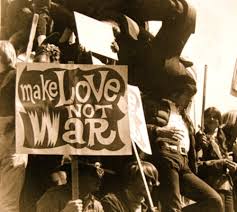
makelovewarnothealthygivepeace

Perhaps the most naive of them all was this one:

whatifwarThis is the one most likely to make people cringe. On the surface, it’s seems so naive, almost childishly optimistic. It sounds so crazy. To quote Steely Dan, “Only a fool would say that.”

But what if it really happened?

It did.

For a very short span of time during World War I (the conflict ironically called “the war to end all wars” – talk about naive optimism!) both sides refused to play the game of killing each other for the benefit of absentee generals and politicians.

Over the years, I’d heard stories about the so-called “Christmas Truce” of 1914. This past week I read a thorough history of the events in a book called “Silent Night” by Stanley Weintraub. A movie about the truce was made in 2005. “Joyeux Noel” creates a compelling composite of the actual events by centering on a single group of combatants on the Western Front.

Both book and movie are excellent works, but the truce itself is the amazing tale. Bands of enemies mingled with each other, singing Christmas carols, playing soccer, burying their dead, trading keepsakes, sharing food and drink, and generally getting to know one another. Guns were laid down and differences forgotten. Nearly a million people had already given up their lives for this mindless standoff. Beginning on Christmas Eve that year, a hundred thousand suddenly came to their senses and grasped at the outrageous opportunity to celebrate Christmas with Peace on Earth, if only for a couple of days.

When word of the impromptu truce got back to the powers-that-were-but-no-longer-are, all ensconced in luxurious digs and downing fine food and drink for the holidays, they were incensed. Threats of transfers, court-martials, and even firing squads were brought down on the lowly servicemen who were bogged down in frozen or muddy trenches.

The high ranking officers and politicians thought it insane for the soldiers to drop their weapons and spend Christmas getting to know the enemy who had been painted by each opposing nation as barbaric, evil, less-than-humans who deserved to be and must be eradicated. Those same elites saw nothing crazy about throwing young lives at each other in a futile attempt to move their lines a few yards either way in the pointless and protracted conflict. After all, they were out of harm’s way themselves. Some things never change.

As the groups of enemies fraternized on the few hundred feet of No Man’s Land that separated them, they actually became friends, sometimes making plans to get together after the war. By meeting their foes, British and French troops came to realize that Germans weren’t monsters who crucified children as they had been told. The Germans learned that their foes were just like them, with the same dreams and desires, most with families they missed.

Some people objected. One member of the German army who was alarmed by the actions of the soldiers said:

Such things should not happen in wartime. Have you Germans no sense of honor left at all?

If you find this man’s opinion resonates with yours, be aware that his name was Cpl. Adolf Hitler.

In 1914, everyone thought the end of the war was imminent. It ended up dragging on for another four years, causing millions of casualties. Worse yet, it planted the seeds that grew into the next and even greater conflict, World War II. Author Weintraub in his book makes the compelling case that, had the perpetrators of the war followed the lead of its victims toward peace, we might have not only avoided the second Great War, but the Bolshevik Revolution might never have occurred, thus eliminating more conflict from the world in ensuing years.

Today, armed conflicts seem to be ubiquitous. Once more, it’s not quite clear what people are fighting about, but it’s usually the same thing: enemies are demonized as evil fundamentalist (or atheist – take your pick) demons who want to take away our precious way of life. If you were to talk to most of those enemies, you’d find, just like those men in the trenches in 1914, that they are human beings like ourselves who only want to live their lives in peace.

In the next war, could we have all the leaders – political, military, and religious – slug it out among themselves while the rank-and-file watch from a safe distance? It would make great reality TV.

The more common motivation for war today is to give the big weapons manufacturers an opportunity to showcase and sell their wares. If a few thousand kids are killed in the process, that’s a price the stockholders of said companies are willing to pay. I’m reminded of the opening scenes of a rare good superhero movie, “Iron Man”, when Tony Stark, between bedding women and sipping champagne, sells a gazillion dollars worth of killing machinery to everyone in sight but misses the downside until he becomes a victim of his own products.

Jesus – He’s the guy that started this whole Christmas thing – says, “Love your enemies.” I’m pretty sure, as the saying goes, killing them isn’t what He meant. Is there a better way to celebrate the day than to refuse to kill the people Jesus said we should love?

That is what would happen if they gave a war and nobody came. Maybe it’s not so childish after all.

(For more reading, here’s a fascinating article from nine years ago.)

Creative communities

communityI’m all about community. I crave being part of a community, I flourish in the context of community, and I love building communities. It doesn’t matter what the little society is built around – church, MS, philanthropy, sports, the arts, or pure recreation. Where two or more are gathered, there I want to be in the midst of them. That’s why I speak and write so often (like here and here and a lot of places in between) about the value of support groups for those with MS.

So today I felt like writing about communities. This blog being centered on writing and film, it’s creative/artistic communities that are on my mind.

If I can break it down a bit, I see two flavors of such communities. The first would include temporary gatherings for specific purposes: individual plays, films, concerts, and recordings, for example. My experience participating in such efforts has invariably proven to be fun, exhilarating, and inspiring… for a while. There’s a sort of “postpartum” depression that often sets in when they end, as they always must.

No matter how brief, I wouldn’t want to miss those opportunities for the world. Whether singing in a choir or acting with a troupe, there’s nothing like being part of a collective creative consciousness all aimed in the same artistic direction. To get a glimpse into that world, read the book I wrote about in this post.

As you might have guessed, the second type of creative community is a long term one. They last for years, lifetimes, or generations. Members of these collectives pour their creative energies and encouragement into one another thus enhancing their work and their lives. Some are formal, others more a matter of proximity.

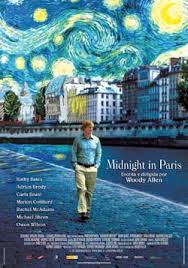
laurelcanyonThe folkies of 50’s Greenwich village were a hotbed of creative (and cultural and political) growth. In the 60’s, the Motown area gave rise to R&B and Haight-Ashbury nurtured the roots of modern rock’n’roll. Those communities were responsible for seismic shifts in culture. Though not considered MIPartistic, Silicon Valley was for a time as creative a community as the world has seen. Gertrude Stein’s Paris salon, portrayed so effectively in Woody Allen’s “Midnight in Paris”, was an intentional community that hosted some of the century’s most celebrated artists and writers.

After all, what is a band, an orchestra, or an architectural firm but a community of creatives? These gatherings are so much more creative and productive than the individuals involved could ever be. I feel confident in asserting that the community known as The Beatles was far greater than the sum of its parts.

Those kinds of groups always seem to eventually fall victim to bloated egos, tempestuous personalities, and conflicting agendas. That’s part of the baggage of the stereotypical artistic personality. Which is probably why artists of all stripes tend toward isolation.

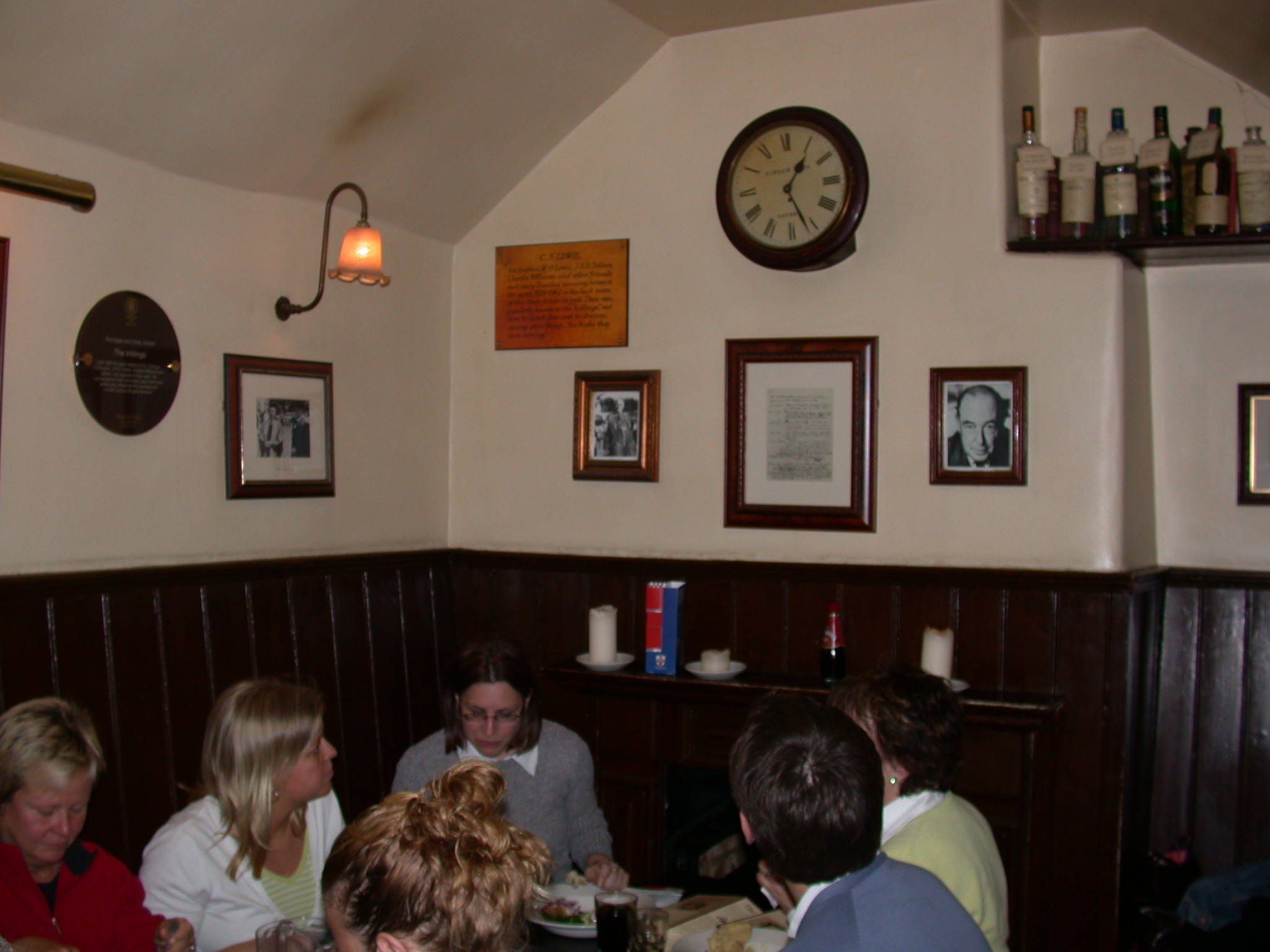
inklingsMy personal icon of a literary community is the Inklings of Oxford, UK. The most prominent members of this discussion group were J. R. R. Tolkien and C. S. Lewis – not sure if using one’s initials was a prerequisite to membership. What I would give to hang around at the Eagle and Child Pub with these guys discussing their latest work and ideas. I’d be lost, of course, but humiliation is a price I’d gladly pay.

Inklings meeting room, Eagle and Child Pub, OxfordSeveral years ago, I had the privilege of visiting Oxford, dining at the Bird and Baby, as its customers often called it, and also hearing a lecture on Tolkien in the adjoining building. I was staying in a house on the same street in Headington where Tolkien once lived, driven to the talk by a gentleman who had been a friend of the Tolkien family, accompanied by the caretaker of the Kilns, Lewis’s home. I’ve never had a more fulfilling, if thoroughly vicarious, literary experience.

I’m not sure why this was on my mind. I can’t say I’ve ever been involved in one of those long-term artistic communities, although the prospect is appealing. The funny thing is that writers are notorious loners and introverts, which would fight against any impulse to be part of a larger group. For many, the value must win out over the personal reticence.

Gotta go. I’m running late for a meeting of one of my collection of communities.

Relaxing in Lewis's study. Where's Jack?

Relaxing in Lewis’s study.
Where’s Jack?

As I Wish

I just finished one of the most enjoyable reads I’ve had in a long time. It wasn’t just the book by itself, but the entire experience. It combined two of my great joys: books and film. This was a book about the making of a film from a book. The book and film are “The Princess Bride”.

pb2

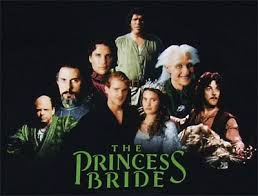
“The Princess Bride” is among my favorite films. In fact, I consider it a perfect film. Every part of this movie is as good as it could possibly be. William Goldman’s original book is great, his screenplay brilliant, the cast impeccable, Rob Reiner’s direction inspired. It’s funny, exciting, romantic, poignant, and very, very smart. Reading about what went on behind all that merely added to the whole package.

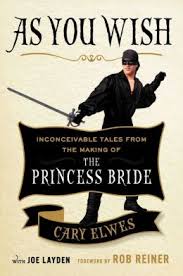
asyouwishCary Elwes, who exquisitely portrayed farm boy Westley, the Man in Black, and Dread Pirate Roberts wrote “As You Wish: Inconceivable Tales from the Making of the Princess Bride” – as unwieldy a title as your bound to find, yet appropriate for this tale. It’s a memoir of his experiences as a very young actor in his first starring role.

Although the movie is now (can it possibly be?) 27 years old, his recollections, like the movie itself, have the freshness of today. He captures the same innocence, excitement, and naiveté with which he approached the filming. It had all the immediacy and enthusiasm of a kid’s essay about hitting the winning home run in a little league game. But that little league game didn’t go on to become one of the most precious cultural icons in American history.

Clearly, making the movie was as much fun as watching it. I have to confess a bit of envy as I read. Those are the kinds of experiences anyone who loves film would love to be part of. In my own life, I’ve experienced the fun, camaraderie, and passion that goes into a dramatic presentation. It’s really quite unparalleled. I couldn’t even imagine what it must have been like to be involved in something as magical as “Bride”. At least, I couldn’t until I read Elwes’s wonderful book.

If you don’t like the movie – an “inconceivable” thought – I suppose the book won’t mean much to you either. Clearly, you don’t have a beating heart. If, however, you’re a fan of Fezzik, Vizzini, Miracle Max, Inigo Montoya, and all the rest, this is a must-read.

Anyone who tells you different is selling something.

Random late summer thoughts

random3My favorite writer, Mark Helprin, once adjured an audience, of which I had the privilege of being a part, to pay attention to the world around us. This is critical for writers. The topic was touched on with respect to dialog in a previous post.

Paying even a modicum of attention to what’s happening in your family, town, or on the news will supply fodder for countless stories. Market Basket, a lowly supermarket chain, has in recent weeks given us enough storylines, characters, and sub-plots to fill several books, a few movies, and at least one mini-series. Just watch; they’re coming.

What to do? asks the humble scribe of blog posts. With so much to comment on, there isn’t time to do justice to every one. My solution to the problem is to do an occasional dump of thoughts rattling around in this mostly empty skull. This is the first in this blog, although it tends to be a regular ploy in my other blog, Limping in the Light, e.g. here.

Here are a few things backed up in my mental septic system:

Here’s a fun question for you literati: When you go to a bookstore, what section do you go to first? Your answers should lead to a lot of fascinating follow-up discussion.

I recently read a best-selling novel with a couple of egregious problems. This wasn’t mass market pop lit such as “Twilight” or some transcribed TV-show passing itself off as literature. This was a highly regarded, serious novel. Two things stood out to me. One was the author’s obsession with using the word “impossibly” to modify an adjective (e.g. “impossibly large”). I have no problem with that in principle. The aforementioned Helprin will use it occasionally. But this author used it five times in the one book! (Don’t ask me how I noticed this. It’s a curse.)

Another sentence read: “…each <whatever> was more perfect than last.” Some things can be more perfect than others? How does that work?

Although the book received mixed reviews, it won awards and was on the NY Times best-seller list for several weeks. Yet I can’t get anyone to even read my book. It must not be as perfect as that one. ((sigh))

parking-lot1Off the book topic: What’s with people endlessly circling parking lots looking for the closest space? In spite of sky-high gas prices and rampant obesity and the supposed busy-ness of everyone, they waste what’s in scarcity – time and fuel – to avoid what they desperately need: exercise. Just park the stinkin’ car!

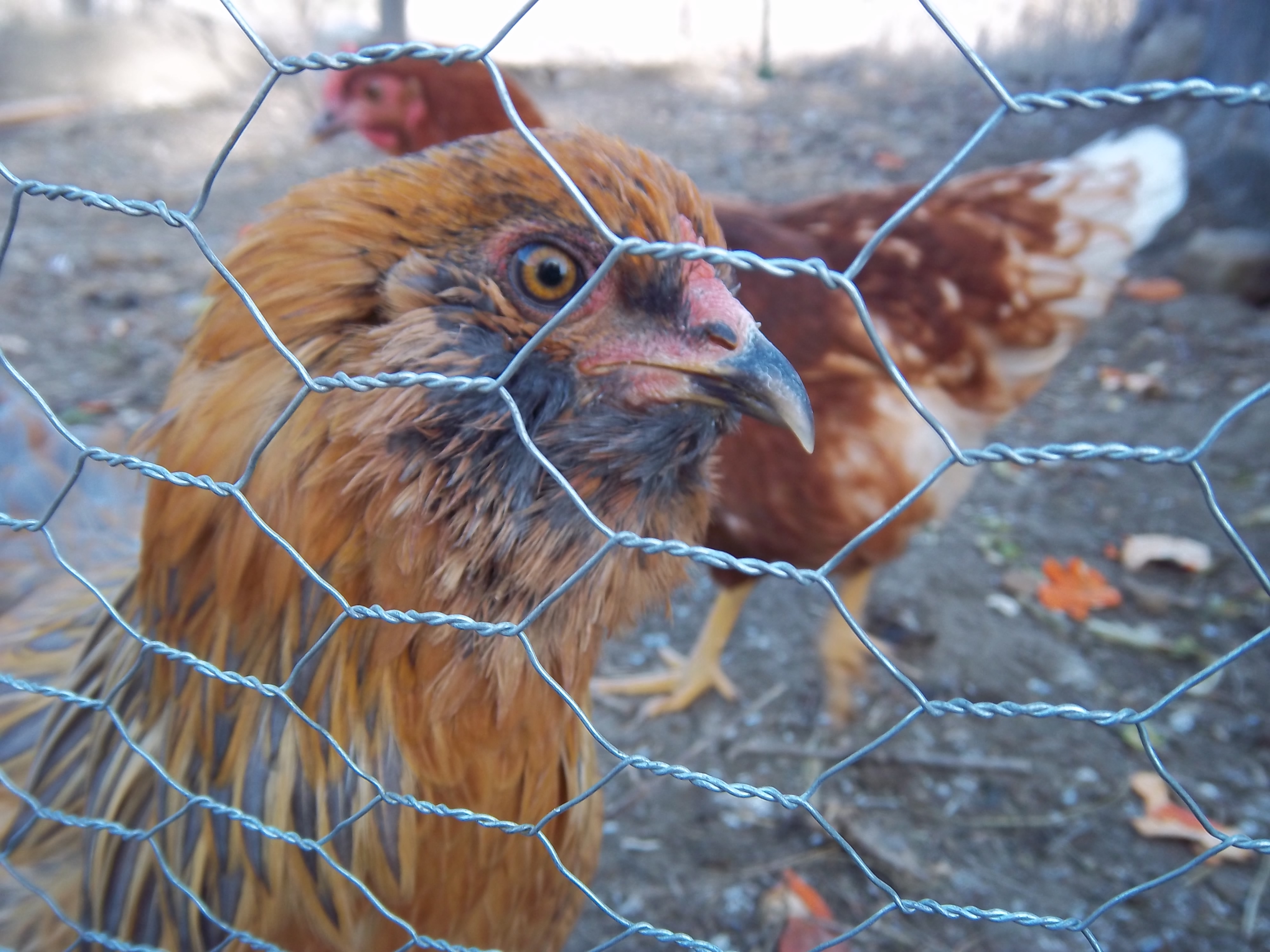
Have you noticed that owning chickens is hot?

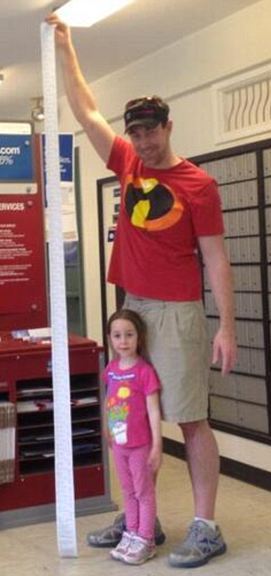
100_0403CVSIn CVS (a firm already infamous for its extravagant waste of receipt paper, q.v. photo) yesterday, I bought one item that came in a bag. The clerk at the counter put it in one of their plastic CVS bags. I asked her why I needed a bag to put the bag in. She had no answer, perhaps because there is none. Punch in folks, it’s time to bag the bags. We don’t need a bag to carry one item… unless you’re hiding something.

I usually ask for no bag, but the checkout people, who must be on the payroll of the bag manufacturer, sometimes beat me to it. When I ask them (kindly) to keep their bag, more often than not, they stuff it in the trash. Someone’s missing the point.

Living on a busy street, my front lawn serves as de facto trash dump for passing cars. We can learn a lot about the kind of person who has no regard for other people’s property or the cleanliness of the town they live in or drive through. The following items make up 90% of the trash strewn across my lawn:trash

  • losing lottery tickets
  • beer cans
  • fast food containers
  • cigarettes

Who are the slobs who trash our neighborhoods? The list speaks for itself. It makes me think of the old Disney cartoon. It’s cute, but painful.

bob&rayA word to the wise: Today’s phones, whether cell or landline, have the annoying trait of inserting a brief delay between the time the phone is answered and when it will register your voice. Thus, you call someone and they generally respond, “…lo!” My advice: answer the call and count to 2-1000 before speaking.

Reminds me of the old Bob and Ray routine with the fictional reporter Wally Ballou starting his on-the-spot reports by saying, “…ly Ballou here.”

When I was a kid and when my kids were kids, punishment usually meant being sent to your room. A more appropriate form of discipline today would be, “That’s it, I’ve had it with you. Come out of your room and stay out all afternoon!” Much more effective.

 That was an impossibly easy post…

Of watermelons and books

watermelon&books

In the middle of his tea party, the Mad Hatter asks Alice a riddle:

Why is a raven like a writing-desk?

When Alice gives up trying to figure out the answer, she asks the Hatter, who says:

I haven’t the slightest idea.

I’ll do Mr. Carroll and his Hatter one better. Here’s a riddle, the answer to which I not only know, but will divulge (spoiler alert) in this post.

Why is a watermelon like a book?

First, confession time: This isn’t a true riddle, although what constitutes a true riddle (if that isn’t an oxymoron) isn’t 100% clear to me.

You see, I was cutting up and eating a watermelon today (I can never do the former without indulging in the latter) when it occurred to me that there are striking parallels between these two things that are, on the surface, quite different. Here’s my (probably partial) list of similarities:

  1. I love both of these items. I couldn’t imagine life without either one.
  2. Both are often consumed voraciously. I treat a book in the same way as I do the melon. At first I savor every bite/page, but as I approach the end, I down those chunks/pages as if they might disappear before I finish them.
  3. Both have seeds. In the case of the fruit, literal ones. (Yeah, even the “seedless” ones.) With books, they’re seeds of inspiration.
  4. Either one makes a great beach companion on a hot summer day.
  5. You can’t judge either by its cover. Believe me, in the case of watermelons, I’ve tried to figure out how to identify a quality melon by inspecting, tapping, or shaking it. I still end up with clunkers. Which brings me to the next thought:
  6. There are good ones and there are bad ones. Far fewer watermelons could be described as “bad” but I’ve had a few. Books, while I haven’t read them all, probably have more bad than good, especially in this day of self-publishing.
  7. You can grow your own. It’ll be a crap shoot quality-wise, but with time, effort, and enough fertilizer (make of that what you will) you can have yourself one sweet fruit of your labors.

Mind you, there are also major differences between watermelons and books which are hard to ignore.

  1. With few exception, watermelons are much bigger than books. They can be downright unwieldy.
  2. If watermelon juice drips, it becomes very sticky. I honestly can’t think of a book about which I could say the same thing.
  3. No one has yet been able to perfect the eMelon. I pray it never happens.

That’s about all I can think of at the moment. I’m open to your ideas.

Meanwhile, I’m going to grab a book and some watermelon.

Why Should I Care?

I’ve been told by more than one person that I have a song for everything. That is, for almost any situation, I can recall some obscure song lyric that captures that situation’s essence, or enhances the experience thereof. There’s probably at least one song that applies to any occasion. I just seem to know more than my fair share.

quadThus, when I was thinking about a title for this post, it shouldn’t surprise you that I settled on song lyrics. In fact, the lyrics of two songs from “Quadrophenia“, the classic album by The Who, came to mind. In two different songs from that outstanding concept album, there are lines that ask, “Why should I care?”

I’ve been asking myself that question lately regarding my reaction to fictional characters. As I alluded to in my previous post about “Peace Like a River”, some books have characters that are so real, so sympathetic, so readily identifiable, I simply buy into them as real people and I care about what happens to them. Further, I want to know what happens to them once the story (movie, book, play, short story, whatever) ends.

Why?

The short answer is that I have no idea. I would like to know, however, because those are the kinds of characters I want to write. A story populated with those kinds of characters is easier to write. They have a will of their own. They move the writer along rather that the other way around.

A collection of flat, one-dimensional characters have no place to go and no reason to go there. They have no motivation, no purpose for being. Who cares what they do? They’re deadly dull. They are dead. Who wants to read or write about them?

We could learn a lot by thinking about ourselves in those terms. If we have no depth, no purpose, no absolute motivator, we’re going to lead a pretty dull existence, more than likely swamped by our own self-interest.

Recently, someone who performed a test-read of my first (and, so far, only) novel said she couldn’t stop thinking about the protagonist, a young woman in Haiti. That’s about as high praise as I could want and more than I expect, yet I feel the same way about her and the rest of the characters.

Having rewritten the book in part or whole several times, I’ve probably read it a dozen or more times. Maybe it’s my familiarity with the characters, but I’ve come to (in some weird way) love and care for them. I’m so pathetic in fact, that I cry every time I read certain poignant passages.

It happens all over the place with me. In movies, for example:

  • I’d love to follow the relationship of Sam and Annie (and Jonah) after they finally meet at the top of the Empire State Building in “Sleepless in Seattle”. Will they be married? Where will they eventually live, Seattle or Baltimore? Will Becky,  Greg, and Suzy all hang out together? Sadly, Nora Ephron is gone so I’ll never know.
  • I want to watch as George and Nina Banks raise little Megan. (“Father of the Bride 2”)
  • Is there any hope of redemption for Harry Caul after trashing his apartment in “The Conversation”?
  • Where does that long road lead for the tramp and the gamin at the end of “Modern Times”?

And those are just movies. What of books like “The Rosie Project”, “Winter’s Tale”, “Gilead”, “Claire of the Sea Light”, and, of course, “Peace Like a River”?

(This phenomenon appears to be a “chick thing”. If you Google “fictional characters”, you’ll see what I mean. I’ll have to live with that, I guess.)

This is why I love movies with “follow-up” info before the credits roll. I get to find out what happened to all those fascinating players in “Remember the Titans”. Those are real human beings, so there’s some excuse for me in that case.

Strangely, it doesn’t matter if the characters are the creation of some writer’s imagination. I still wanna know what happens to them. That’s why I’m relieved to see where the lives of the members of The Wonders (not the One-ders) lead them in Tom Hanks’ vastly under-appreciated “That Thing You Do”.

That extra information can make a funny movie even funnier and more memorable. The roller coaster relationship of Robert and Mary is just as nuts after the movie ends in Albert Brooks’s hysterical “Modern Romance”, another hidden gem and one of the funniest movies I’ve ever seen.

starsI’m not alone in my mania. This pointless passion is one of the key elements in John Green’s wonderful book, “The Fault in Our Stars”. Without Hazel and Gus’s quest for the next events in Van Houten’s “An Imperial Affliction”, the story is left incomplete. But then, they are fictional characters, too. And I want to know what happens to Hazel! How long does she live? What happens to Isaac? Argh!! Nested frustration! I want to know what happens to fictional characters who are trying to figure out what happens to fictional characters.

I really care about these quasi-people. I just don’t know why.

fictional

Maybe I should stick with non-fiction.

Peace Like a River

PLARThis new blog being primarily concerned with writing, I thought I’d start with an homage to one of my favorite books, “Peace Like a River” by Leif Enger. As one reviewer put it, this book “serves as a reminder of why we read fiction to begin with.”

The reason it’s fresh on my mind is, a couple of weeks ago I finished reading it for the fourth time. It’s weird, isn’t it, to read a book more than once? When we do that, we’re doing more than searching for the end of a cracking good story. If you already know the butler did it, something else must be calling you back to a commitment as significant as reading a 300-page novel.

We read books multiple times is to drink in the prose, to spend time with old friends we know well and want to know better, whose fate (for some odd reason, which I’ll scribble about in a later post) we care about. The writing in PLaR is so vivid, so crisp, so beautifully crafted, I would regularly stop and reread a passage as if I were a sommelier tasting a fine wine; to roll it around as a delicious taste that I wanted to savor as long as possible. Or a song that never grows old.

A few such snippets of Mr. Enger’s prose, in all its glorious Midwestern resonance:

That night Swede and I lay somewhat breathless under a hill of quilts. For drafts, there was no place like August’s farmhouse; you could roast under such strata and your nose still cold as a glass knob.

There’s nothing like a good strong meter to make a poem mind its manners.

I succeeded in worrying about this escalation business for a good day and a half before worry died as usual, at the hand of routine.

Good advice is a wise man’s friend, of course; but sometimes it just flies on past, and all you can do is wave.

So thoughtlessly we sling our destinies.

Winter was a train crawling north.

I won’t pretend that reading those brief lines out of context and without knowing the narrator will drive you to the library to pick up this book. But really, if you haven’t, you ought.

The same reviewer I quoted above also said, “He’s the type of writer that other writers read, and die a little.” While I’m a writer, I can’t say I died reading it — I’m here, after all, after four passes through that would-be valley of death. — but I know (I feel) what he means: Compelling plot, musical prose, lifelike characters… Mr. Enger has them all in a way I could never attain. This is a near perfect book. Rather than depress me (OK, it does depress me a bit) it motivates me to write better. He’s set a standard I can’t even dream of achieving, but it’s best to aim high. For as Mr. Browning says, “Ah, but a man’s reach should exceed his grasp, or what’s a heaven for?”

Make of it what you will…