Creative communities

communityI’m all about community. I crave being part of a community, I flourish in the context of community, and I love building communities. It doesn’t matter what the little society is built around – church, MS, philanthropy, sports, the arts, or pure recreation. Where two or more are gathered, there I want to be in the midst of them. That’s why I speak and write so often (like here and here and a lot of places in between) about the value of support groups for those with MS.

So today I felt like writing about communities. This blog being centered on writing and film, it’s creative/artistic communities that are on my mind.

If I can break it down a bit, I see two flavors of such communities. The first would include temporary gatherings for specific purposes: individual plays, films, concerts, and recordings, for example. My experience participating in such efforts has invariably proven to be fun, exhilarating, and inspiring… for a while. There’s a sort of “postpartum” depression that often sets in when they end, as they always must.

No matter how brief, I wouldn’t want to miss those opportunities for the world. Whether singing in a choir or acting with a troupe, there’s nothing like being part of a collective creative consciousness all aimed in the same artistic direction. To get a glimpse into that world, read the book I wrote about in this post.

As you might have guessed, the second type of creative community is a long term one. They last for years, lifetimes, or generations. Members of these collectives pour their creative energies and encouragement into one another thus enhancing their work and their lives. Some are formal, others more a matter of proximity.

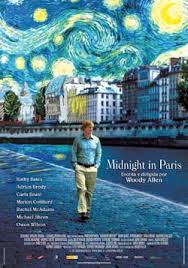
laurelcanyonThe folkies of 50’s Greenwich village were a hotbed of creative (and cultural and political) growth. In the 60’s, the Motown area gave rise to R&B and Haight-Ashbury nurtured the roots of modern rock’n’roll. Those communities were responsible for seismic shifts in culture. Though not considered MIPartistic, Silicon Valley was for a time as creative a community as the world has seen. Gertrude Stein’s Paris salon, portrayed so effectively in Woody Allen’s “Midnight in Paris”, was an intentional community that hosted some of the century’s most celebrated artists and writers.
After all, what is a band, an orchestra, or an architectural firm but a community of creatives? These gatherings are so much more creative and productive than the individuals involved could ever be. I feel confident in asserting that the community known as The Beatles was far greater than the sum of its parts.

Those kinds of groups always seem to eventually fall victim to bloated egos, tempestuous personalities, and conflicting agendas. That’s part of the baggage of the stereotypical artistic personality. Which is probably why artists of all stripes tend toward isolation.

inklingsMy personal icon of a literary community is the Inklings of Oxford, UK. The most prominent members of this discussion group were J. R. R. Tolkien and C. S. Lewis – not sure if using one’s initials was a prerequisite to membership. What I would give to hang around at the Eagle and Child Pub with these guys discussing their latest work and ideas. I’d be lost, of course, but humiliation is a price I’d gladly pay.
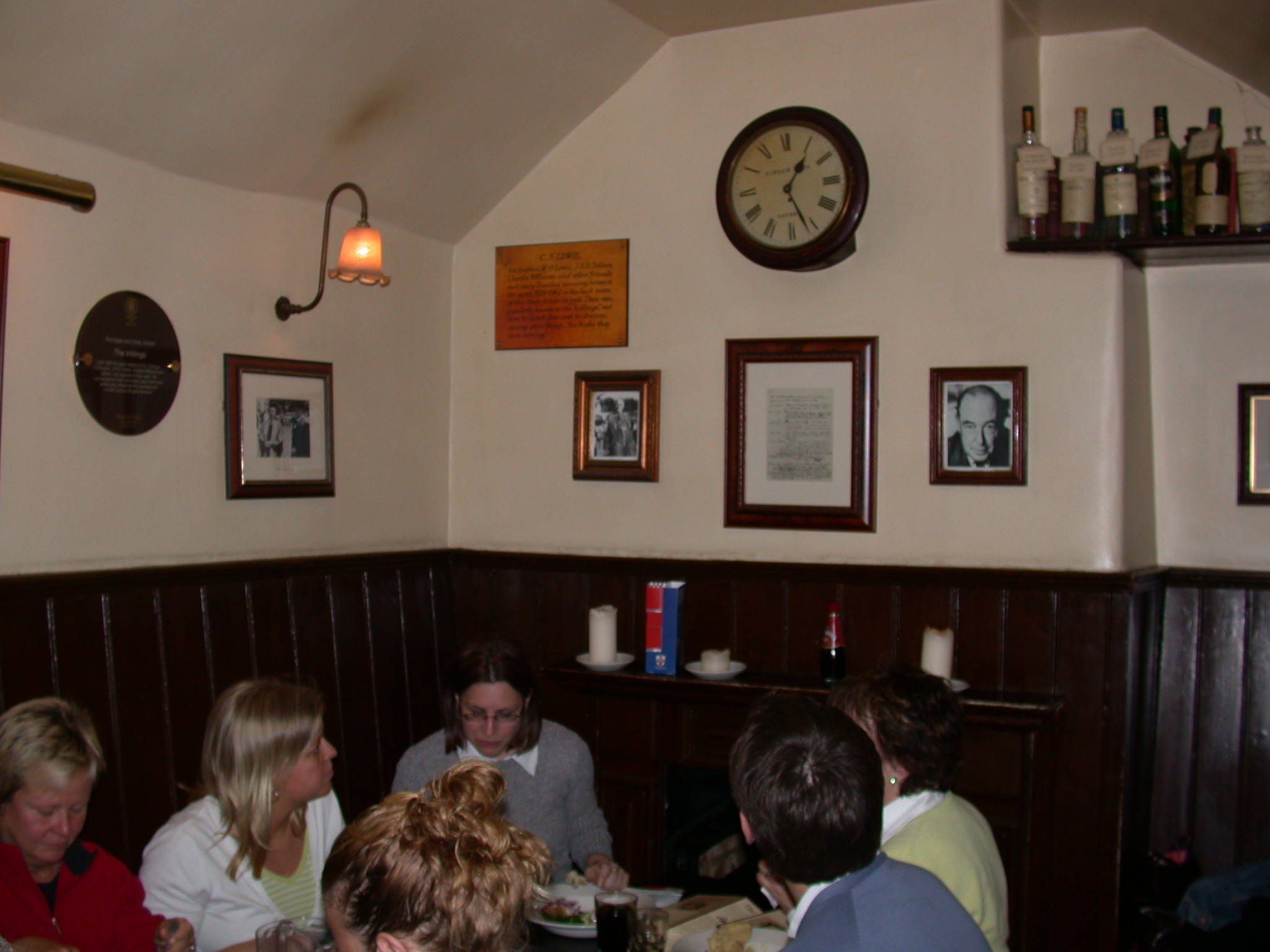
Inklings meeting room, Eagle and Child Pub, OxfordSeveral years ago, I had the privilege of visiting Oxford, dining at the Bird and Baby, as its customers often called it, and also hearing a lecture on Tolkien in the adjoining building. I was staying in a house on the same street in Headington where Tolkien once lived, driven to the talk by a gentleman who had been a friend of the Tolkien family, accompanied by the caretaker of the Kilns, Lewis’s home. I’ve never had a more fulfilling, if thoroughly vicarious, literary experience.

I’m not sure why this was on my mind. I can’t say I’ve ever been involved in one of those long-term artistic communities, although the prospect is appealing. The funny thing is that writers are notorious loners and introverts, which would fight against any impulse to be part of a larger group. For many, the value must win out over the personal reticence.

Gotta go. I’m running late for a meeting of one of my collection of communities.

Relaxing in Lewis's study. Where's Jack?

Relaxing in Lewis’s study.
Where’s Jack?
As I Wish

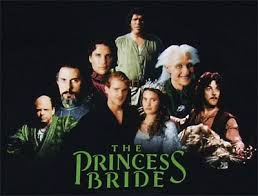
I just finished one of the most enjoyable reads I’ve had in a long time. It wasn’t just the book by itself, but the entire experience. It combined two of my great joys: books and film. This was a book about the making of a film from a book. The book and film are “The Princess Bride”.

pb2

“The Princess Bride” is among my favorite films. In fact, I consider it a perfect film. Every part of this movie is as good as it could possibly be. William Goldman’s original book is great, his screenplay brilliant, the cast impeccable, Rob Reiner’s direction inspired. It’s funny, exciting, romantic, poignant, and very, very smart. Reading about what went on behind all that merely added to the whole package.

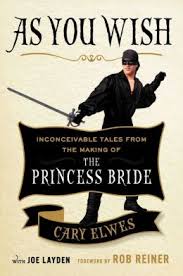
asyouwishCary Elwes, who exquisitely portrayed farm boy Westley, the Man in Black, and Dread Pirate Roberts wrote “As You Wish: Inconceivable Tales from the Making of the Princess Bride” – as unwieldy a title as your bound to find, yet appropriate for this tale. It’s a memoir of his experiences as a very young actor in his first starring role.

Although the movie is now (can it possibly be?) 27 years old, his recollections, like the movie itself, have the freshness of today. He captures the same innocence, excitement, and naiveté with which he approached the filming. It had all the immediacy and enthusiasm of a kid’s essay about hitting the winning home run in a little league game. But that little league game didn’t go on to become one of the most precious cultural icons in American history.

Clearly, making the movie was as much fun as watching it. I have to confess a bit of envy as I read. Those are the kinds of experiences anyone who loves film would love to be part of. In my own life, I’ve experienced the fun, camaraderie, and passion that goes into a dramatic presentation. It’s really quite unparalleled. I couldn’t even imagine what it must have been like to be involved in something as magical as “Bride”. At least, I couldn’t until I read Elwes’s wonderful book.

If you don’t like the movie – an “inconceivable” thought – I suppose the book won’t mean much to you either. Clearly, you don’t have a beating heart. If, however, you’re a fan of Fezzik, Vizzini, Miracle Max, Inigo Montoya, and all the rest, this is a must-read.

Anyone who tells you different is selling something.

Game Over

vidgamemovieI like movies but I don’t much care for video games. This isn’t an unfounded bias based on my age or a disconnect from current culture. (My video game experience goes back to the pre-Atari days). No, the reason is my preference for story.

Aristotle had it right, in my opinion. A story should have a beginning, a middle, and an end. That separates it from pageantry, which is a continuous display without a plot. Thus, I prefer plays to parades and Olympic competition to opening ceremonies.

This bias extends to my preference for baseball, which I see as a plot-driven competition (complete with 9 “chapters” with no clock) as opposed to basketball, soccer, and hockey, which are continuous action.

Today, the line between the movies and video games has become blurred, if not invisible. Movies are made based on video games. Screenwriters write for video games. Actors voice video games. It seems that, now, gamers are writing some of the movies.

This struck me when I recently watched the movie “Divergent”, a film made from a YA novel of the same name. Not surprisingly, it echoes many features of the wildly successful “Hunger Games” series: onion-skin-thin YA characters in a dystopian society trying to kill each other off. If you think the similarities in these logos is a coincidence, I have an Amway franchise you’d be interested in. (I’m not alone in this. SNL noticed the connection, too. Check it out.)

HGmovie

Seeing

Divergent

double?


I can’t speak for the book because I haven’t read it, but “Divergent” the movie was mind-numbing for me. As I watched, it felt like I was trapped in a video game. The protagonist, Tris (rhymes with Katniss from “Hunger Games”; get it?), has to survive multiple levels of challenges not a whole lot different than those faced by Mario Brothers. In case the obvious isn’t obvious enough, she even gets a score for each level. All middle, no beginning or end; not exactly Aristotelian.

There is a plot buried somewhere under all the mundane action, one-dimensional characters, and hackneyed relationships but it’s as trite as it is uninteresting.

And, guess what. Like a video game, it doesn’t end. The vapid protagonist and all her shallow cohorts simply set themselves up for the next level, er, sequel. Oh joy.

From all appearances, a movie in a similar (i.e. exactly the same) vein is “The Maze Runner”. This flick dispenses with any pretense. The name is a game and the plot appears to be trying to play a game.

This one is also based on a book. The usual suspects: YA, dystopian, trilogy (i.e. built-in franchise).  Once more, I have to confess that I haven’t read this book. It could be a YA classic that will make us all forget “The Chocolate War”, “A Catcher in the Rye”, and “The Giver”.

I’m betting not.

This class of pulp seems to be churned out at a factory somewhere and judged not on their ability to challenge or inspire, but on their potential for selling cookie cutter movie franchises and tangential tchotchkes to gullible adolescents.

Mario would be all over them.

mario

Start at the beginning…

harehatterSpeaking of movie trends that annoy me (which I was, though you’d have no way of knowing since you aren’t here listening to me rant) in recent years, a lot of films have messed around with the order of things. They obviously haven’t listened to the sage advice of the March Hare and Mad Hatter in Disney’s version of Alice in Wonderland,

Mad Hatter: Something seems to be troubling you. Won’t you tell us all about it?

March Hare: Start at the beginning!

Mad Hatter: Yes, yes….and when you come to the end…..STOP!

It seems that once “Pulp Fiction” came along, the whole space-time continuum was thrown to the wind with scenes falling wherever they landed. The value of that gimmick can be debated in PF, but it doesn’t always work. (Opinion: It does more than work in “Memento”; it’s crucial and brilliant.)

bttfThe only places where messing around with time is always excusable are time-travel movies: the “Back to the Future” trilogy, “Déjà Vu”, “Terminator” movies, and all the rest, some good and some (and I’m thinking here of “Somewhere in Time”) excruciatingly bad. The only truly meaningful time-travel movie is the one that treats the concept with the flippancy it deserves: “Bill and Ted’s Excellent Adventure”. (Good news: There will be a third B&T movie with them as adults… or as adult as they could possibly be, I’d guess.)

Less adventurous directors have decided they can hedge their bets by swapping just one scene: The end.

I can’t even count the number of films I’ve seen post-PF where the first scene is the end of the movie. This technique has been used effectively in great films such as “Sunset Boulevard” and “Citizen Kane”. None of the movies I’m thinking of are “Citizen Kane”.

Here are a few possible reasons directors use this cliché:

  1.  It was used in successful films such as “Sunset Boulevard” and “Citizen Kane”. Wrong answer.
  2. The last scene is usually a “grabber”. There’s no point grabbing the audience’s attention at the end of the movie. That could be too late. Grab’em right up front.
  3. You’re unsure whether the audience will stay awake until the end so you want make sure they see it ASAP. If that’s it, you got bigger potatoes to fry.
  4. No point waiting for critics to give away the “spoilers” when you can do it yourself.

That last one is the one that bugs me. Should these movies have a warning at the beginning the way some reviews do? Warning: This movie contains its own spoilers. They all want to be Lucy, the ultimate spoiler:rosebud

I’m waiting for this movie opening:

butler

I have the mixed blessing of a miserable memory. True story: My wife and I were watching a movie not too long ago. As it approached the denouement, I called out – as I am wont to do – what I thought would happen next. My more able spouse corrected me. “No, he gets shot. Don’t you remember they showed it at the beginning?”

sunsetboulIt wasn’t ruined for me, but it was for her and all the other non-brain-damaged folks who watched it. The “good” news is that the movie was a flop and pretty much no one saw it. So much for copying “Sunset Boulevard”.

As a public service, I’d like to list here all those movies with built-in spoilers… but I forget what they are.

Kill the cat

(Don’t worry, cat-lovers. This isn’t the mad ravings of a felinocidal maniac. There are cat people in my family I’d have to answer to, including the one who trained his cat to turn on the lights.)

Have you ever had the feeling that something wasn’t right but you lacked the confidence to mention it to others because you thought it was just you? I had that sense about movies. They’re running together, each one hard to distinguish from another. The only differentiators are the kinds of superpowers the protagonist has, the planet (or dimension) the aliens are from, or the evil-empire-of-the-month whence arise the powers that are going to wipe out the free world as we know it.

It’s deja vu all over again. Same story, different characters. Is it just me?

As a screenwriter, I had a theory. There are dozens of different philosophies out there about structuring screen stories. As the brilliant screenwriter William Goldman (“Princess Bride”, “Butch Cassidy and the Sundance Kid”, etc.) succinctly puts it: “Screenplays are structure.” In his “Poetics”, Aristotle started it all with the simple three-act structure. Some version of that structure has since been applied to stories of all forms: books, plays, movies, fireside ghost tales, and everything in between.

savethecatIn the screenwriting world, there have been dozens, perhaps hundreds, of refinements suggested to that basic structure. I’ve studied many of them – McKee, Vogler, Truby, Field, Hunter, and more. They range from flexible to downright Draconian. The most rigid of all was laid out in a book called “Save the Cat”, by the late screenwriting guru, Blake Snyder. My theory was that too many modern screenwriters had bought his formula down to the last beat.

I was right. At least, I have some agreement out there.

prefabA couple of days ago, I stumbled on this article from Slate. The author confirms my worst suspicions and fears. (Unfortunately, because the article is over a year old, some of the links in it are dead-ends.) According to this article, in complete agreement with my personal experience (and probably yours), many modern movies are actually prefab creations, like 60’s tract houses. The STC philosophy breaks a film into 15 “beats” that must be hit. That’s one predetermined action that will occur every six minutes in a 90 minute movie. There isn’t a lot of flexibility there. You can read the article to get a better understanding and at the same time seal your cynicism.

For this reason, I’ve pretty much stopped viewing Hollywood blockbusters. They’re all as bankrupt as their namesake video chain. The funny thing is that I’m not missing anything. By seeking out smaller, character-driven films rather than tentpole behemoths that measure their budgets in the hundreds of millions, I’m seeing better films.

bynumbersAs someone trying to sell screenplays, it would behoove me to sell my creative soul and buy into this paint-by-numbers philosophy. While I agree that the structure of a screenplay is critical, I’d rather not write at all than churn out plug’n’play, cookie cutter, straight-off-the-assembly-line widgets that will be gone and forgotten in a month anyway. I might be cutting my own throat commercially, but I’ll retain as much of my dignity as any screenwriting hopeful can.

Bad movies of good stories

inspired by actual eventsRecently I watched what looked, from descriptions I’d read, like an interesting movie. It was a fabricated story “inspired by actual events”, as opposed to “based on a true story” or “inspired by a true story” or “based on actual events.”

According to the blurb on the DVD cover, the film was “Astonishing.” As it turns out, the only thing about the movie I found astonishing was that it got made at all. Surprisingly, the “actual events” that inspired the story were more horrific than the ones actually portrayed in the movie. More often than not, the opposite is true. Otherwise tepid events are typically sensationalized to titillate potential viewers. That should give you an idea of how grim these particular “actual events” were.

There are a number of questions and concerns that films like this raise in my mind:

First, when is a true story not a true story? Is it fair to sell fiction as fact? The Academy Award winning best picture of 2012, “Argo”, brought this question to the fore. It was publicized as, “Based on the declassified true story”, but it was more fiction than history. How discerning is the average moviegoer? From my perspective, not very. Therefore, in a very real way, we’re rewriting history.

Then, is it fair to review a movie’s content versus its quality? I’ve seen plenty of weak movies that tell amazing stories ripped from headlines or history books. Great story, mostly because it was great in real life. The movie, not so much. Still, these are worth watching. One good example was a biopic (probably heavily fictionalized) about Cesar Chavez, a man whose story should be more widely known. The film was marginal, but it was important to see because I regularly need to be inspired by great – and real – men.

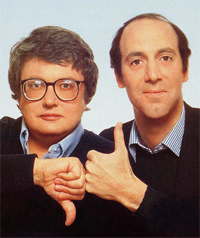
That also brings up the question of whether the moral content of a film should be included as part of its review. In today’s political climate, a siskel-and-ebertracist film would almost certainly be trashed, as it should be. Yet misogynistic films and TV shows seem to be proliferating without much resistance. One could legitimately say that the moral judgment of a story is dependent on the morality of the reviewer. But doesn’t the reviewer’s bias come into play in any review? If every reviewer agreed on every movie, we could eliminate personal prejudices as a factor. But then we would never have had Siskel and Ebert arguing about the direction of thumbs. What fun would that be?

So then, of what value are critics’ opinions? Probably none at all, except in those rare cases where all the critics seem to agree. But even then, if I’d listened to that unanimity, I’d have missed out on some films I consider terrific. (Call me weird.) Worse are the films I’ve seen because the cognoscenti decreed them great and they’ve left me feeling like I needed a good scrubbing afterward.

Unless you have a particular reviewer whose opinions always align with yours – Ebert was one who came closest for me – you’re pretty much on your own.

Like me, be your own best critic.

Life is long… and short

Is it possible for two seemingly opposite statements to both be true? On the face of it, the answer would be no, but not so fast. We deal with such incongruities all the time.

Absence makes the heart grow fonder. There’s plenty of anecdotal evidence supporting that as a true statement. Yet, we’ve all experienced the veracity of “out of sight, out of mind.”

Christian theology is filled with such contradictions. God is one but God is three. We have free will, but God is sovereign and predetermines our eternal fates.

When it comes to one particular adage, I can’t disagree with one of my favorite characters from another of my favorite under-appreciated movies: Lamarr from “That Thing You Do” says:

"Slow down, young squire. Life is long."
“Hey, hey, hey! Slow down there, young squire. Life is long.”

Lots of folks say life is fleeting and you have to squeeze as much into every moment as possible. But if Lamarr says life is long, who am I to disagree? He’s one of my heroes and he’s never steered me wrong. Think about the last time you were in the dentist chair. Did life go by fast? Or when you’re waiting for the results of a job application or medical test? Or for the writers out there, how about when you’re waiting for a response to a query letter?

In those cases, and in many others, life is indeed looooooooooooooooooong.

At the same time, life is way too short. If you have kids, you know exactly what I’m talking about. One day, they’re potty-training, seemingly the next, they’re finishing a doctoral thesis on string theory (or string cheese; I can never tell the difference). Life couldn’t go any faster than that.

I’m not the first and I won’t be the last to declare how life speeds up as you age. The more years behind you, the shorter the ones ahead. A classic example: When I was in school, summer lasted forever. Those two months, after all, were a significant percentage of my life. Now they represent a miniscule fraction of the whole and the season’s gone before I’ve had time to make vacation plans.

None of this is new; everyone pays lip service to it. But few behave any differently in the face of the increasing velocity of life. Ironically, Lamarr’s advice applies here as well, “Slow down, young squire.” Appreciate the fleeting moment. Get off the information superhighway.

Instead of giving more and creating more, we (myself included) bury ourselves, our gifts, and our talents in a jumble of iDevices, sports, lame TV and movies, innumerable tweets, and more added to the mess every day.

To once more quote the incomparable Lamarr, “Now where I come from, that just ain’t right.”

Special edition*: Grass roots

If you live anywhere in New England, you can’t help hearing about the Market Basket soap opera. In fact, you can’t help hearing about it no matter where you live. I’ve seen articles in Time and the Wall Street Journal, as well as newspapers as far away as New Zealand covering this tawdry debacle.

I’ll declare my sentiments up front. I’m a huge fan of the old MB. I shop there and have for the past thirty or so years. The DeMoulas family is clearly dysfunctional, but the ASD side of it (if you’ve been studying the cast of characters in your program) is delusional, stupid, and possibly even evil. (The distinction is subtle, one I plan to discuss in a future post.) The employees, the customers, and even local pols have made it clear by the proverbial overwhelming majority, that the current board of directors of the company needs to put the old CEO, ATD, back into power.

So what’s this all about? Money? Clearly not. MB is losing ten million dollars a day. That’s $10,000,000 US. Every day. Now I’ve lost money in my day. Quarters slip behind the couch cushions, dollars stick together, and that kind of thing. But $10,000,000? As forgetful as I am, I can’t even imagine that. (“Honey, have you seen my ten million bucks? I had it in my jacket pocket this morning.” This concept deserves its own post.)

newsiesThe more I hear about this grass roots movement of a bunch of employees, the more I think of what I consider the single most underrated movie of all time, “Newsies”. The critics trashed the movie mercilessly when it was released 22 years ago, but I’ve never met a viewer who didn’t like it. I’m among them. To remind myself of how terrific the movie is, and to capture the parallels with the MB fiasco, I watched it again tonight.

It’s still great.

The songs will bounce around my head for at least a week, so catchy are they. The live musical version of the movie went on to win 2012 Tony Awards® for Best Score and Best Choreography. So I guess it’s not just me. This is a case where the self-proclaimed “experts” are simply wrong.

The connection to MB is best summarized in the following (slightly abridged) exchange between two of the striking newsies (kids who sell papers on the street) and Joseph Pulitzer, publisher of the NY World.

PULITZER: Anyone who doesn’t act in their own self interest is a fool.

DAVID: Then what does that make you?

PULITZER: What?

DAVID: You talk about self interest, but since the strike, your circulation’s been down 70%. Every day you’re losing thousands of dollars just to beat us out of one lousy tenth of a cent. Why?

JACK: You see, it ain’t about the money, Dave. If Joe gives in to nobodies like us, it means we got the power. And he can’t do that, no matter what it costs. Am I right, Joe?

If the current Board of Directors (who, to replace ATD, appointed co-CEO’s – now there’s a formula for success – one of whom was named one of the five worst CEO’s in 2012) cared about money, they’d give in to the employee’s demands yesterday. But that’s not what the fight is about. It’s about bitterness, power, revenge, hatred, and all sorts of other petty nonsense. Are these really adults?

Give me back my Market Basket!

*This is five days before my next scheduled post, but I couldn’t resist. The whole situation could change any minute.

Why Should I Care?

I’ve been told by more than one person that I have a song for everything. That is, for almost any situation, I can recall some obscure song lyric that captures that situation’s essence, or enhances the experience thereof. There’s probably at least one song that applies to any occasion. I just seem to know more than my fair share.

quadThus, when I was thinking about a title for this post, it shouldn’t surprise you that I settled on song lyrics. In fact, the lyrics of two songs from “Quadrophenia“, the classic album by The Who, came to mind. In two different songs from that outstanding concept album, there are lines that ask, “Why should I care?”

I’ve been asking myself that question lately regarding my reaction to fictional characters. As I alluded to in my previous post about “Peace Like a River”, some books have characters that are so real, so sympathetic, so readily identifiable, I simply buy into them as real people and I care about what happens to them. Further, I want to know what happens to them once the story (movie, book, play, short story, whatever) ends.

Why?

The short answer is that I have no idea. I would like to know, however, because those are the kinds of characters I want to write. A story populated with those kinds of characters is easier to write. They have a will of their own. They move the writer along rather that the other way around.

A collection of flat, one-dimensional characters have no place to go and no reason to go there. They have no motivation, no purpose for being. Who cares what they do? They’re deadly dull. They are dead. Who wants to read or write about them?

We could learn a lot by thinking about ourselves in those terms. If we have no depth, no purpose, no absolute motivator, we’re going to lead a pretty dull existence, more than likely swamped by our own self-interest.

Recently, someone who performed a test-read of my first (and, so far, only) novel said she couldn’t stop thinking about the protagonist, a young woman in Haiti. That’s about as high praise as I could want and more than I expect, yet I feel the same way about her and the rest of the characters.

Having rewritten the book in part or whole several times, I’ve probably read it a dozen or more times. Maybe it’s my familiarity with the characters, but I’ve come to (in some weird way) love and care for them. I’m so pathetic in fact, that I cry every time I read certain poignant passages.

It happens all over the place with me. In movies, for example:

  • I’d love to follow the relationship of Sam and Annie (and Jonah) after they finally meet at the top of the Empire State Building in “Sleepless in Seattle”. Will they be married? Where will they eventually live, Seattle or Baltimore? Will Becky,  Greg, and Suzy all hang out together? Sadly, Nora Ephron is gone so I’ll never know.
  • I want to watch as George and Nina Banks raise little Megan. (“Father of the Bride 2”)
  • Is there any hope of redemption for Harry Caul after trashing his apartment in “The Conversation”?
  • Where does that long road lead for the tramp and the gamin at the end of “Modern Times”?

And those are just movies. What of books like “The Rosie Project”, “Winter’s Tale”, “Gilead”, “Claire of the Sea Light”, and, of course, “Peace Like a River”?

(This phenomenon appears to be a “chick thing”. If you Google “fictional characters”, you’ll see what I mean. I’ll have to live with that, I guess.)

This is why I love movies with “follow-up” info before the credits roll. I get to find out what happened to all those fascinating players in “Remember the Titans”. Those are real human beings, so there’s some excuse for me in that case.

Strangely, it doesn’t matter if the characters are the creation of some writer’s imagination. I still wanna know what happens to them. That’s why I’m relieved to see where the lives of the members of The Wonders (not the One-ders) lead them in Tom Hanks’ vastly under-appreciated “That Thing You Do”.

That extra information can make a funny movie even funnier and more memorable. The roller coaster relationship of Robert and Mary is just as nuts after the movie ends in Albert Brooks’s hysterical “Modern Romance”, another hidden gem and one of the funniest movies I’ve ever seen.

starsI’m not alone in my mania. This pointless passion is one of the key elements in John Green’s wonderful book, “The Fault in Our Stars”. Without Hazel and Gus’s quest for the next events in Van Houten’s “An Imperial Affliction”, the story is left incomplete. But then, they are fictional characters, too. And I want to know what happens to Hazel! How long does she live? What happens to Isaac? Argh!! Nested frustration! I want to know what happens to fictional characters who are trying to figure out what happens to fictional characters.

I really care about these quasi-people. I just don’t know why.

fictional

Maybe I should stick with non-fiction.