As I Wish

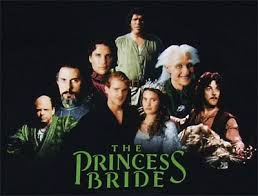
I just finished one of the most enjoyable reads I’ve had in a long time. It wasn’t just the book by itself, but the entire experience. It combined two of my great joys: books and film. This was a book about the making of a film from a book. The book and film are “The Princess Bride”.

pb2

“The Princess Bride” is among my favorite films. In fact, I consider it a perfect film. Every part of this movie is as good as it could possibly be. William Goldman’s original book is great, his screenplay brilliant, the cast impeccable, Rob Reiner’s direction inspired. It’s funny, exciting, romantic, poignant, and very, very smart. Reading about what went on behind all that merely added to the whole package.

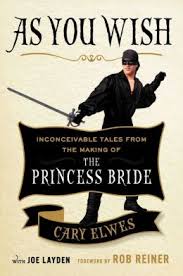
asyouwishCary Elwes, who exquisitely portrayed farm boy Westley, the Man in Black, and Dread Pirate Roberts wrote “As You Wish: Inconceivable Tales from the Making of the Princess Bride” – as unwieldy a title as your bound to find, yet appropriate for this tale. It’s a memoir of his experiences as a very young actor in his first starring role.

Although the movie is now (can it possibly be?) 27 years old, his recollections, like the movie itself, have the freshness of today. He captures the same innocence, excitement, and naiveté with which he approached the filming. It had all the immediacy and enthusiasm of a kid’s essay about hitting the winning home run in a little league game. But that little league game didn’t go on to become one of the most precious cultural icons in American history.

Clearly, making the movie was as much fun as watching it. I have to confess a bit of envy as I read. Those are the kinds of experiences anyone who loves film would love to be part of. In my own life, I’ve experienced the fun, camaraderie, and passion that goes into a dramatic presentation. It’s really quite unparalleled. I couldn’t even imagine what it must have been like to be involved in something as magical as “Bride”. At least, I couldn’t until I read Elwes’s wonderful book.

If you don’t like the movie – an “inconceivable” thought – I suppose the book won’t mean much to you either. Clearly, you don’t have a beating heart. If, however, you’re a fan of Fezzik, Vizzini, Miracle Max, Inigo Montoya, and all the rest, this is a must-read.

Anyone who tells you different is selling something.

This changes everything

Here’s a little news item you probably missed. This Congressional resolution, issued just today, will change all our futures. We knew it had to happen eventually.


113th CONGRESS

2nd Session

H.R. 99

Initiating updates of names and labels for humans, pets, and all organizations and establishments to reflect the era of technological ubiquity in which the nation finds itself.

IN THE HOUSE OF REPRESENTATIVES

October 22, 2014

Mr. BOEHNER (for himself and Mr. BROOKS) submitted the following resolution; which was referred to the Committee on Science, Space, and Technology


RESOLUTION

That all names and labels currently in use as of passage of this bill shall forthwith be changed to reflect the era of technological ubiquity in which the nation finds itself. Names and labels yet to be assigned shall adhere to the same set of new “futuristic” names, giving preference to words such as “space”, “jet”, “planet”, and other names of that futuristic ilk.

Whereas it has been several millennia since the Stone Age ended and since the previous name shift when sobriquets favoring words such as “rock” and “stone” were deprecated;

Whereas we recognize that today’s technology-dominated culture should impact naming processes at all levels;

Whereas we all expect soon to be traveling in flying automobiles powered by quiet, unobtrusive little circles;

Whereas living in saucer-shaped homes supported by single posts reaching beyond cloud level will soon be commonplace;

Whereas robotic technology already exists in nearly every product we consume from automobiles to toasters, soon to perform all our errands, household chores, work, and recreation;

Whereas archaic names such as “Smith” and “Wright” referring to anachronistic professions will engender tremendous confusion and wreak havoc on the education of our children whose knowledge extends no further into the past than the advent of the DVD;

Whereas even words such as “sprocket”, though hardly high-tech, promote an engineering bias in keeping with our culture of innovation and will be acceptable;

Whereas the future has arrived and we have little time to spare before it overwhelms us with its strangeness: Now, therefore, be it

Resolved, That the House of Representatives —

(1) shall enforce the renaming and relabeling of all existing entities whether living or inorganic through whatever means necessary, whether punitive or compensatory; and

(2) shall propose acceptable names for newly created entities, whether living or inorganic; and

(3) shall provide thorough guidelines for the new naming paradigm; and

(4) shall henceforth refuse to recognize names that do not meet the proposed criteria; and

(5) shall change the National Anthem to “Rocket Man”; and

(6) shall change even the name of our nation to “The United States of Astromerica”; and

(7) shall add an amendment to the Constitution, er, Cosmotution to further reinforce this critical need.

Cogressional update: Submitters henceforth to be known as Cogressmen Frederick LASER and Mo COMETS

jetsons

With your new space-name, you’ll be as happy as these folks.

Game Over

vidgamemovieI like movies but I don’t much care for video games. This isn’t an unfounded bias based on my age or a disconnect from current culture. (My video game experience goes back to the pre-Atari days). No, the reason is my preference for story.

Aristotle had it right, in my opinion. A story should have a beginning, a middle, and an end. That separates it from pageantry, which is a continuous display without a plot. Thus, I prefer plays to parades and Olympic competition to opening ceremonies.

This bias extends to my preference for baseball, which I see as a plot-driven competition (complete with 9 “chapters” with no clock) as opposed to basketball, soccer, and hockey, which are continuous action.

Today, the line between the movies and video games has become blurred, if not invisible. Movies are made based on video games. Screenwriters write for video games. Actors voice video games. It seems that, now, gamers are writing some of the movies.

This struck me when I recently watched the movie “Divergent”, a film made from a YA novel of the same name. Not surprisingly, it echoes many features of the wildly successful “Hunger Games” series: onion-skin-thin YA characters in a dystopian society trying to kill each other off. If you think the similarities in these logos is a coincidence, I have an Amway franchise you’d be interested in. (I’m not alone in this. SNL noticed the connection, too. Check it out.)

HGmovie

Seeing

Divergent

double?


I can’t speak for the book because I haven’t read it, but “Divergent” the movie was mind-numbing for me. As I watched, it felt like I was trapped in a video game. The protagonist, Tris (rhymes with Katniss from “Hunger Games”; get it?), has to survive multiple levels of challenges not a whole lot different than those faced by Mario Brothers. In case the obvious isn’t obvious enough, she even gets a score for each level. All middle, no beginning or end; not exactly Aristotelian.

There is a plot buried somewhere under all the mundane action, one-dimensional characters, and hackneyed relationships but it’s as trite as it is uninteresting.

And, guess what. Like a video game, it doesn’t end. The vapid protagonist and all her shallow cohorts simply set themselves up for the next level, er, sequel. Oh joy.

From all appearances, a movie in a similar (i.e. exactly the same) vein is “The Maze Runner”. This flick dispenses with any pretense. The name is a game and the plot appears to be trying to play a game.

This one is also based on a book. The usual suspects: YA, dystopian, trilogy (i.e. built-in franchise).  Once more, I have to confess that I haven’t read this book. It could be a YA classic that will make us all forget “The Chocolate War”, “A Catcher in the Rye”, and “The Giver”.

I’m betting not.

This class of pulp seems to be churned out at a factory somewhere and judged not on their ability to challenge or inspire, but on their potential for selling cookie cutter movie franchises and tangential tchotchkes to gullible adolescents.

Mario would be all over them.

mario

Start at the beginning…

harehatterSpeaking of movie trends that annoy me (which I was, though you’d have no way of knowing since you aren’t here listening to me rant) in recent years, a lot of films have messed around with the order of things. They obviously haven’t listened to the sage advice of the March Hare and Mad Hatter in Disney’s version of Alice in Wonderland,

Mad Hatter: Something seems to be troubling you. Won’t you tell us all about it?

March Hare: Start at the beginning!

Mad Hatter: Yes, yes….and when you come to the end…..STOP!

It seems that once “Pulp Fiction” came along, the whole space-time continuum was thrown to the wind with scenes falling wherever they landed. The value of that gimmick can be debated in PF, but it doesn’t always work. (Opinion: It does more than work in “Memento”; it’s crucial and brilliant.)

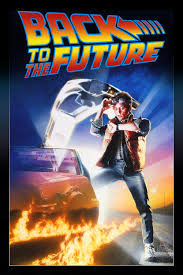
bttfThe only places where messing around with time is always excusable are time-travel movies: the “Back to the Future” trilogy, “Déjà Vu”, “Terminator” movies, and all the rest, some good and some (and I’m thinking here of “Somewhere in Time”) excruciatingly bad. The only truly meaningful time-travel movie is the one that treats the concept with the flippancy it deserves: “Bill and Ted’s Excellent Adventure”. (Good news: There will be a third B&T movie with them as adults… or as adult as they could possibly be, I’d guess.)

Less adventurous directors have decided they can hedge their bets by swapping just one scene: The end.

I can’t even count the number of films I’ve seen post-PF where the first scene is the end of the movie. This technique has been used effectively in great films such as “Sunset Boulevard” and “Citizen Kane”. None of the movies I’m thinking of are “Citizen Kane”.

Here are a few possible reasons directors use this cliché:

  1.  It was used in successful films such as “Sunset Boulevard” and “Citizen Kane”. Wrong answer.
  2. The last scene is usually a “grabber”. There’s no point grabbing the audience’s attention at the end of the movie. That could be too late. Grab’em right up front.
  3. You’re unsure whether the audience will stay awake until the end so you want make sure they see it ASAP. If that’s it, you got bigger potatoes to fry.
  4. No point waiting for critics to give away the “spoilers” when you can do it yourself.

That last one is the one that bugs me. Should these movies have a warning at the beginning the way some reviews do? Warning: This movie contains its own spoilers. They all want to be Lucy, the ultimate spoiler:rosebud

I’m waiting for this movie opening:

butler

I have the mixed blessing of a miserable memory. True story: My wife and I were watching a movie not too long ago. As it approached the denouement, I called out – as I am wont to do – what I thought would happen next. My more able spouse corrected me. “No, he gets shot. Don’t you remember they showed it at the beginning?”

sunsetboulIt wasn’t ruined for me, but it was for her and all the other non-brain-damaged folks who watched it. The “good” news is that the movie was a flop and pretty much no one saw it. So much for copying “Sunset Boulevard”.

As a public service, I’d like to list here all those movies with built-in spoilers… but I forget what they are.

Where did that come from?

3dogcyan

(This isn’t a post-day, but this hit me out of the blue.)

Just minutes ago, during a football game I was watching, a commercial came on for very large bank – you know, one of those that’s too big to fail. Serving as sonic backdrop to the inane activity in the ad was a 41-year-old pop song: “Shambala” by Three Dog Night.

Wow.

I already ranted about this phenomenon in a previous post on my other blog, so I won’t do it again, but each time one of those old songs pops me into the Wayback Machine, I’m amazed.

And grateful. 🙂

Kill the cat

(Don’t worry, cat-lovers. This isn’t the mad ravings of a felinocidal maniac. There are cat people in my family I’d have to answer to, including the one who trained his cat to turn on the lights.)

Have you ever had the feeling that something wasn’t right but you lacked the confidence to mention it to others because you thought it was just you? I had that sense about movies. They’re running together, each one hard to distinguish from another. The only differentiators are the kinds of superpowers the protagonist has, the planet (or dimension) the aliens are from, or the evil-empire-of-the-month whence arise the powers that are going to wipe out the free world as we know it.

It’s deja vu all over again. Same story, different characters. Is it just me?

As a screenwriter, I had a theory. There are dozens of different philosophies out there about structuring screen stories. As the brilliant screenwriter William Goldman (“Princess Bride”, “Butch Cassidy and the Sundance Kid”, etc.) succinctly puts it: “Screenplays are structure.” In his “Poetics”, Aristotle started it all with the simple three-act structure. Some version of that structure has since been applied to stories of all forms: books, plays, movies, fireside ghost tales, and everything in between.

savethecatIn the screenwriting world, there have been dozens, perhaps hundreds, of refinements suggested to that basic structure. I’ve studied many of them – McKee, Vogler, Truby, Field, Hunter, and more. They range from flexible to downright Draconian. The most rigid of all was laid out in a book called “Save the Cat”, by the late screenwriting guru, Blake Snyder. My theory was that too many modern screenwriters had bought his formula down to the last beat.

I was right. At least, I have some agreement out there.

prefabA couple of days ago, I stumbled on this article from Slate. The author confirms my worst suspicions and fears. (Unfortunately, because the article is over a year old, some of the links in it are dead-ends.) According to this article, in complete agreement with my personal experience (and probably yours), many modern movies are actually prefab creations, like 60’s tract houses. The STC philosophy breaks a film into 15 “beats” that must be hit. That’s one predetermined action that will occur every six minutes in a 90 minute movie. There isn’t a lot of flexibility there. You can read the article to get a better understanding and at the same time seal your cynicism.

For this reason, I’ve pretty much stopped viewing Hollywood blockbusters. They’re all as bankrupt as their namesake video chain. The funny thing is that I’m not missing anything. By seeking out smaller, character-driven films rather than tentpole behemoths that measure their budgets in the hundreds of millions, I’m seeing better films.

bynumbersAs someone trying to sell screenplays, it would behoove me to sell my creative soul and buy into this paint-by-numbers philosophy. While I agree that the structure of a screenplay is critical, I’d rather not write at all than churn out plug’n’play, cookie cutter, straight-off-the-assembly-line widgets that will be gone and forgotten in a month anyway. I might be cutting my own throat commercially, but I’ll retain as much of my dignity as any screenwriting hopeful can.

Ice cream murderer

That’s me. I’m an ice cream murderer. (Not to be confused with a cereal killer.) We’re not talking murder metaphorically, as in, “I just murdered a pint of Ben and Jerry’s.” No, I actually kill off products. Think: missing persons, but the person is an ice cream.

My MO is simply to become obsessed with a flavor or treat. As soon as I do, you can count on that item disappearing from the face of the earth. Think I’m kidding? Here’s the evidence against me, admissible in a court of frozen dairy law:

  1. kempsIC-MIAMy first victim was a flavor from Kemp’s called “Northern Exposure”. Really, really good. Mint ice cream (a particular favorite of mine in general) with dark chocolate chunks and a brittle ribbon of fudge undulating throughout the ice cream. That ribbon was what set this flavor apart from every other ice cream I’ve had.
    While Kemp’s is not always the purveyor of the finest ice creams, Northern Exposure was the real deal. Where is it now? Gone. I’ve checked every supermarket from hither to yon (more hither than yon, I admit) and it’s nowhere to be found. I even contacted Kemp’s corporate headquarters. They said it was out there and even pointed me at a few stores. They lied. It’s dead. I should know. I killed it.
  2. doveIC-RIPNext victim: Dove “Give in to Mint”. Another minty selection. The best mint-based IC I’ve ever had. Fabulous Dove dark chocolate chips throughout and a luscious (yes, I said luscious and I meant luscious) chocolate ganache coating the top of the ice cream. That topping alone was worth the price of the pint. Not satisfied with doing away with just this one flavor, the entire line of Dove ice creams, all made with the ganache topping, are gone, finito, vamoose, sayonara, hasta la vista, baby. I’m nothing if not thorough.
  3. "naked" (unchipped sides) Hoodwich

    “naked” (unchipped sides) Hoodwich

    Latest in a long line of late, lamented treats: the Hoodwich. You know what I’m talking about: Hood ice cream sandwiched between two chocolate chip cookies, rolled in a coating of mini-chocolate chips all around the side. These were a tradition for me to consume at a local minor league baseball park. Alas, the Hood Corporation responded to my pleas about where to find these delectables with the unfeeling statement, “We apologize but we no longer produce the novelty Hoodwich.” Little do they know that I’m responsible for their lack of production. They can’t produce them. They’re all dead!

Who will be next? I hesitate to eat ice cream now. I don’t want anyone to know about the peanut butter cup flavor at Ben and Bill’s. That will go down for sure. Dare I continue to eat the Moose Tracks at Sully’s? I’m surprised at the resilience of Ben & Jerry’s Chocolate Chip Cookie Dough, which I’ve feasted on ever since its introduction. Could it be invulnerable? Maybe it’s from Krypton.

Beware! I may start eating your favorite ice cream next!

Remember the future

obsoleteNo one needs to be reminded of the transitory nature of this life. Today is a memory before we have a chance to make sense of it. Those times we breathlessly look forward to become vague memories while they are still echoing in our minds.

I’ve written on this topic before, which gives you some idea of how close to my heart it is. The speed at which the highly anticipated future becomes the distant path can be downright frightening. How desperately we want to hold onto those moments in a more tangible form than an elusive and fleeting memory.

Even the title of this blog, “Scribbling in the Sand” speaks to the futility of trying to extend ourselves beyond ourselves. Those scribbles are washed away with the next tide, in whatever form its breakers take.

Look no further than the mundane articles of our daily lives to demonstrate this concept in the most concrete manner possible. Every day, some of our most wonderful innovations are relegated to the scrap heap of history (which is shipped to China to be recycled into future scrap heap candidates).

Here is just a tiny percentage of those once-precious items that have disappeared in my years:

  • Slide rules – Remember those? They were indispensable before they were obsoleted by calculators. Oops! Remember those?
  • Encyclopedias – Not the democratic virtual kind. I’m talking about the honkin’ multi-volume, sold-door-to-door beasts that still sit in the basements of people who can’t imagine tossing such storehouses of knowledge, regardless of how useless and outdated they might be.
  • Dial and corded phones – First we had the hefty black monstrosities that could double as weapons that – in many a noir film – would be used to knock the bad guy into the middle of next week. Can you imagine doing that with your iPhone? Goodbye “Princess” phone, knots in the cord, “Dial M for Murder”, and yanking phones off tables as we reached for a pen to write down the number of the person calling. (Another unnecessary action due to caller ID.)
  • Station wagons – Before the minivan and the (God help us) SUV, extended families cruised the country in comfort in these beauties.
  • Phone booths – What’s a Superman to do? The empty chrysalises of countless phones now unbound can be seen across the land.
  • Civility in public discourse – This is a whole ‘nother story. Let’s hope it isn’t a permanent scrap heap dweller, though I harbor little hope for that in my lifetime.

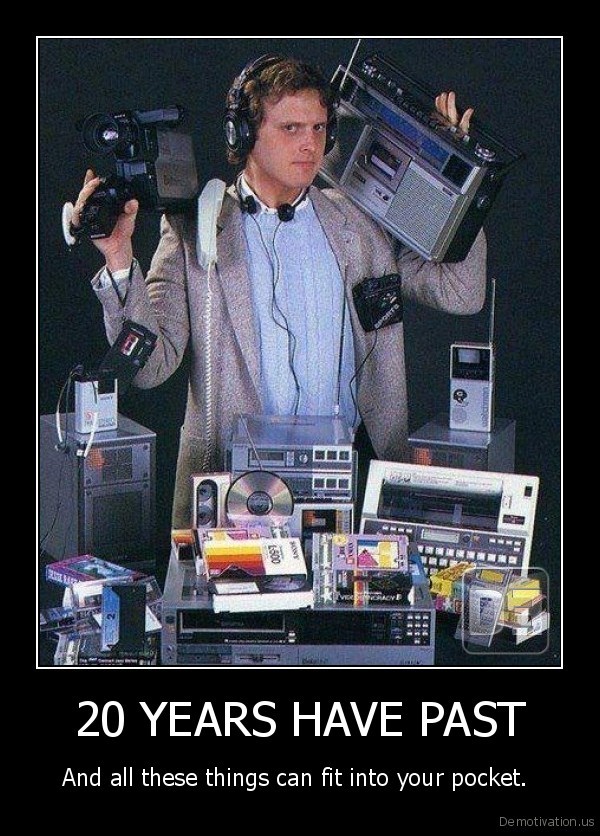
pocketNo small amount of technology has come and gone over the same period: acoustic modems (I’m old enough to remember when 9600 baud was screamin’ fast), 8-tracks, cassettes, and videotapes all had their brief flicker of utility. In fact, all “tape” is gone – except that of the duct, masking, and Scotch varieties – but the name lives on as we talk about taping TV shows, with no tape is involved.

A few things out there are barely hanging on or have been relegated to the role of novelty. Vinyl records refuse to give up, but they’re only a niche. Virtually all media except various forms of computer memory (increasingly of the solid-state species, though all bets are off if “the cloud” has its way) have no real raison d’etre anymore.

The same can be said of watches, books, newspapers, and writing in cursive. A day may come when the only people who see such relics do so as they scratch their heads walking by museum exhibits.

drive-inAlthough most of them have become land for low income housing, strip malls, and office parks, here’s hoping that a remnant of drive-ins survive into the future. They’d be missed at least as much as any extinct species.

In the “we hardly knew ye” category, you’ll find flash-in-the-pan technologies such as laser discs, Betamax, HD-DVD, and PDA’s.

It’s hard to say goodbye to some things. The GPS, itself now a dispensable technology in its standalone form, eliminated the need to give directions. I say “need” not so much for the recipient of those directions as for the giver. We all know folks who live to provide detailed directions of the best possible route(s) to our destination. When I recognize that craving, I generally allow the speaker the opportunity to give vent to his passion. Then I return to Google Maps or a GPS and find the best route for myself. No endless discussion of the best shortcut, most scenic route, or least traffic.

While I don’t miss LP’s so much, I do mourn the loss of album packaging. Some of that album art was suitable for mounting and hanging on your wall. (I have just two words for you: Roger Dean.) A few releases contained enough junk to overflow a fan’s scrapbook, e.g. The Who, “Live at Leeds” or “Chicago at Carnegie Hall”. Sure they were extravagant and pompous, but so was the music and we loved it.

CD’s never offered such wit and variety. And downloads? Fuhgeddaboudit.

I don’t wish to live in the past, but it would be nice if some of the past still lived here.

[By the way, if you’re paying attention, you’ll notice that the smartphone (beginning with the iPhone) is the perpetrator of many in these untimely demises. Not that it’s wrong, just saying is all.]

Bad movies of good stories

inspired by actual eventsRecently I watched what looked, from descriptions I’d read, like an interesting movie. It was a fabricated story “inspired by actual events”, as opposed to “based on a true story” or “inspired by a true story” or “based on actual events.”

According to the blurb on the DVD cover, the film was “Astonishing.” As it turns out, the only thing about the movie I found astonishing was that it got made at all. Surprisingly, the “actual events” that inspired the story were more horrific than the ones actually portrayed in the movie. More often than not, the opposite is true. Otherwise tepid events are typically sensationalized to titillate potential viewers. That should give you an idea of how grim these particular “actual events” were.

There are a number of questions and concerns that films like this raise in my mind:

First, when is a true story not a true story? Is it fair to sell fiction as fact? The Academy Award winning best picture of 2012, “Argo”, brought this question to the fore. It was publicized as, “Based on the declassified true story”, but it was more fiction than history. How discerning is the average moviegoer? From my perspective, not very. Therefore, in a very real way, we’re rewriting history.

Then, is it fair to review a movie’s content versus its quality? I’ve seen plenty of weak movies that tell amazing stories ripped from headlines or history books. Great story, mostly because it was great in real life. The movie, not so much. Still, these are worth watching. One good example was a biopic (probably heavily fictionalized) about Cesar Chavez, a man whose story should be more widely known. The film was marginal, but it was important to see because I regularly need to be inspired by great – and real – men.

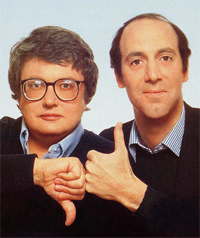
That also brings up the question of whether the moral content of a film should be included as part of its review. In today’s political climate, a siskel-and-ebertracist film would almost certainly be trashed, as it should be. Yet misogynistic films and TV shows seem to be proliferating without much resistance. One could legitimately say that the moral judgment of a story is dependent on the morality of the reviewer. But doesn’t the reviewer’s bias come into play in any review? If every reviewer agreed on every movie, we could eliminate personal prejudices as a factor. But then we would never have had Siskel and Ebert arguing about the direction of thumbs. What fun would that be?

So then, of what value are critics’ opinions? Probably none at all, except in those rare cases where all the critics seem to agree. But even then, if I’d listened to that unanimity, I’d have missed out on some films I consider terrific. (Call me weird.) Worse are the films I’ve seen because the cognoscenti decreed them great and they’ve left me feeling like I needed a good scrubbing afterward.

Unless you have a particular reviewer whose opinions always align with yours – Ebert was one who came closest for me – you’re pretty much on your own.

Like me, be your own best critic.

What’s *your* story?

storyI love Jesus. Not just because He loves me and died for me, although that’s pretty cool and would be enough. I also love the fact that He’s a master storyteller. When people ask Him profound theological questions, He usually tells a story. It’s almost as if He’s trying to evade the question. Rather, I think, He’s getting to the heart of it.

Ask a theologian to tell you what the Kingdom of God is and you’re bound to get a tedious multi-volume treatise on the ins and outs of Jewish culture, a summary of a couple millennia of church history, and a detailed exegesis of Greek New Testament passages. Ask Jesus and you get a story about one of the following:

  • Some sad old woman who spends the whole night looking for her spare change in the sofa.
  • A farmer who’s having mixed success with his crops.
  • A sleazy middle manager who makes good by cheating his old boss.

legoparableThe parables (fancy theological word for stories) of the Prodigal Son and the Good Samaritan are more than tales that have become part of the nerve fiber of our culture. They’re great stories.

Why does He tell stories? Because people listen to stories. Sermons? Not so much. Even those of us who listen to sermons don’t always listen. If you know someone who’s heard a sermon recently, ask her what it was about. You’re more likely to hear about the joke the preacher told or the simple family anecdote that illustrated a forgotten moral lesson.

We’re wired to listen to stories. No matter what the era or the dominant philosophy thereof, people love and crave stories. They used to be told around campfires and now they’re seen on a phone or in a cineplex. No difference. It’s the story, the people, the ups and downs of fortune, the clawing after the goal, the battle of good vs. evil, the boy-meets-girl, the life-and-death struggle.

cleaversOne reason I believe stories resonate so well with us all is that we somehow, without even thinking about it, realize we’re in our own story. You might not be a writer, but you’re writing your life story. You’re the lead, the hero. That doesn’t mean you have to be Indiana Jones or Aragorn. It might be enough to be June or Ward Cleaver.

Most of our stories are pretty boring. They’d make lousy movies. Hitchcock was quoted as saying, “Movies are real life with the boring parts cut out.” By that criteria, most lives would make brief movies indeed, more like music videos or even commercials.

It doesn’t have to be that way.

What if your life was interesting enough to be made into a miniseries? Or a sitcom that runs 20 (or more) seasons? What’s to stop it? You’re the writer. You might have no pen, pencil, laptop, or vintage Underwood, but every day you’re writing the story of your life with your words, your loves, your priorities. Some day this volume of that story will end. (Lord willing, there will be a sequel.) Meanwhile, make it interesting, something worth telling. Something people want to hear.

Including you.