Coming soon!

My first novel is on the verge of being self-published. Sorry. That’s a misleading statement. The book isn’t publishing itself. My self is publishing it.

The good news is, it’s absurdly easy to publish one’s own book today.

The bad news is, it’s absurdly easy to publish one’s own book today.

Thus, my book will be out there soon, fighting for attention amidst an overwhelming onslaught of similarly hopeful creations by similarly hopeful creators. My hope is that its quality rises above that of the average tome available. But who am I to judge?

I’ve already given a teaser in a previous post. Since then I’ve finished the book, changed the title (twice), and had a terrific designer create some fantastic cover art.  Come back in a month or so and I’ll shamelessly and relentlessly plug it.

One agent told me that it’s a hard sell because it’s about Haiti and no one is interested in reading about Haiti. I hope that’s not true for many reasons, not just because it means no one will buy my book. More importantly, it saddens me to think that people might no longer have any concern for that sad and beautiful nation.

Six years ago this week Haiti was all anyone was talking about. This past Tuesday (January 12) marks the sixth anniversary of the horrific earthquake that killed tens of thousands of people, injured countless more – no one will ever know exactly how many of each – and put millions out of their homes.

Now, they tell me, no one cares.

I hope you do.

Look closely

Whenever the subject of book tours is brought up in the company of writers, they all talk about how much they dread them. The travel, the repetitive questions, the crowds or the absence of them. I can’t imagine why they don’t enjoy the experience. If I had a book tour, believe me, I’d make the most of it. Easy to say since the prospect is slim for me. I can always dream.

If it’s any consolation to those jaded scribes, I enjoy hearing author presentations of any kind. The standard format is to have the authors read excerpts from their work then endure a line of dozens, perhaps hundreds, of autograph hounds. Serious RSI potential.

One of my favorite writers, Mark Helprin, did the signing thing but declined to read from his book, claiming that there were only a few great actors in the world and there was no way he could do his prose justice with his weak performance skills. There’s a lot of truth in what he said. What’s the point in hearing him read his own stuff anyway? Usually, I’ve already read it. If I’m there, I’m probably a fan so he doesn’t have to sell me on the book.

Instead of reading, Helprin described fascinating, often bizarre experiences he’d had. Not surprising, since his books are filled with such occurrences. He concluded his talk by urging his readers to follow his example by keeping our eyes open to the amazing things that happen around us all the time. (That’s heavily paraphrased. My addled memory can’t recall his exact words and my comparatively pathetic prose can’t come anywhere near his lofty standard.)

In the spirit of his admonition, and my unwillingness to devote too much time to this post in the face of deadlines and exhaustion, I present some photos of things I’ve observed in recent months. Since each is worth 1,000 words, this could be my longest post of all.

Enjoy, but then go out and have your own experiences.


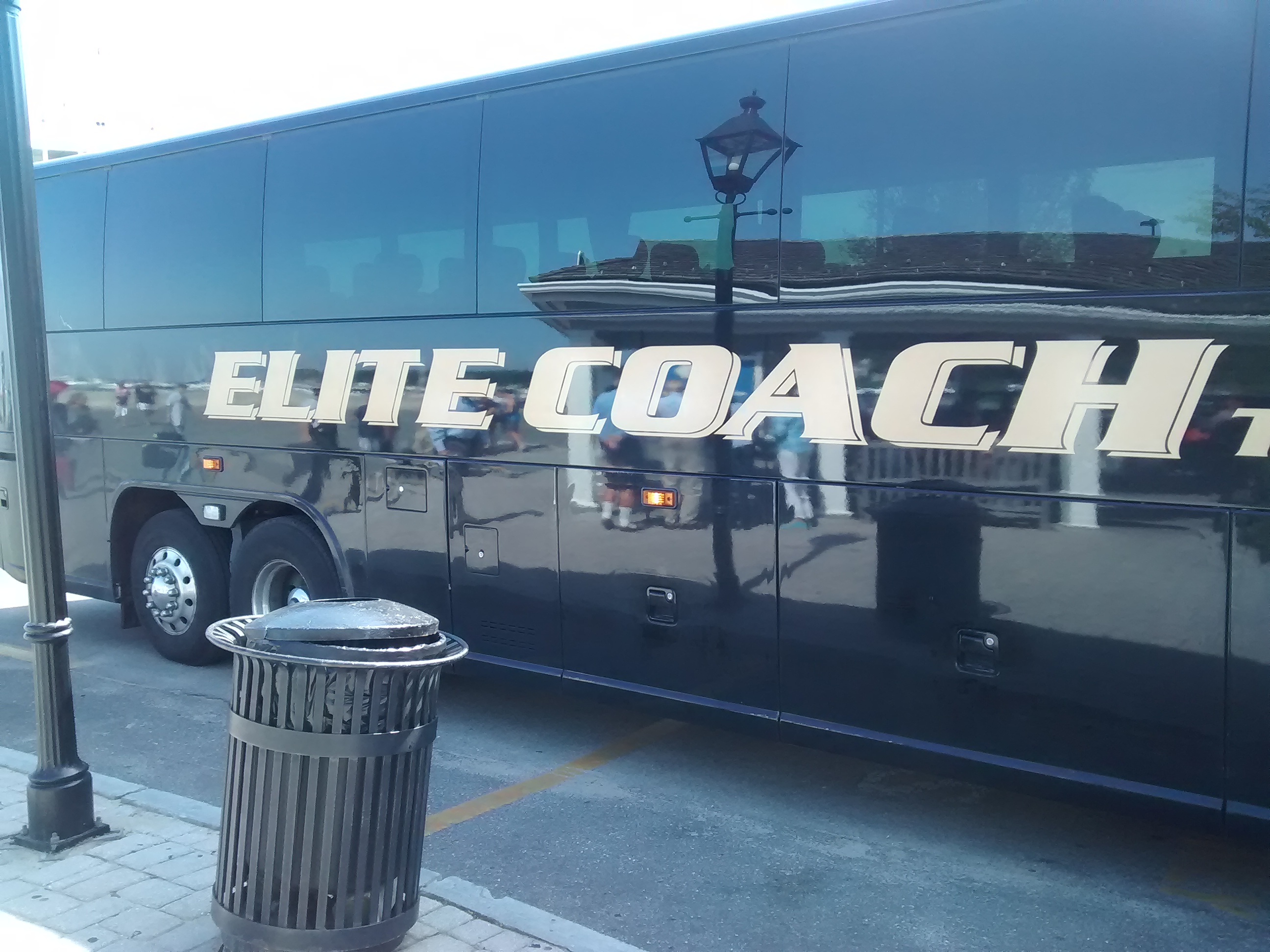
I saw these two buses drive off a ferry recently. Which one would you prefer to ride, “Elite” or “Lamers”?

IMG_20150917_112917463_HDR IMG_20150917_113050820


This is what’s called a “no-brainer”. Who’s the marketing wizard who came up with “Lamers” for a name? It’s almost certainly a person’s name – a person who put his (or her) ego before the company’s best interests.

This guy was giving away ice cream in downtown Boston. I love this town!

This guy was giving away ice cream in downtown Boston. I love this town!

A visitor on the bike path. Is it any wonder I spend as much time on it as possible?

A visitor on the bike path. Is it any wonder I spend as much time there as possible?

What's cooler than the front porch of a general store?

What’s cooler than hanging out on the front porch of a general store? Especially Alley’s. (Martha’s Vineyard)

There’s something inspiring about these two trees seeming to grow out of nothing but rock. (Acadia National Park)


Take one, leave one

Please permit me this brief observation to accommodate a busy schedule…

T1L1

It should come as no surprise to anyone that the literary crowd is a pretty civilized group as a whole. A primary piece of evidence supporting this conclusion is the existence of “take one, leave one” bookshelves. These things are everywhere, in hotels, doctor’s offices, and coffee shops, among other locales. Some are even out in the open air, accessible to all!

(While researching this piece, I stumbled upon an organization that promotes these installations. Little Free Library gives everyone a chance to create their own T1L1 system. The photo above depicts one of many sites they’ve inspired.)

Free books on the honor system. What a concept. I’ve never heard of anyone taking unfair advantage of this largesse. People really do most often leave one when they take one. At worst, they return the one they take. At best, they return more than one. How cool is that?

Of course, the aforementioned “mini-libraries” owe their existence to that bastion of American socialism, the free library system. They are a testament to the honesty and goodwill of the reading public. Anyone with a little card (no, not an Amex) can borrow books (and more recently, music, videos, and select other materials) at no cost, the only condition being that they be returned in approximately the same condition in which they started.

Can you imagine any other product being offered thus? There’s no shortage of stuff people want and could use on a temporary basis. Why isn’t there a clothing library? There are times (such as weddings and funerals) when borrowing a nice suit would be helpful. Sporting goods? How often do you need those skis? Why not borrow them on an as-needed basis from the sports library?

People will argue that literacy is such a fundamental need that free books are more than a luxury. They’re a necessity to the populace of a democratic nation. Well, couldn’t I say the same about fitness? Isn’t a healthy public important? Then where are those sports libraries when I want a set of golf clubs for a quick nine? Or why not clothes? Isn’t a clothed community better than a naked one? (Have you looked around lately? There’s an overabundance of flesh and a severe dearth of clothing. And not in a good way.)

Free vehicles, tools, art work, and furniture would all be in great demand on a temporary basis. But that will never happen, and it’s just as well. Even by suggesting such gibberish, I run the risk of some uber-capitalist overreacting and declaring libraries as inappropriate in our free market system.

Even if that were to happen, an underground (yet above ground) T1L1 movement would thrive. Readers by their very nature want to share the joy of reading. Take it from me… and leave one.

Memories of memoirs

For no discernible reason, seven of the last fourteen books I’ve read have been memoirs.  This wasn’t planned. Some were chosen during a flash of inspiration, others coincidentally rose to the top of stack around the same time after many months in waiting. I’m not even necessarily a big fan of memoirs.

Four of the seven books were by people who are renowned in some area of the arts in which I take a special interest: three were writers and one was a performer.

A number of similarities arose in these books.

  • Each attributed much of their success to luck, yet had no problem taking credit for it just the same. (In his book, “Outliers”, Malcom Gladwell documents many such cases of success coming by being in the right place at the right time through pure serendipity, if you believe in that kind of thing.)
  • Each wrote with a significant sense of entitlement, as if they simply got what they deserved.
  • There was a uniformly distinct lack of humility in tone, even some amount of condescension.
  • None of them had any problem dismissing and rationalizing their personal failings, of which there were many.
  • Without exception, they all went out of their way to disparage religious belief. I wonder what prompts people to be evangelistic about their lack of belief but condemn those who proselytize a genuine faith?
  • All at times sounded like spoiled children who whined when things didn’t go their way or when something was missing from their privileged lives.

Regarding that last point, it amazes me that the more we have (and these folks have lots) the more we take it for granted. It’s not just the Rich and Famous. After all, by the world’s standards, I’m obscenely wealthy. From my observations in the time I’ve spent in Haiti, people there are more thankful for the little they have than we are for our abundance. And they readily acknowledge God as the source of their few blessings. Gratitude and faith are among the first victims of the pandemic of Affluenza.

I don’t criticize out of spite or envy. I’m just making observations. The four books are the works of brilliant minds, people whose work I have tremendous respect for. Perhaps these kinds of personality traits are helpful in reaching heights of fame and/or creativity.

Every one of us exhibits some or all of these tendencies at one time or another.

We just don’t publish them for the world to see.


[In the interest of fair and balanced reporting, I should note that a memoir I read last year, “As you wish – Inconceivable Tales from the Making of The Princess Bride” by Cary Elwes showed very little of these characteristics. It was terrific, as I reported in a previous post.]

Born to be broken

IMG_20150330_200252587The old adage says rules are meant to be broken. There’s no shortage of “rules” for writing. Those commandments are intended to aid in the writing process. They might be helpful if only they weren’t moving targets. I’ve written before about the difficulty of writing. Trying to remain upright on the shifting sands of unstable standards doesn’t make it any easier.

Go ahead. Try to get a group of authors to agree on the tenets that are most useful to guide the writing process. You’re likely to get a protracted religious argument for your trouble.

Here are a few of the most well-known non-negotiables that are constantly being negotiated:

  • Write every day.
  • Write what you know.
  • The road to hell is paved with adverbs.
  • Use sparse language, i.e. “less is more”.
  • To write well, you must read a lot.

For every writer who subscribes to one of these statutes, there’s probably one or more who eschew it. For example, I was at a book reading by a highly regarded, best-selling author who, when asked what other authors he read, claimed not to read other authors in order to avoid being unduly influenced by them. So much for reading to become a good writer.

With all due respect to adverb-phobic Stephen King, who deserves a great deal of respect indeed, I don’t have any problem with adverbs as a reader. In fact, I kinda like them. So why avoid them? If you’re writing a book for Mr. King, I guess. But why leave any tool in the toolbox unused? They’re there for a reason.

Fundamentalism is generally condemned in other spheres, but it’s alive and well in the writing world.

And the “write what you know” dictum would be better expressed as “write what you care about.” You can always gain knowledge about a topic. It’s no easy task to develop enough passion to write well about something about which you are otherwise indifferent.

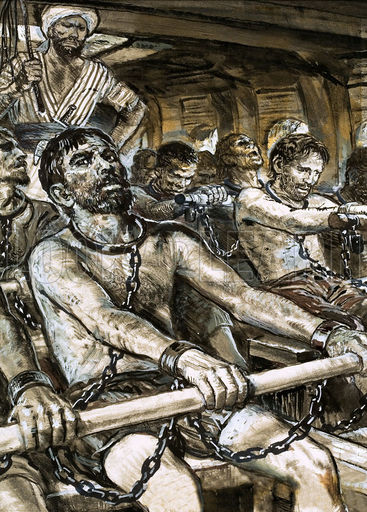
John Fox, manacled hand and foot by his pirate captorsIf you’ve read enough about writers writing, you’ve undoubtedly come across the ones who claim they don’t know where their characters are going to take the story. Those lifeless entities are independent actors with wills of their own. I guess that’s possible, but is it mandated somewhere? Some would have you believe that it is or that at least it’s a hallmark of a higher level of fiction. I don’t think so. No less an authority than Vladimir Nabokov says he has no use for that tactic when he says, “My characters are galley slaves.” No surprises for Mr. Nabokov, thank you.

This confusion first confronted me when I was trying to master screenwriting. The rules to screenwriting are many, absolute, and quite specific. The only problem is, accomplished screenwriters break them as a matter of course. One decree beyond discussion is: Don’t describe what can’t be shown on the screen. For example, a script can’t say in its descriptive text, “Joe was nervous about the interview.” Fine. At a lecture at the Austin Film Festival (the screenwriter’s Mecca), a man who is arguably the most successful screenwriter of this generation, told all of us rapt listeners that he does it all the time.

AFF produced a nice little book of excerpts from various talks given at the festival over the years. “On Story” has lots of advice for writing the next great movie. Unfortunately, much of the advice is conflicting.

This is one of the reasons I question a prime directive of screenwriting education: Read scripts. A problem with that advice is that screenwriters don’t follow “the rules” we’re supposed to learn, so we’re likely to learn the wrong way. Also, most scripts we have access to are “shooting scripts” filled with camera angles and other technical directions that don’t belong in submitted scripts.

What’s a struggling writer to do? Obey the rules (“Do as I say, don’t do as I do.”) until you break in. Then you can do anything you want. Another way of saying it is, “Write something great and you have permission to write whatever you want.” I think of it as learning a secret handshake. Based on what I’ve seen and read, once you’re in the club, the rules no longer apply.

Fair enough. If I want to play their game, I’ll do my best to play by their rules.

Mr. Burdick’s Burden

Hello, my name is Rick C and I’m a bookaholic.

It’s true. There is always at least one book I’m making my way through, sometimes a few at a time. My backlog of to-be-read books is out of control. I’ll read pretty much any genre, but there’s one I miss terribly. Children’s picture books are among my favorite reading matter.

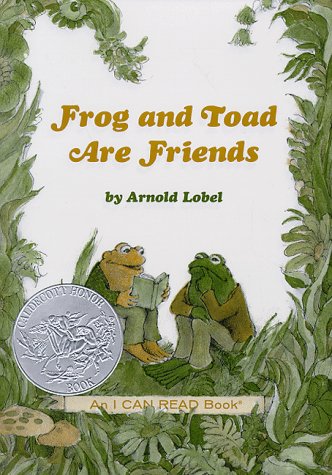
FrogToadArnold Lobel, Don and Audrey Wood, Rosemary Wells, Peter Spier, James Stevenson, as well as old reliables like Dr. Seuss and Maurice Sendak. They’re my Tolstoy, Hemingway, and Faulkner. I miss having little children around to read to and it runs contrary to the societal norm for a man to read “Frog and Toad Are Friends” in public. Not that I haven’t done it anyway.

burdickNo list of children’s author/illustrators would be complete without the remarkable Chris van Allsburg, best known for his “The Polar Express”, as well as other great books that were made into mediocre movies. One of his books was an enigmatic masterpiece called, “The Mysteries of Harris Burdick”. Each page of the book consists of a magical (and sometimes downright creepy) illustration. On each facing page was written a single line from the book from which the picture was supposedly drawn (pun intended).

According to the book’s introduction, the collection of drawings and accompanying texts were dropped off at a publisher by a mysterious author named Harris Burdick, who never returned to pick them up.

All that verbiage was simply to lead up to an idea I’ve come up with for some blog posts. Since the extent of my backlog of writing ideas outstrips even that of my reading list, what better model to follow than Mr. Burdick’s? I can’t draw to save my life – hope to God I never have to – so I’ll write short snippets from stories that don’t exist, that I have ideas for but have no hope of ever pursuing. Consider them writing prompts on steroids. Maybe they are.

Confused as much as distressed, he watched the ship disappear beneath the waves, foam and oil bubbling to the surface, marking its interment. No one could possibly have survived the explosion that ended the vessel’s journey long before it reached its destination.

He still clung to the life preserver he’d carried with him when he leapt into the water just moments before the blast. The old man he’d dived in to save had certainly looked like he might drown out here, miles from any known shore. The prospect of playing the hero in front of the crowd of onlookers standing on the deck, some of whom were attractive young women, had triggered a shot of adrenaline that made him perform an act that was as uncharacteristic of him as the peaceful, beckoning look was on the face of the old man.

Now the ship was gone, the sea slowly settling from turbulent to placid. What had happened to that man?

YABD

Yet Another Brain Dump.

Since I don’t have much time to write this week and since I did an extra post last week and since I haven’t popped the idea stack for more than three months, I’m going to do it now. Here’s another brain dump of thoughts that have piled up lately. Nothing life-changing or earth-shaking. Maybe Head-shaking, though.

Here’s a little news item you might have missed:

The [Boston Red Sox] officially released minor league lefthander Cody Kukuk, who was arrested in November on a robbery charge in his native Kansas. Kukuk was given an $800,000 bonus after being selected in the seventh round of the 2011 draft.

The kid got an 800K signing bonus and was on his way to a big league career and he commits robbery. Huh? Reminds me of the even more amazing story a couple years ago, involving a football player making half a million bucks a year who was arrested for shoplifting a cologne sample and two pair of underwear worth a total of $123.50.

Wow.

I hope we hurry up development of the driverless car, cuz from what I’m seeing on the road, no one’s paying attention when they drive anyway.

From the “Who Invented This Language Anyway?” department:  The words overlook and oversee are opposites yet flammable and inflammable mean the same thing.

True confession: Wonder no longer. I wrote the book of love

Why do people record messages on their cell phones that say, “I can’t come to the phone right now”? Isn’t the whole point of a cell phone that you don’t have to come to the phone? What did I miss?

I thought it was a short-lived fad, but it seems books and movies about zombies and vampires simply refuse to die. I guess I shouldn’t be surprised.

Have you seen the movie about the guy who used to be a criminal who tried to go straight but was forced by some bad guys to do one last job? Which movie was that you ask? Just about all of them.

It’s about 10 degrees outside. I heat my house to 70. And I have a big box I store food in that cools down to below freezing. Am I the only one who sees a problem here?

??????????A business in Santa Barbara: Ye Olde Deli and Thai Food. That’s covering all your bases. Oh yeah, and as you can see in the photo to the right, you can also get Boba Bubbles in your Olde Thai Deli drink.

That’s all I have time for. I have to go to my cell phone.

Religious arguments

argueWe are an argumentative people. That’s “we” as in my family, Americans, humans. It’s a congenital trait, I’m afraid. Conflict is built into us. It’s not called the human “race” for nothing. We all feel the need to top the other guy, just as the Patriots topped the Seahawks in the Super Bowl this past weekend. But that wasn’t enough. The arguments continue: Are the Patriots only capable of winning because they’re cheaters? (For the record: No.) Are Brady/Belichick the best ever? (Yes.) Is Gronk superhuman? (It sometimes appears to be so.)

The fighting, it seems never ends, even when the fighting ends.

Although David Gates has a good point when he sings, “…an argument can be outta sight, when you love to argue and you know how to fight”, I’m afraid we don’t know how to argue or fight well these days. What start out as discussions invariably degenerate into name-calling spite-fests. That’s a whole ‘nother area of discussion (and perhaps an argument) that I described in some detail in this post from a few years ago.

Even those who would consider themselves above the fray, cultured literati who read, write, and talk about same, have their endless and futile religious arguments. Here are a couple you might overhear in a local coffee shop:

ebooksGood old-fashioned paper books are better than e-books. Now there’s a religious argument if ever there was one. It’s about as pointless as Archie and Meathead’s argument about the order of putting on shoes and socks. There is no right and wrong here. It’s pure opinion. My own personal preference depends on the context. If I’m traveling, I can load more books on my Kindle than I could fit in my luggage. Additionally, most traditional books are impossible to read while both hands are otherwise occupied.

Conversely, some books feel as if they were meant to be held in the hands. My copy of “A Soldier of the Great War” has a heft to it that matches the epic scale of the wonderful novel. It’s also signed. Try that with an e-book.

Finally, there’s something aesthetically pleasing about a shelf or entire wall of books. Scanning the binders can be a joy unmatched by twiddling through the menus of a Nook or Kindle.

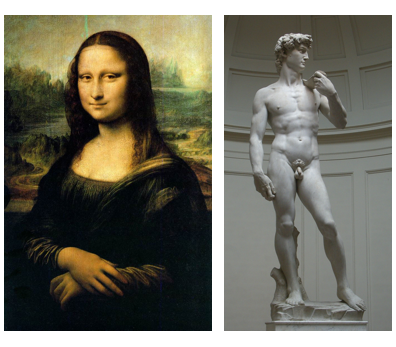
Mona&DavidBooks are always better than the movies made from them. Hopefully no one has such a sweeping opinion. Anyway, it’s a specious argument for the most part. We’re talking about two different mediums: a mental one and a visual one. Your opinion may well depend on the way you process information. You might as well ask which is better, da Vinci’s Mona Lisa or Michelangelo’s David?

Were the “Lord of the Rings” books better than the movies? It’s a moot point. The films were the vision of a small group of artists, Peter Jackson and friends. Who am I to say their vision is wrong or right? I love both creations for what they are. Note: “The Hobbit” films are a different story for reasons I expounded on here.

Some books are rightfully considered unfilmable. Any attempt to do so generally leads to disaster. Cases in point from the not-too-distant past: “Winter’s Tale” and “Cloud Atlas”. Both were monumental critical and box-office failures made from monumentally fine books.

There are a few movies I believe improved on their literary source material. One prime example is “About a Boy”. A good book, a better film, the final third of the story having been changed radically for the better in my estimation. Thus we’re talking about two different stories. Which is better? Again, personal preference. In this case, my preference is the movie’s story. You may disagree.


These two arguments are carried on all over. They can actually be fun to argue about, if it’s done right. When it’s done wrong, we’re missing the point entirely. Needing to be right can kill relationships.

It’s 11:00. Do you know where your priorities are?*

(*Does anyone remember this reference?)

Desolation

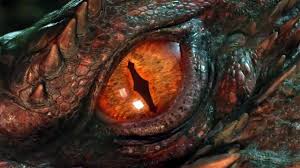
smaugeyePurely out of an overdeveloped sense of obligation and closure, I recently watched the final episode of “The Hobbit” trilogy, which I believe was subtitled, “The Last in an Endless Series of Epic Battles and Beheadings Filmed in a Cynical Attempt to Extract Maximum Funds from an Unsuspecting Public by Bloating a Single Book into Three Movies”. If it sounds as if I resented forking over my cash to see the last of these artificially over-inflated flicks, you’d be on the money – my money. I guess that makes me a willing participant in my own mugging.

Let it be known, I’m a huge fan of Peter Jackson’s original “Lord of the Rings” trilogy. Three books, three movies. That makes perfect sense. Trying to cram those three literary masterpieces into a single (watchable in one sitting) film would have been as foolhardy as turning the single Hobbit book into three films was rapacious. Nor am I averse to watching the admittedly protracted extended version, which clocks in at over 11 hours.

It ain’t about the length. It’s about the greed. (More on that later.)

It’s been fittingly suggested that, just as there’s the Extended Director’s version of LOTR, there ought to be an Abbreviated Viewers’ version of Hobbit. Break me off a piece of that.
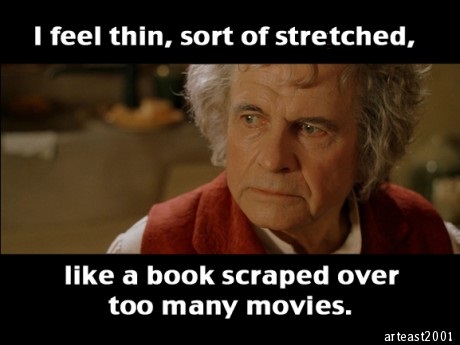
hobbitstretchAs penance for being duped into seeing all those Hobbit installments, I decided to re-read the book. That would not only atone for my sin but give me an idea of how much damage was done to the story.

It goes without saying that the book is terrific. In no way did it require being pumped up with massive amounts of gratuitous battle carnage. Evidently, the producers assumed people were craving more carnage because, let’s face it, there hasn’t been nearly enough war in our world.

Beyond the spectacular tale told by Tolkien and the completely realized world he creates so brilliantly, there are insights into our world that transcend the author’s lifetime. The following passage particularly caught my attention:
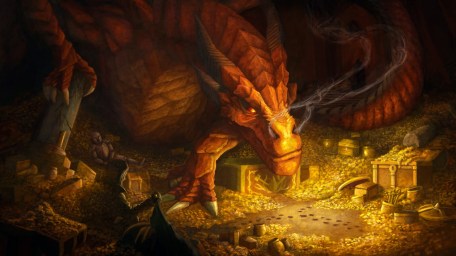
smaugDragons steal gold and jewels, you know, from men and elves and dwarves, wherever they can find them; and they guard their plunder as long as they live (which is practically forever, unless they are killed), and never enjoy a brass ring of it. Indeed they hardly know a good bit of work from a bad, though they usually have a good notion of the current market value; and they can’t make a thing for themselves, not even mend a little loose scale of their armour.

Sound like anyone you know?

The most ironic comparison is to the movie producers themselves. It’s all about the gold, artistic integrity be damned. How could they have missed that little parallel?

Closer to the mark, though, are the avaricious denizens of Wall Street whose careers amount to nothing more than collecting other people’s money and hoarding it, Smaug-like, for no particular purpose. They create nothing but profit for themselves. Like those worms of old, these modern day snakes have no use for the cash they collect. They couldn’t spend it all in their lifetimes. (Ask Larry Ellison; he seems to be trying.) The fate of the poor souls barely scraping by outside their luxurious caves, similar to Smaug’s Laketown neighbors, isn’t even on their radar.

It’s inconceivable (does that word mean what I think it means?) to me that Tolkien wasn’t thinking of that class of individuals when he wrote of those who know nothing about what’s good and what’s bad, but “have a good notion of the current market value” of same.

thorinWhile the filthy rich don’t have the longevity of dragons, their caches of cash do. Their children’s children, some of whom will have never worked a day, are destined to sit on that pile of gold “practically forever”. Over time they grow to be like Thorin Oakenshield, who spent long hours in his treasure of gold “and the lust of it was heavy on him.”

I think Thorin was on the old board of directors of Market Basket.

No need to envy the latter-day Smaugs. Those hoarders are as likely to enjoy a brass ring of their fortune as Smaug did. Without the right heart attitude, our possessions come to possess us. We live in so much fear of losing that which we don’t need or deserve, our lives become consumed by what Tolkien called dragon-sickness, an insatiable lust for gold and possessions. Happiness and joy elude us.

Perhaps the “Desolation of Smaug” depicted in Tolkien’s maps doesn’t so much represent physical barrenness caused by the dragon’s destructive presence as it does the devastation dragon-sickness creates in our own hearts.

smaugsketch

Dickens and Christmas

ChristmasCarolBookThere are plenty of folks out there crediting Charles Dickens with “inventing” Christmas. That’s a pretty drastic overstatement, but there’s a grain of truth to it. At least one author posits that, with the publication of “A Christmas Carol”, Dickens rescued his own career and shaped the celebration of Christmas as we know it today. For those who wish to pursue the matter, an intelligent refutation of that premise can be found here.

For the record, as much as a lot of people would prefer otherwise, Christmas is in fact the celebration of the birth of Christ. In our pluralistic society, people are free to ignore that fact, just as they ignore the “true meaning” of Thanksgiving and Memorial Day. You don’t have to celebrate it as such, but that’s the way it is.

The mode of that celebration, however, is quite a different matter. For example, the December date is well known to have been a later invention. Reindeer, Christmas trees, gift giving, and wassailing – not to mention Santa himself – are all among the pieces of extraneous baggage that have been heaped mercilessly on what is a simple observance of a historical and spiritual event of significance to a huge percentage of the world’s population.

Neither Dickens nor his masterpiece needs the superfluous acclaim. “A Christmas Carol” is as brilliant as it is timeless. It honors what people call the “spirit of Christmas” with only a slight nod to the religious aspect of the holiday. As such, it tends to be tolerable to all stripes. Yet the theme of repentance and transformation conforms perfectly with Christian orthodoxy. In the grand tradition of great art, it works equally well as edification and entertainment.

XmasCarolI just watched my favorite filmed rendition of the story, the 1984 version starring George C. Scott. It edges out the surprisingly high quality animated Mr. Magoo musical version.

(One reason I prefer that version to any other is the supporting cast, which includes several performers from the Royal Shakespeare Company’s production of Dickens’s “The Life and Adventures of Nicholas Nickleby”. In a previous post, I made no bones about my tremendous admiration for that production.)

Some of the scenes and lines of dialog in the book are as fresh and meaningful today as they’ve ever been. The poor still struggle, barely noticed, at the feet of the rich. Dickens’s bleak portrayal of that situation is neglected in many dramatic presentations of the story.

I reproduce the exchange between Scrooge and The Spirit of Christmas Present below. Now as it was then, the prose is rich and evocative, the message relevant and convicting.

From the foldings of its robe, it brought two children; wretched, abject, frightful, hideous, miserable. They knelt down at its feet, and clung upon the outside of its garment.

“Oh, Man! look here. Look, look, down here!” exclaimed the Ghost.

They were a boy and girl. Yellow, meagre, ragged, scowling, wolfish; but prostrate, too, in their humility. Where graceful youth should have filled their features out, and touched them with its freshest tints, a stale and shrivelled hand, like that of age, had pinched, and twisted them, and pulled them into shreds. Where angels might have sat enthroned, devils lurked, and glared out menacing. No change, no degradation, no perversion of humanity, in any grade, through all the mysteries of wonderful creation, has monsters half so horrible and dread.

Scrooge started back, appalled. Having them shown to him in this way, he tried to say they were fine children, but the words choked themselves, rather than be parties to a lie of such enormous magnitude.

“Spirit! are they yours?” Scrooge could say no more.

“They are Man’s,” said the Spirit, looking down upon them. “And they cling to me, appealing from their fathers. This boy is Ignorance. This girl is Want. Beware them both, and all of their degree, but most of all beware this boy, for on his brow I see that written which is Doom, unless the writing be erased. Deny it!” cried the Spirit, stretching out its hand towards the city. “Slander those who tell it ye! Admit it for your factious purposes, and make it worse. And bide the end!”

“Have they no refuge or resource?” cried Scrooge.

“Are there no prisons?” said the Spirit, turning on him for the last time with his own words. “Are there no workhouses?”

The bell struck twelve.

It makes me wonder what the bell strikes today.


NB: As I’ve noted elsewhere, the lesson of Scrooge and other Yuletide scoundrels has been lost on us today, to our shame.