Entitled

snoopytypeI love to write or I wouldn’t be doing this. Even if no one read my scribblings, I suppose I’d scribble them anyway. That’s a recurring theme from writers. We write because we have no other choice. It’s not like we don’t have any other skills, we simply have the overwhelming need, passion, desire, yearning – call it what you will – to write.

Still, it’s gratifying to have others read what I write. Getting my words to an audience beyond immediate family and friends takes a lot of self-promotion, networking, schmoozing, and building of a platform. None of that comes easily to the average writer. They tend to be introverts. I have the advantage of being an extrovert, but promoting myself remains a chore. To improve my lot, I’ve decided I need to take a drastic next step:

I need a title.

Adding a title to a name immediately increases its credibility. Where would “Cedric the Entertainer” be without “the Entertainer”? Many of us wouldn’t know what to make of him absent the built-in endorsement; at least we know what he’s supposed to be. Which would get more press, King Richard I or “Richard the Lionheart”? No contest. Numbers get confused or forgotten. Lionheart will live on forever.

So a title would be a big boost, but the choice is a dilemma. It should be influential without being obnoxious, positive without being presumptuous. You can’t undersell yourself. Seriously, would you remember a ruler called Alexander the Adequate?

weegeeThere’s no guarantee that adopting such an appellation will work, however. Photographer Arthur Fellig was more commonly known as Weegee. Somewhere along the line, he gave himself the title “Weegee the Famous”. He even marked all his photos with a stamp bearing his title as shown on the right. Have you heard of him? I rest my case.

Some titles could be misunderstood. I fancy myself a relatively humorous person. “Rick the Humorous” is too understated, but “Rick the Hysterical” could get me in trouble.

It’s also a good defensive move to assign a title to yourself. Otherwise, you could end up with something less desirable than you might like. Jack the Ripper, Ivan the Terrible, and Mack the Knife probably didn’t choose those labels. If they’d been more proactive, who knows? Maybe we could look back fondly on Jack the Repairer, Ivan the Tender, and Mack the Spoon.

I’ve yet to home in on just the right title. As of now, I have only this list of unsuitable candidates:

Rick the …

  • …Writer (trite)
  • …Blogger (too on-the-nose)
  • …Wicked Awesome (too pompous)
  • …Storyteller (I kinda like that one – hey, I can dream)
  • …Ridiculous (a quality alliteration, but nothing I want to advertise)

So the jury is still out. If anything strikes me soon, I’ll have to give it serious consideration. Too much is at stake.

Suggestions are welcome… within reason.

Dickens and Christmas

ChristmasCarolBookThere are plenty of folks out there crediting Charles Dickens with “inventing” Christmas. That’s a pretty drastic overstatement, but there’s a grain of truth to it. At least one author posits that, with the publication of “A Christmas Carol”, Dickens rescued his own career and shaped the celebration of Christmas as we know it today. For those who wish to pursue the matter, an intelligent refutation of that premise can be found here.

For the record, as much as a lot of people would prefer otherwise, Christmas is in fact the celebration of the birth of Christ. In our pluralistic society, people are free to ignore that fact, just as they ignore the “true meaning” of Thanksgiving and Memorial Day. You don’t have to celebrate it as such, but that’s the way it is.

The mode of that celebration, however, is quite a different matter. For example, the December date is well known to have been a later invention. Reindeer, Christmas trees, gift giving, and wassailing – not to mention Santa himself – are all among the pieces of extraneous baggage that have been heaped mercilessly on what is a simple observance of a historical and spiritual event of significance to a huge percentage of the world’s population.

Neither Dickens nor his masterpiece needs the superfluous acclaim. “A Christmas Carol” is as brilliant as it is timeless. It honors what people call the “spirit of Christmas” with only a slight nod to the religious aspect of the holiday. As such, it tends to be tolerable to all stripes. Yet the theme of repentance and transformation conforms perfectly with Christian orthodoxy. In the grand tradition of great art, it works equally well as edification and entertainment.

XmasCarolI just watched my favorite filmed rendition of the story, the 1984 version starring George C. Scott. It edges out the surprisingly high quality animated Mr. Magoo musical version.

(One reason I prefer that version to any other is the supporting cast, which includes several performers from the Royal Shakespeare Company’s production of Dickens’s “The Life and Adventures of Nicholas Nickleby”. In a previous post, I made no bones about my tremendous admiration for that production.)

Some of the scenes and lines of dialog in the book are as fresh and meaningful today as they’ve ever been. The poor still struggle, barely noticed, at the feet of the rich. Dickens’s bleak portrayal of that situation is neglected in many dramatic presentations of the story.

I reproduce the exchange between Scrooge and The Spirit of Christmas Present below. Now as it was then, the prose is rich and evocative, the message relevant and convicting.

From the foldings of its robe, it brought two children; wretched, abject, frightful, hideous, miserable. They knelt down at its feet, and clung upon the outside of its garment.

“Oh, Man! look here. Look, look, down here!” exclaimed the Ghost.

They were a boy and girl. Yellow, meagre, ragged, scowling, wolfish; but prostrate, too, in their humility. Where graceful youth should have filled their features out, and touched them with its freshest tints, a stale and shrivelled hand, like that of age, had pinched, and twisted them, and pulled them into shreds. Where angels might have sat enthroned, devils lurked, and glared out menacing. No change, no degradation, no perversion of humanity, in any grade, through all the mysteries of wonderful creation, has monsters half so horrible and dread.

Scrooge started back, appalled. Having them shown to him in this way, he tried to say they were fine children, but the words choked themselves, rather than be parties to a lie of such enormous magnitude.

“Spirit! are they yours?” Scrooge could say no more.

“They are Man’s,” said the Spirit, looking down upon them. “And they cling to me, appealing from their fathers. This boy is Ignorance. This girl is Want. Beware them both, and all of their degree, but most of all beware this boy, for on his brow I see that written which is Doom, unless the writing be erased. Deny it!” cried the Spirit, stretching out its hand towards the city. “Slander those who tell it ye! Admit it for your factious purposes, and make it worse. And bide the end!”

“Have they no refuge or resource?” cried Scrooge.

“Are there no prisons?” said the Spirit, turning on him for the last time with his own words. “Are there no workhouses?”

The bell struck twelve.

It makes me wonder what the bell strikes today.


NB: As I’ve noted elsewhere, the lesson of Scrooge and other Yuletide scoundrels has been lost on us today, to our shame.

TV full circle

[No time for a long post today. Life takes up all my time. Weird about that, huh?]

magni-tvIt occurred to me recently that a lot about television, in spite of its rapid evolution, is coming full circle. For a long time, in the early days of TV (no, I don’t remember them) interest seemed to focus more on the newfangled technology than on the admittedly skimpy and weak content.

Today, although the content is more sophisticated than ever, talk is still mostly about technological innovations in things like screen size, type, and resolution, sound, source (cable, satellite, Internet), 3-D, and other novelties.

A big topic is resolution: What used to pass for HD is already old hat. 4K is hot. Great if you have a nice big screen at home. Not such a big deal if you’re watching on your phone or tablet, which everyone seems to be doing. As the screens get smaller, seeing anything at all is a challenge for some of us.

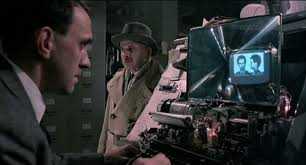
I see us going back to TV’s nascent days, when families would put some kind of magnifying device (including fishbowls!) in front of the tiny screens so the whole family could sit brasiltvaround to watch. I’m not alone in this outlook. According to Terry Gilliam’s brilliant film “Brazil” that’s what our future holds, along with a lot of other nasty stuff. His vision wasn’t meant to be realistic, but it turns out he wasn’t far off the mark in more ways than one.

Other “cutting edge” improvements:

Curved screens will soon appear on virtual store shelves. What’s the big deal? My old Zenith had a significant convex curve to it. Didn’t make “Lost in Space” any more credible.

3-D, which for my money adds no real value to any medium except View-Master, refuses to go away.

The worst new feature for televisions has to be “3-D multi-view”. This allows two people, both wearing geeky glasses with built-in ear buds, to watch two different shows on the same TV at the same time. Could we possibly make an isolating activity more isolating? Why would we want to?

Besides visual changes, sound is also important. HD sound is great. Unfortunately, I have low-def (closer to high-deaf) hearing.

Here’s hoping Santa brings you a fishbowl to put in front of your Android.

Peace on Earth

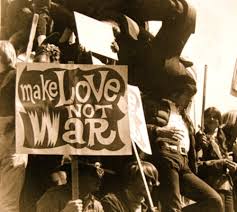
I’m old enough to remember the 60’s and, unlike some of my contemporaries who find the era’s fashions, language, and music a bit dated, I have no desire to distance myself from that connection. It was a great time. We’d run around in our tie-dyes and bell bottoms waving protest banners with what now seem to be quaint phrases such as:

makelovewarnothealthygivepeace

Perhaps the most naive of them all was this one:

whatifwarThis is the one most likely to make people cringe. On the surface, it’s seems so naive, almost childishly optimistic. It sounds so crazy. To quote Steely Dan, “Only a fool would say that.”

But what if it really happened?

It did.

For a very short span of time during World War I (the conflict ironically called “the war to end all wars” – talk about naive optimism!) both sides refused to play the game of killing each other for the benefit of absentee generals and politicians.

Over the years, I’d heard stories about the so-called “Christmas Truce” of 1914. This past week I read a thorough history of the events in a book called “Silent Night” by Stanley Weintraub. A movie about the truce was made in 2005. “Joyeux Noel” creates a compelling composite of the actual events by centering on a single group of combatants on the Western Front.

Both book and movie are excellent works, but the truce itself is the amazing tale. Bands of enemies mingled with each other, singing Christmas carols, playing soccer, burying their dead, trading keepsakes, sharing food and drink, and generally getting to know one another. Guns were laid down and differences forgotten. Nearly a million people had already given up their lives for this mindless standoff. Beginning on Christmas Eve that year, a hundred thousand suddenly came to their senses and grasped at the outrageous opportunity to celebrate Christmas with Peace on Earth, if only for a couple of days.

When word of the impromptu truce got back to the powers-that-were-but-no-longer-are, all ensconced in luxurious digs and downing fine food and drink for the holidays, they were incensed. Threats of transfers, court-martials, and even firing squads were brought down on the lowly servicemen who were bogged down in frozen or muddy trenches.

The high ranking officers and politicians thought it insane for the soldiers to drop their weapons and spend Christmas getting to know the enemy who had been painted by each opposing nation as barbaric, evil, less-than-humans who deserved to be and must be eradicated. Those same elites saw nothing crazy about throwing young lives at each other in a futile attempt to move their lines a few yards either way in the pointless and protracted conflict. After all, they were out of harm’s way themselves. Some things never change.

As the groups of enemies fraternized on the few hundred feet of No Man’s Land that separated them, they actually became friends, sometimes making plans to get together after the war. By meeting their foes, British and French troops came to realize that Germans weren’t monsters who crucified children as they had been told. The Germans learned that their foes were just like them, with the same dreams and desires, most with families they missed.

Some people objected. One member of the German army who was alarmed by the actions of the soldiers said:

Such things should not happen in wartime. Have you Germans no sense of honor left at all?

If you find this man’s opinion resonates with yours, be aware that his name was Cpl. Adolf Hitler.

In 1914, everyone thought the end of the war was imminent. It ended up dragging on for another four years, causing millions of casualties. Worse yet, it planted the seeds that grew into the next and even greater conflict, World War II. Author Weintraub in his book makes the compelling case that, had the perpetrators of the war followed the lead of its victims toward peace, we might have not only avoided the second Great War, but the Bolshevik Revolution might never have occurred, thus eliminating more conflict from the world in ensuing years.

Today, armed conflicts seem to be ubiquitous. Once more, it’s not quite clear what people are fighting about, but it’s usually the same thing: enemies are demonized as evil fundamentalist (or atheist – take your pick) demons who want to take away our precious way of life. If you were to talk to most of those enemies, you’d find, just like those men in the trenches in 1914, that they are human beings like ourselves who only want to live their lives in peace.

In the next war, could we have all the leaders – political, military, and religious – slug it out among themselves while the rank-and-file watch from a safe distance? It would make great reality TV.

The more common motivation for war today is to give the big weapons manufacturers an opportunity to showcase and sell their wares. If a few thousand kids are killed in the process, that’s a price the stockholders of said companies are willing to pay. I’m reminded of the opening scenes of a rare good superhero movie, “Iron Man”, when Tony Stark, between bedding women and sipping champagne, sells a gazillion dollars worth of killing machinery to everyone in sight but misses the downside until he becomes a victim of his own products.

Jesus – He’s the guy that started this whole Christmas thing – says, “Love your enemies.” I’m pretty sure, as the saying goes, killing them isn’t what He meant. Is there a better way to celebrate the day than to refuse to kill the people Jesus said we should love?

That is what would happen if they gave a war and nobody came. Maybe it’s not so childish after all.

(For more reading, here’s a fascinating article from nine years ago.)

Pop the thought stack!

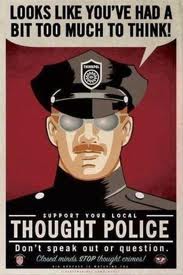
think2muchI’ve said it before and I’m likely to say it again. I think too much.

I’d be aware of this fact even if the people around me didn’t regularly remind me. (Yeah, it’s that obvious.) Thinking too much is way-wicked better, though, than the more typical American attitude of thinking too little or the almost pandemic not-thinking-at-all. Thinking is Good.

Still, thinking too much has its own set of drawbacks.

One negative is that I get stacks and stacks of ideas to write about for blogs, articles, fiction, and scripts – more than I’d ever be able to get around to in this lifetime.

pop1To cut down on that pile, allow me to pop the stack with a random dump of topics here. With sufficient thought (of which, as I’ve mentioned, I have an overabundance) and time (of which I have precious little) some of these might justify an entire post of their own. Who’s got time for that? I’m too busy thinkin’.


Have you noticed that, as movies get shorter*, credits get longer? You’d think the equation “shorter movies = less to do = less credit” would apply, but you’d be wrong. There are more people getting credit for doing whatever they do. It bucks the whole business trend of “doing more with less.”

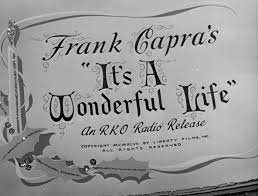
IAWLcreditsLook at a classic film like the seasonally appropriate “It’s a Wonderful Life”. The credits list only the major acting roles, director, screenwriter, costume designer, and a few others. Buried in the eight or nine minutes of credits today, you’ll find the insurance company underwriting the movie, five drivers, the caterer(s), several assistant background colorists, and a seemingly infinite number of other obscure jobs. (Key grip, lock grip, best boy, worst girl, mediocre pet.) No exaggeration: Today’s trailers list more credits than did entire films from the 40’s.

[*They are getting shorter in general, with the obvious exception of “Interstellar“. If movie length affected credit length, the credits for that epic-in-its-own-mind would roll longer than an average romantic comedy runs in its entirety.]

Speaking of classic movies, does anyone else see a problem with the current practice of labeling a newly released film an “instant classic”? Is that legit? It seems to me that a little passing of time is required to test whether something is truly classic. Otherwise, why not have brand new antiques? Anyone who can explain all this will become an instant legend.

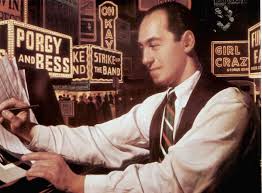
gershwinWhen Robin Williams died before his time, it reminded me how much I grieve when an artist dies, not only for the loss of life, but at the loss of the great works that will never be. My most painful example is George Gershwin, possibly the greatest musical genius in American history, who died at age 38. Those first 38 years produced a wealth of memorable music. How many more great musical creations went to his grave with him? Another “Porgy and Bess” perhaps? An entire rainbow of Rhapsody’s? That’s something to mourn.

I called the doctor the other day and was greeted with a recording that said, “If this is a life-threatening medical emergency, hang up and dial 911.” I don’t even know where to begin on that one. First of all, do we need to say “hang up”? That would seem obvious. Anyone who calls the main switchboard of a hospital during a “life-threatening emergency” does indeed have serious problems, but even 911 won’t help. I seem to get this same message no matter what kind of medical practice I call. Do you suppose there are a lot of people with life-threatening emergencies calling their optometrist?

The good news: Black Friday sales were down 7%. The bad (actually, tragic) news: Sales on Thanksgiving Day were up 24%. It’s official. America has completely lost its sense and moral compass.

watchesThere’s a watch store at the mall. Are enough people still buying watches to justify dedicated stores? Why is anyone buying a watch? Everyone and their pets carry cell phones that prominently display the time. Besides, clocks are everywhere now, in everything. From where I sit, I can see the time on a radio, cable box, toaster, TV, DVD player, microwave, and phone. The bathroom is the only safe place from the invasion of the timepieces. Maybe that’s where people need their watches. I hope not. To paraphrase Brian Regan, if you gotta check your watch in the john, you’re booking yourself too tight.

And in spite of all those clocks, most people are still late.

I keep hearing people complain about getting phone spam even though they’re on the do-not-call list. What do these folks think, criminals check the DNC list before making their illegal robo-calls? Do they suppose murders would cease overnight if we had a do-not-kill list? Heck, let’s give it a try. I’d sign up.

Have you been in a sporting goods store lately? The floor space in these places is taken up by about 5% sports equipment and 95% clothes. It appears that no one is actually playing any sports these days, but if one breaks out, we’ll be ready.

Back here, I listed some things that have disappeared in my lifetime. I keep thinking of new ones:

  • searsCRTs
  • Fotomat (Remember those short-lived dinosaurs?)
  • film
  • All-encompassing catalogs such as Sears, JC Penney, and Montgomery Wards

Actually, all catalogs have outlived their usefulness as much as slide rules, Yellow Pages, and unfoldable road maps, but the individual retailers keep sending them out, especially around Christmas. I’m getting catalogs from companies I last did business with over ten years ago. Others are from companies I never even heard of. My recycling bin could have a field day if it had an internet connection.

Driving down the road recently, I was cut off by a guy whose car sported a “coexist” bumper sticker. He wants all races and religions to coexist peacefully but he can’t even coexist with the next car.

That’s a load off…

Too big to be good

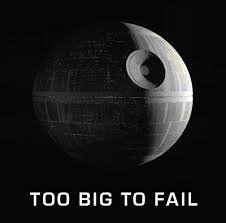
tooBig2There’s an infamous saying that almost brought down the American economy. “Too big to fail.” (I already wrote about this in my other blog here, but this post takes the idea in a different direction.) My own take on that absurd concept is, if something’s too big to fail, it’s too big. Period. Note that the statement is actually a lie. Nothing is too big to fail. Failing happens regardless of size. Just ask the Empire.

My own preference is for small: small cars, small churches, small stores, small restaurants, small businesses in general. I’ve worked for big companies – I’m talking BIG companies – and small companies. There’s no comparison. For the most part, the big ones are hell, the small, paradise.

My preference for the petite extends to movies and movie theaters. Yes, there’s a place for the blockbuster playing at the regional Imax theater, but it’s a small place. (That shouldn’t surprise you.) This was brought home to me in the most tangible way possible this past week. I saw BIG movie in a BIG movie house. A few days later I saw a small movie in a cozy little theater. The former was torture, the latter a joy.

technicolorAt the risk of life and limb*, I’ll tell you about the BIG movie. “Interstellar” was BIG in stars, budget, marketing, and most painfully, length. It felt more like a three hour physics lecture than a story. (You remember “story”, don’t you?)Yes, of course the special effects were amazing. Let’s agree that effects are always amazing and be done with it. They no longer have any meaningful impact on the quality of a movie, any more than the fact that it’s in “full living color!”

For my money, the more important contributors to movie quality consist of things like the following: Consistent characters, cohesive story, and humility of length, all in short supply in Interstellar.

When the credits finally, mercifully rolled, I realized I’d forgotten it had been directed by Christoper Nolan, a man who specializes in BIG, at least since “Dark Knight”. So I hated the BIG movie, with its physics borrowed from Madeline L’Engle, interviews stolen from Ken Burns, and everything else taken from Stanley Kubrick.

And the venue? There’s nothing to like about Generic Cinema 1-2-3-4-5-6-7-8-9-10-11-12-13-14-∞.

LunaTktForget BIG. Let me tell you about the small venue. It’s called “Luna” and it’s found in a remodeled mill building, nestled in with a bunch of funky little (do you see a theme emerging?) shops. The audience sits in easy chairs with tables nearby on which to put snacks and drinks. None of the seats are half a mile from the screen from which the movie is just a rumor. Even the tickets at Luna are cooler than the the ones at Generic Cinema 1-2-3-4-5-∞. See what I mean? →

stadium

Take a seat, any seat at all.

luna

Luna in your living room.

Which looks like a more enjoyable way to see a movie?


The movie I saw at Luna was small. It was about people, not aliens – ideas, not bombs – real places, not CGI landscapes. Most movies happen to you. I like a movie I can settle into. There’s a place for both in the world, but not in Generic Cinema 1-2-3-4-5-∞.

I don’t think there’s a place for me there either.


* Publicly criticizing a Christopher Nolan movie, I’ve come to find out, can be hazardous to your health. When I made disparaging comments about “Inception” in this post, I was taken to task with a profanity-laced harangue from someone who must have a degree in Missing the Point. I expect to hear from the same guy this time, with his master’s thesis in Cluelessness.

World Toilet Day

WTDhurryHere’s a joke that’s not funny:

Q: How can you tell a developing nation from a first world nation?

A: First world nations flush drinking water down their toilets.

Another thing that sounds funny but is deadly serious is World Toilet Day, today November 19. A family member first told me about WTD and I’m glad he did.

Now that you know, too, you can no longer plead ignorance. You must chose: Be part of the solution or part of the problem.

Here’s some great background on the day, courtesy of the Gates Foundation. For more details just Google “World Toilet Day”.

WTD

[I posted this on my other blog (Limping in the Light) too, because it’s that important.]

Creative communities

communityI’m all about community. I crave being part of a community, I flourish in the context of community, and I love building communities. It doesn’t matter what the little society is built around – church, MS, philanthropy, sports, the arts, or pure recreation. Where two or more are gathered, there I want to be in the midst of them. That’s why I speak and write so often (like here and here and a lot of places in between) about the value of support groups for those with MS.

So today I felt like writing about communities. This blog being centered on writing and film, it’s creative/artistic communities that are on my mind.

If I can break it down a bit, I see two flavors of such communities. The first would include temporary gatherings for specific purposes: individual plays, films, concerts, and recordings, for example. My experience participating in such efforts has invariably proven to be fun, exhilarating, and inspiring… for a while. There’s a sort of “postpartum” depression that often sets in when they end, as they always must.

No matter how brief, I wouldn’t want to miss those opportunities for the world. Whether singing in a choir or acting with a troupe, there’s nothing like being part of a collective creative consciousness all aimed in the same artistic direction. To get a glimpse into that world, read the book I wrote about in this post.

As you might have guessed, the second type of creative community is a long term one. They last for years, lifetimes, or generations. Members of these collectives pour their creative energies and encouragement into one another thus enhancing their work and their lives. Some are formal, others more a matter of proximity.

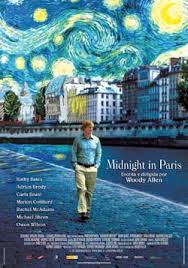
laurelcanyonThe folkies of 50’s Greenwich village were a hotbed of creative (and cultural and political) growth. In the 60’s, the Motown area gave rise to R&B and Haight-Ashbury nurtured the roots of modern rock’n’roll. Those communities were responsible for seismic shifts in culture. Though not considered MIPartistic, Silicon Valley was for a time as creative a community as the world has seen. Gertrude Stein’s Paris salon, portrayed so effectively in Woody Allen’s “Midnight in Paris”, was an intentional community that hosted some of the century’s most celebrated artists and writers.

After all, what is a band, an orchestra, or an architectural firm but a community of creatives? These gatherings are so much more creative and productive than the individuals involved could ever be. I feel confident in asserting that the community known as The Beatles was far greater than the sum of its parts.

Those kinds of groups always seem to eventually fall victim to bloated egos, tempestuous personalities, and conflicting agendas. That’s part of the baggage of the stereotypical artistic personality. Which is probably why artists of all stripes tend toward isolation.

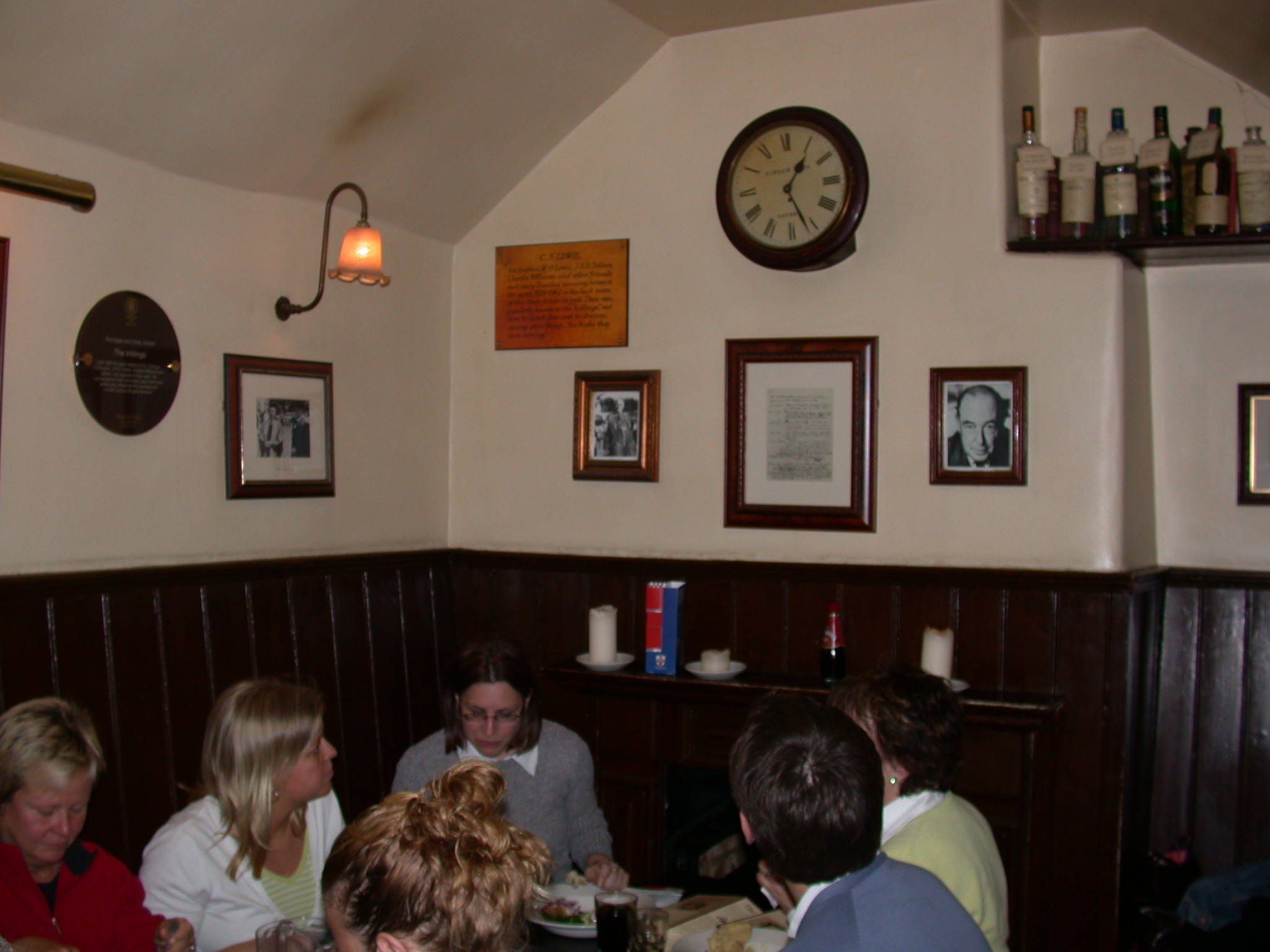
inklingsMy personal icon of a literary community is the Inklings of Oxford, UK. The most prominent members of this discussion group were J. R. R. Tolkien and C. S. Lewis – not sure if using one’s initials was a prerequisite to membership. What I would give to hang around at the Eagle and Child Pub with these guys discussing their latest work and ideas. I’d be lost, of course, but humiliation is a price I’d gladly pay.

Inklings meeting room, Eagle and Child Pub, OxfordSeveral years ago, I had the privilege of visiting Oxford, dining at the Bird and Baby, as its customers often called it, and also hearing a lecture on Tolkien in the adjoining building. I was staying in a house on the same street in Headington where Tolkien once lived, driven to the talk by a gentleman who had been a friend of the Tolkien family, accompanied by the caretaker of the Kilns, Lewis’s home. I’ve never had a more fulfilling, if thoroughly vicarious, literary experience.

I’m not sure why this was on my mind. I can’t say I’ve ever been involved in one of those long-term artistic communities, although the prospect is appealing. The funny thing is that writers are notorious loners and introverts, which would fight against any impulse to be part of a larger group. For many, the value must win out over the personal reticence.

Gotta go. I’m running late for a meeting of one of my collection of communities.

Relaxing in Lewis's study. Where's Jack?

Relaxing in Lewis’s study.
Where’s Jack?

Man of the tombs (rerun)

Two years ago almost to the day, I wrote a little story about a man who had a confrontation with Jesus. We don’t know his real name. He is known by what possessed him. I post it again here for a few reasons. First, life is hectic and I need the break. Second, it’s a bit of original writing that, although it first appeared in my other blog, Limping in the Light, finds its more proper place here. Third, with Black Friday approaching, one message I found behind the story takes on greater urgency. I’ll explain in the “afterword” below.


manofthetombsI was free until he came into my life.

I could come and go as I pleased and no one could prevent me.  Believe me, they tried.  Crowds of men would come and try to hold me down, as many as ten men at once.  They seized my arms and legs, leaped on my chest, locked their arms around my neck, thinking they could choke the life out of me.  I threw them aside as effortlessly as a fisherman tosses his nets out over the nearby Sea of Galilee.  Back then, I had the strength of thirty, forty, fifty men.

Sometimes, just to taunt my assailants, I would let them bind me.  I feigned struggle as they wound the chains around my chest, legs, and arms then clamped my ankles in irons.  When they were done and stood back, finally satisfied that they had subdued me, I stared at them with all the spite that was in my soul and shook off the shackles as if they were made of parchment.  My would-be captors ran off in panic.

They were afraid of me.  My strength frightened them.  My freedom threatened them.  They wanted nothing to do with me and that was the way I wanted it, too.  Their fear simply fueled my hatred for them and their common, contemptible lives.

I didn’t want to be anywhere near the people of the Decapolis – my home! – so I raced up and down the hills with abandon, howling my independence by day and night.  But most of the time I ran free among the tombs.  The dead didn’t bother me; they didn’t try to deny me my freedom.

One day, I found myself trembling.

Rumors of a fresh power sailed across the water before the boats driven by the winds over Galilee.  When they reached me, I was conflicted within.  Gazing over the waters from the top of a distant hill, I saw a man standing in a boat.  He stepped out and stood in the lapping water as if he was waiting for something.

He was waiting for me.

Like never before, I was driven to him.  Nothing and no one had ever compelled me like this man who was still merely a distant image.  Yet there was an opposing force inside me that was tearing at me to hold back.

What was this feeling?  The freedom that defined me now eluded me, replaced by an unnamed conflict within.  I could do nothing; I had no will.  Before I was aware of my own actions, I was at the feet of the stranger.  He spoke something in my direction, but it could not have been meant for me.  I didn’t understand his words.

Someone shouted a response in an acrid voice, or rather a chorus of voices that sounded like a mob all screeching at once.  “What do you want with me, Jesus, Son of the Most High God?  In God’s name don’t torture me!”

The sound came from my mouth.  I felt as if I was standing aside, watching the freakish scene play out before me.  The man the voices called Jesus asked, “What is your name?”  Before I could respond, the voices answered him.  I shuddered as I heard the wretched multitude of tongues growl “My name is Legion, for we are many.”

The voices terrified me, but they were the voices I knew.  It was my voice that spoke next the words that were a betrayal of myself, though I no longer knew who I was.  “Don’t send them away, Jesus.”  Maybe I was trying to convince myself because I repeated it over and over.

There was pity in Jesus’ eyes as he watched me writhing on the ground.  The Legion I feared and needed spoke from my depths, begging Jesus to send them into a herd of pigs that had been my only neighbors when I wandered these hills.  Jesus bade them go and they destroyed those pigs just as they had laid waste to my life all those years.

The citizens who wanted nothing to do with this wild man who ran naked among the tombs made it clear that they wanted less to do with my savior.  When they came out to drive Jesus away from their homes, they found me seated at the feet of Jesus, where I’d belonged all my life.  No matter where I would go, I would forever be his.

I was free indeed.


There is a literal meaning to this story, a tale of one man’s spiritual bondage and redemption. But, as with so much of scripture, there is a lesson for all of us, too. You can read my explanation of that lesson here in the post that followed this one in LITL. I commend it to your attention.

The Squatter

Among the many things I’ve scribbled in the sand is a novel entitled “The Squatter”. Some folks to whom I’ve confided about the book aren’t crazy about the title. I find it hard to disagree. It’s not a very pleasant sounding word. However, it effectively and succinctly captures not only the protagonist, but her situation as well. Anyway, I’m sticking with it for now, but am open to negotiations, especially from editors and publishers.

This is all to preface the following post, which is the opening few paragraphs of the book. There’s danger, some might say, in exposing one’s writing (even as brief as this) this way. They would have us all believe that creative thieves lurk around every corner of the Internet. They could be right, but cowering in fear is no way to live. My protagonist, Fania, would say the same.


Chapter 1

January 12, 2010 – 4:45 PM

Anticipation hung in the house like the fine particles of dust that filled the air. The family had long since grown accustomed to seeing the air they breathed; the constant presence of the dust made it disappear. When something is everywhere, it ceases to exist.

But apprehension, anticipation’s malicious twin, followed like a rabid dog nipping at its heels. Good fortune never walked alone in Haiti. Hopeful elections carried with them violence and turmoil. A cool, refreshing rain inevitably brought streams of filth running through the tiny hovel that was the Dieusel family home. It had reached the point where they dreaded good news for the trouble it promised.

Still, Fania hoped. Her dreams were simple for a fifteen-year-old girl. An education. Reading and writing. Humble dreams, more remote than the far off peaks of the Massif de la Selle. Just as she couldn’t see those mountaintops from her home in the Village Solidarité neighborhood of Port-au-Prince unless she climbed to the roof, she couldn’t conceive of being in a school, reading books, or writing letters.

This was the day when all that could change. The news her father carried would determine whether those mountains would be brought within her reach or, if his news was bad, she would continue to dream of distant peaks.