Old words, bad words

Before I started this blog to concentrate on my writing, I was already writing another blog. It’s called “Limping in the Light” and it’s still limping along out there. Today it focuses on its primary role: dealing with chronic illness while trying to live a life of faith, plus whatever rant comes to mind that week. Until I started this newer blog, however, everything, including the kinds of literary and film stuff you find here, was dumped into that one catch-all.

One such post has come home to haunt me recently. This post on the power of words, especially negative words, would fit nicely into “Scribbling in the Sand”. If I’d read it myself a few weeks ago, I might not have later blurted out what I thought was a clever wisecrack, but was actually a cruel invective cleverly disguised in joke’s clothing.

For a while after I uttered it, I wondered if maybe it was more hurtful than I intended and how the recipient might have taken it. The incident soon faded from my fading memory.

I thought no more about it until a subsequent role reversal. This time someone else made a simple joke at my expense, the kind of quip we often hear and too often make. We babble our little bon mot, not realizing it’s received as a mal mot, containing a slim stiletto of truth that cuts to the heart.

It certainly did in my case. For the next week I was undone. Unbeknownst to the speaker, he’d hit on a simmering volcano in my life and it erupted with a vengeance.

The upside of my injury was that it reminded me of my previous verbal blunder. In trying to make amends, I learned that my idiotic witticism stepped on a personal land mine. Now there’s some serious relational repairs to be undertaken.

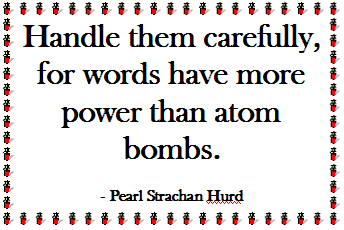
wordbombs2That’s a lot of collateral damage for a couple of silly statements meant to entertain or, more likely, meant to flaunt our extraordinary wit. We’d like it if those who deal in weapons of mass destruction would show some discretion in their use. (They don’t, but that’s another sad tale.)

As dealers in words, we writers should be careful how we wield our particular brand of explosive.

Now a message from our sponsors

I really hate television commercials.

That’s just one of the reasons I don’t watch much TV. Unfortunately, every now and then I’ll be watching a movie and one of those beasts will interrupt my viewing. Here are a few for which I hold particular disdain:

The Dunkin Donuts commercial where a guy announces he got a promotion. He and his friends decide the appropriate way to “celebrate” this achievement is to get a sandwich from DD. Really? That’s the best they can come up with?? I’m thinking either this wasn’t much of a promotion (“Hey, guys! After five years in my bathroom cleaning job, I’m finally getting a brush!”) or they aren’t really his friends.

Another is for some kind of automobile cleaning product. The tagline says it all:

“Restore your car, restore your pride.”

Wow. Maybe that’s the guy with the bathroom cleaning job.

It was a year or so ago but, in one BMW commercial, a purchaser of a used BMW declares the day of his purchase to be the “best day of my life.” His wife and child stand by in amazement. So do I. What odds do you give that marriage? That kid? There’s a reason the old joke comparing BMW’s and porcupines is so funny.

I learn a lot from watching commercials, though. For instance, if a classic movie shot appears in a commercial, it has officially left the realm of tired cliche and entered the Vapid Zone. It should never be touched again. Example: Some superhero or wannabe falls into a three point crouch, usually shattering the ground beneath. It was cool in “The Matrix”, still mildly fun in “Iron Man”, but commercials have been using it for a while now. Yet movies still lean on that hack. Retire the insipidity.

Here’s another lesson I learned: Remember Veruca Salt in the “Willy Wonka and the Chocolate Factory” movie? The diminutive actress who portrayed her performed one of the great musical numbers in film history: “I Want It Now”. In case it wasn’t obvious enough from the Oompa Loompa’s song (“Who is to blame when a child is a brat?”), she was a bad girl. She was selfish. The lesson was to not be like her.

So when did “I Want It Now” become a good thing? No less than two commercials – for beer and a cell service, there could be many more; I don’t get a very wide sampling – use the chant as exemplary. Yes, American marketing tells us, we should all strive to be little Verucas, sulking and screaming and throwing tantrums if we don’t get what we want NOW.

Encouraging lesson: My era’s music still rules the airwaves. As much as I hate to have my musical heroes sell out, it’s great to hear their tunes in surprising places, such as commercials for Lay’s (Bread), Stop & Shop (Three Dog Night), video games (The Turtles), as well as many others. Either those groups are timeless or all these commercials are made by geezers like me. I’m guessing the former.

Finally, it occurs to me that advertisers are consistently telling us that their customers, both current and prospective, are jerks with warped priorities, q.v. aforementioned Beemer drivel. Think about it next time you’re viewing advertising. It’s always wise to watch commercials with a discerning mind. One good practice is to think critically and ask yourself: “Do I wanna be lumped in with those creeps?”

I vote “no”.

YABD

Yet Another Brain Dump.

Since I don’t have much time to write this week and since I did an extra post last week and since I haven’t popped the idea stack for more than three months, I’m going to do it now. Here’s another brain dump of thoughts that have piled up lately. Nothing life-changing or earth-shaking. Maybe Head-shaking, though.

Here’s a little news item you might have missed:

The [Boston Red Sox] officially released minor league lefthander Cody Kukuk, who was arrested in November on a robbery charge in his native Kansas. Kukuk was given an $800,000 bonus after being selected in the seventh round of the 2011 draft.

The kid got an 800K signing bonus and was on his way to a big league career and he commits robbery. Huh? Reminds me of the even more amazing story a couple years ago, involving a football player making half a million bucks a year who was arrested for shoplifting a cologne sample and two pair of underwear worth a total of $123.50.

Wow.

I hope we hurry up development of the driverless car, cuz from what I’m seeing on the road, no one’s paying attention when they drive anyway.

From the “Who Invented This Language Anyway?” department:  The words overlook and oversee are opposites yet flammable and inflammable mean the same thing.

True confession: Wonder no longer. I wrote the book of love

Why do people record messages on their cell phones that say, “I can’t come to the phone right now”? Isn’t the whole point of a cell phone that you don’t have to come to the phone? What did I miss?

I thought it was a short-lived fad, but it seems books and movies about zombies and vampires simply refuse to die. I guess I shouldn’t be surprised.

Have you seen the movie about the guy who used to be a criminal who tried to go straight but was forced by some bad guys to do one last job? Which movie was that you ask? Just about all of them.

It’s about 10 degrees outside. I heat my house to 70. And I have a big box I store food in that cools down to below freezing. Am I the only one who sees a problem here?

??????????A business in Santa Barbara: Ye Olde Deli and Thai Food. That’s covering all your bases. Oh yeah, and as you can see in the photo to the right, you can also get Boba Bubbles in your Olde Thai Deli drink.

That’s all I have time for. I have to go to my cell phone.

What do you mean?

ambiguousWords are the tools of the writer as much as a hammer is for a carpenter, a brush is for a painter, or a combover is for a CEO. As such, I should be able to make myself understood. And I want others to express themselves clearly, unambiguously. It doesn’t always happen. We either shy away from saying something directly or we slip into vague expressions that can cause serious misunderstandings.

The most prominent example in my life, and the one that makes me most crazy, is the question that begins, “Do you want to…” then continues with an obvious command, such as, “wash the dishes?” How can I honestly answer yes? There’s no way I want to wash the dishes (or run to the store or pick up after myself or do anything for that matter). The person posing that pseudo-question is trying to tell me to do something without telling me to do it. It’s politely passive-aggressive.

Another useful one for the subtle-controller crowd: You’re on the phone with someone and the conversation has worn out its welcome; you’re ready to move on. The direct, “I don’t want to talk to you any longer”, is probably not going to win you any style points, etiquette-wise. The one I hear all the time is, “I’m gonna let you go.” Huh? What happened? Did I express a desire to be “let go”? The truth is, you wanted to go but didn’t want to hurt my feelings. That would work… if I was stupid.

What that statement really meant was, “Let me go.” If it was an appropriate way to express that sentiment, I figure Moses would have used it on Pharoah a few thousand years ago.

moses

I’m going to let you go!

Moses: Well, Pharoah, it’s been real, slaving under you for the last 400 years, with you making our lives bitter with harsh labor and all. But now I’m gonna let you go.

Pharoah: You’re gonna…? How did…? I thought…?

Moses: See you at the Red Sea. Bye now.

It could have been that simple. No plagues required.

(As an aside, the easiest way to end a protracted phone call is to hang up while you are speaking. Hanging up on the other party would be rude. No one expects you to hang up on yourself. This is purely hypothetical. I would never do this, of course.)

The problem with those approaches is all the room for misunderstanding.

Mother: Billy, do you want to take out the trash now?

Billy: Not really. Instead I think I’ll just blockade myself in my room and play video games until puberty’s over. But thanks for the offer, Mom!

Mother: I sincerely appreciate your honesty, Billy.

The above approaches should be avoided because ambiguity is an enemy to peace in relationships. That’s why it’s so important to be clear. A friend told me about an argument she had with her husband when he asked her where to find a certain item in the kitchen:

cabinetHusband: Honey, where’s a certain item in the kitchen?

Wife: In the cabinet next to the dishes.

(Rummage, rummage)

Husband (simmering with anger): It’s not there.

Wife: Yes, it is. Are you sure you looked in the cabinet next to the dishes?

Husband (smouldering with anger): Yes! I’m sure I looked in the cabinet next to the dishes!

Wife: Then you should have found it.

Husband (boiling over with anger): I’m looking there right now and it’s not there!

This went on for ten minutes or so before they realized what she said was not what he heard. She was referring to the dish cabinet, next to said dishes. He heard the cabinet next to the cabinet where the dishes were. I suppose verbal punctuation would have helped: “In the cabinet comma next to the dishes,” but that makes for pretty clumsy communication.

That’s my communication lesson for today: You can’t be too specific when you speak. (Figure out what that means.)

Looking in the mirror

mirrorFor some time, I’ve had this intriguing idea for a play. I’m convinced it would be entertaining because I lived through the events I’d be chronicling and they were surreal, hysterical, and more than a little profound. The main reason I’ve hesitated writing it is my fear that it would hurt the real people who were involved. The chances of them seeing or reading any version of the play would be relatively slim, but it’s not a chance I’m willing to take. Today, anyway. There might come a time.

Meanwhile, I wonder how many people out there have felt the sting of seeing themselves in a less than flattering light in the mirror of the media, whether intentional or not. Here are a couple of areas I’ve been contemplating recently where that could easily happen.

One of the most successful TV advertising campaigns of late has been the “alternate” Rob Lowe commercials. The awkward, hairy, paranoid, and other bizarro Rob Lowes are simply hysterical. Although they’re all over-the-top stereotypes, they are types, after all. The world is filled with creepy and painfully awkward people. Do they recognize themselves? At least one group does, according to this Time Magazine article. (Who knew there was a “shy bladder syndrome”, never mind an advocacy group thereof?)

meatheadThe one that really gets me with respect to recognizing oneself, though, is “meathead” Rob Lowe. I know this guy! If you’re honest, you probably do, too. These musclebound no-brain-no-pain dudes are everywhere, but sighted most often in fitness centers picking things up then putting them down. When this commercial plays at “Fitness World” or wherever, as it surely must, how could there not be a meathead revolt of Bolshevik proportions? Huh, Bro?

On a far more serious note, there are the neanderthal racists (excuse the slight at neanderthals – do they have an advocacy group I need to be wary of?) portrayed in disturbingly large numbers in excellent films such as “Selma”, “Glory Road”, “Mississippi Burning”, and “Remember the Titans”, to name just a small sample. Given that the actual events on which those films are based occurred only 50 years ago, give or take a decade, a lot of those bigots are still slithering around. How do they view those portrayals? I can think of a few possible reactions:

  1. People of such low IQ wouldn’t see quality movies. Or any movies.
  2. They wouldn’t understand what they saw, mistaking antagonists for “good guys” and vice versa.
  3. They have, since those dark days, recognized the error of their ways and look with deep regret at the characters who most resemble them.
  4. They grind their brown, crooked teeth as they yearn for the “good old days” when they could carry out their psychotic acts with impunity.

neverending1I get it. The whole point of a good movie is to hold up a mirror so we can see ourselves in a new and unexpected light. Not everyone is up to the task of seeing themselves as they really are. I’m reminded of the quest of Atreyu in “The Neverending Story”. At one point, the “mad scientist” Engywook has this exchange with Falcor, the Luck Dragon:

Engywook: Nonsense! You don’t understand anything! The worst [test] is coming up. Next is the Magic Mirror gate. Atreyu has to face his true self.

Falkor: So what? That won’t be too hard for him.

Engywook: Oh! That’s what everyone thinks. But kind people find that they are cruel, brave men discover that they are really cowards. Confronted with their true selves most men run away screaming!

I’ve run away screaming from many a  mirror – especially in the morning – but wonder how I’d react to seeing my “true self”, i.e. the person I could be under the worst possible circumstances. Having witnessed the depths to which people can sink, I can only hope I’d do better.

May I never find out.

Haiti, Five Years Later


DSC_0677

It was five years ago today that Haiti was hit by an earthquake. The tremors still shake the ground under their feet. Since that day, there has been a lot of hand-wringing and finger-pointing about the fate of Haiti. I’ve done my share.

Lest we forget, we’re talking about people. This special post is just a pointer to another post in my other blog. It’s mere tragic coincidence that I’ve done this twice in a few days.

January 12 will never pass without my remembering, writing, mourning, praying, and acting.

TV full circle

[No time for a long post today. Life takes up all my time. Weird about that, huh?]

magni-tvIt occurred to me recently that a lot about television, in spite of its rapid evolution, is coming full circle. For a long time, in the early days of TV (no, I don’t remember them) interest seemed to focus more on the newfangled technology than on the admittedly skimpy and weak content.

Today, although the content is more sophisticated than ever, talk is still mostly about technological innovations in things like screen size, type, and resolution, sound, source (cable, satellite, Internet), 3-D, and other novelties.

A big topic is resolution: What used to pass for HD is already old hat. 4K is hot. Great if you have a nice big screen at home. Not such a big deal if you’re watching on your phone or tablet, which everyone seems to be doing. As the screens get smaller, seeing anything at all is a challenge for some of us.

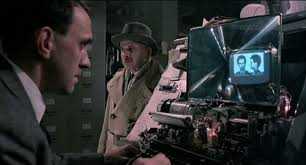
I see us going back to TV’s nascent days, when families would put some kind of magnifying device (including fishbowls!) in front of the tiny screens so the whole family could sit brasiltvaround to watch. I’m not alone in this outlook. According to Terry Gilliam’s brilliant film “Brazil” that’s what our future holds, along with a lot of other nasty stuff. His vision wasn’t meant to be realistic, but it turns out he wasn’t far off the mark in more ways than one.

Other “cutting edge” improvements:

Curved screens will soon appear on virtual store shelves. What’s the big deal? My old Zenith had a significant convex curve to it. Didn’t make “Lost in Space” any more credible.

3-D, which for my money adds no real value to any medium except View-Master, refuses to go away.

The worst new feature for televisions has to be “3-D multi-view”. This allows two people, both wearing geeky glasses with built-in ear buds, to watch two different shows on the same TV at the same time. Could we possibly make an isolating activity more isolating? Why would we want to?

Besides visual changes, sound is also important. HD sound is great. Unfortunately, I have low-def (closer to high-deaf) hearing.

Here’s hoping Santa brings you a fishbowl to put in front of your Android.

Peace on Earth

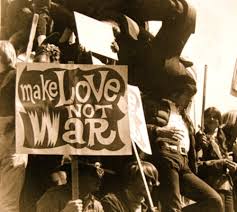
I’m old enough to remember the 60’s and, unlike some of my contemporaries who find the era’s fashions, language, and music a bit dated, I have no desire to distance myself from that connection. It was a great time. We’d run around in our tie-dyes and bell bottoms waving protest banners with what now seem to be quaint phrases such as:

makelovewarnothealthygivepeace

Perhaps the most naive of them all was this one:

whatifwarThis is the one most likely to make people cringe. On the surface, it’s seems so naive, almost childishly optimistic. It sounds so crazy. To quote Steely Dan, “Only a fool would say that.”

But what if it really happened?

It did.

For a very short span of time during World War I (the conflict ironically called “the war to end all wars” – talk about naive optimism!) both sides refused to play the game of killing each other for the benefit of absentee generals and politicians.

Over the years, I’d heard stories about the so-called “Christmas Truce” of 1914. This past week I read a thorough history of the events in a book called “Silent Night” by Stanley Weintraub. A movie about the truce was made in 2005. “Joyeux Noel” creates a compelling composite of the actual events by centering on a single group of combatants on the Western Front.

Both book and movie are excellent works, but the truce itself is the amazing tale. Bands of enemies mingled with each other, singing Christmas carols, playing soccer, burying their dead, trading keepsakes, sharing food and drink, and generally getting to know one another. Guns were laid down and differences forgotten. Nearly a million people had already given up their lives for this mindless standoff. Beginning on Christmas Eve that year, a hundred thousand suddenly came to their senses and grasped at the outrageous opportunity to celebrate Christmas with Peace on Earth, if only for a couple of days.

When word of the impromptu truce got back to the powers-that-were-but-no-longer-are, all ensconced in luxurious digs and downing fine food and drink for the holidays, they were incensed. Threats of transfers, court-martials, and even firing squads were brought down on the lowly servicemen who were bogged down in frozen or muddy trenches.

The high ranking officers and politicians thought it insane for the soldiers to drop their weapons and spend Christmas getting to know the enemy who had been painted by each opposing nation as barbaric, evil, less-than-humans who deserved to be and must be eradicated. Those same elites saw nothing crazy about throwing young lives at each other in a futile attempt to move their lines a few yards either way in the pointless and protracted conflict. After all, they were out of harm’s way themselves. Some things never change.

As the groups of enemies fraternized on the few hundred feet of No Man’s Land that separated them, they actually became friends, sometimes making plans to get together after the war. By meeting their foes, British and French troops came to realize that Germans weren’t monsters who crucified children as they had been told. The Germans learned that their foes were just like them, with the same dreams and desires, most with families they missed.

Some people objected. One member of the German army who was alarmed by the actions of the soldiers said:

Such things should not happen in wartime. Have you Germans no sense of honor left at all?

If you find this man’s opinion resonates with yours, be aware that his name was Cpl. Adolf Hitler.

In 1914, everyone thought the end of the war was imminent. It ended up dragging on for another four years, causing millions of casualties. Worse yet, it planted the seeds that grew into the next and even greater conflict, World War II. Author Weintraub in his book makes the compelling case that, had the perpetrators of the war followed the lead of its victims toward peace, we might have not only avoided the second Great War, but the Bolshevik Revolution might never have occurred, thus eliminating more conflict from the world in ensuing years.

Today, armed conflicts seem to be ubiquitous. Once more, it’s not quite clear what people are fighting about, but it’s usually the same thing: enemies are demonized as evil fundamentalist (or atheist – take your pick) demons who want to take away our precious way of life. If you were to talk to most of those enemies, you’d find, just like those men in the trenches in 1914, that they are human beings like ourselves who only want to live their lives in peace.

In the next war, could we have all the leaders – political, military, and religious – slug it out among themselves while the rank-and-file watch from a safe distance? It would make great reality TV.

The more common motivation for war today is to give the big weapons manufacturers an opportunity to showcase and sell their wares. If a few thousand kids are killed in the process, that’s a price the stockholders of said companies are willing to pay. I’m reminded of the opening scenes of a rare good superhero movie, “Iron Man”, when Tony Stark, between bedding women and sipping champagne, sells a gazillion dollars worth of killing machinery to everyone in sight but misses the downside until he becomes a victim of his own products.

Jesus – He’s the guy that started this whole Christmas thing – says, “Love your enemies.” I’m pretty sure, as the saying goes, killing them isn’t what He meant. Is there a better way to celebrate the day than to refuse to kill the people Jesus said we should love?

That is what would happen if they gave a war and nobody came. Maybe it’s not so childish after all.

(For more reading, here’s a fascinating article from nine years ago.)

Pop the thought stack!

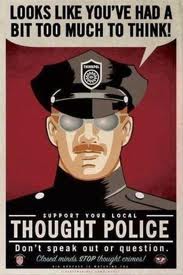
think2muchI’ve said it before and I’m likely to say it again. I think too much.

I’d be aware of this fact even if the people around me didn’t regularly remind me. (Yeah, it’s that obvious.) Thinking too much is way-wicked better, though, than the more typical American attitude of thinking too little or the almost pandemic not-thinking-at-all. Thinking is Good.

Still, thinking too much has its own set of drawbacks.

One negative is that I get stacks and stacks of ideas to write about for blogs, articles, fiction, and scripts – more than I’d ever be able to get around to in this lifetime.

pop1To cut down on that pile, allow me to pop the stack with a random dump of topics here. With sufficient thought (of which, as I’ve mentioned, I have an overabundance) and time (of which I have precious little) some of these might justify an entire post of their own. Who’s got time for that? I’m too busy thinkin’.


Have you noticed that, as movies get shorter*, credits get longer? You’d think the equation “shorter movies = less to do = less credit” would apply, but you’d be wrong. There are more people getting credit for doing whatever they do. It bucks the whole business trend of “doing more with less.”

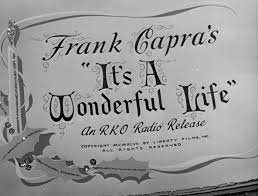
IAWLcreditsLook at a classic film like the seasonally appropriate “It’s a Wonderful Life”. The credits list only the major acting roles, director, screenwriter, costume designer, and a few others. Buried in the eight or nine minutes of credits today, you’ll find the insurance company underwriting the movie, five drivers, the caterer(s), several assistant background colorists, and a seemingly infinite number of other obscure jobs. (Key grip, lock grip, best boy, worst girl, mediocre pet.) No exaggeration: Today’s trailers list more credits than did entire films from the 40’s.

[*They are getting shorter in general, with the obvious exception of “Interstellar“. If movie length affected credit length, the credits for that epic-in-its-own-mind would roll longer than an average romantic comedy runs in its entirety.]

Speaking of classic movies, does anyone else see a problem with the current practice of labeling a newly released film an “instant classic”? Is that legit? It seems to me that a little passing of time is required to test whether something is truly classic. Otherwise, why not have brand new antiques? Anyone who can explain all this will become an instant legend.

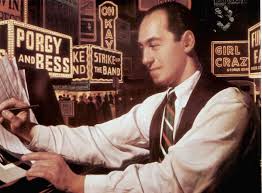
gershwinWhen Robin Williams died before his time, it reminded me how much I grieve when an artist dies, not only for the loss of life, but at the loss of the great works that will never be. My most painful example is George Gershwin, possibly the greatest musical genius in American history, who died at age 38. Those first 38 years produced a wealth of memorable music. How many more great musical creations went to his grave with him? Another “Porgy and Bess” perhaps? An entire rainbow of Rhapsody’s? That’s something to mourn.

I called the doctor the other day and was greeted with a recording that said, “If this is a life-threatening medical emergency, hang up and dial 911.” I don’t even know where to begin on that one. First of all, do we need to say “hang up”? That would seem obvious. Anyone who calls the main switchboard of a hospital during a “life-threatening emergency” does indeed have serious problems, but even 911 won’t help. I seem to get this same message no matter what kind of medical practice I call. Do you suppose there are a lot of people with life-threatening emergencies calling their optometrist?

The good news: Black Friday sales were down 7%. The bad (actually, tragic) news: Sales on Thanksgiving Day were up 24%. It’s official. America has completely lost its sense and moral compass.

watchesThere’s a watch store at the mall. Are enough people still buying watches to justify dedicated stores? Why is anyone buying a watch? Everyone and their pets carry cell phones that prominently display the time. Besides, clocks are everywhere now, in everything. From where I sit, I can see the time on a radio, cable box, toaster, TV, DVD player, microwave, and phone. The bathroom is the only safe place from the invasion of the timepieces. Maybe that’s where people need their watches. I hope not. To paraphrase Brian Regan, if you gotta check your watch in the john, you’re booking yourself too tight.

And in spite of all those clocks, most people are still late.

I keep hearing people complain about getting phone spam even though they’re on the do-not-call list. What do these folks think, criminals check the DNC list before making their illegal robo-calls? Do they suppose murders would cease overnight if we had a do-not-kill list? Heck, let’s give it a try. I’d sign up.

Have you been in a sporting goods store lately? The floor space in these places is taken up by about 5% sports equipment and 95% clothes. It appears that no one is actually playing any sports these days, but if one breaks out, we’ll be ready.

Back here, I listed some things that have disappeared in my lifetime. I keep thinking of new ones:

  • searsCRTs
  • Fotomat (Remember those short-lived dinosaurs?)
  • film
  • All-encompassing catalogs such as Sears, JC Penney, and Montgomery Wards

Actually, all catalogs have outlived their usefulness as much as slide rules, Yellow Pages, and unfoldable road maps, but the individual retailers keep sending them out, especially around Christmas. I’m getting catalogs from companies I last did business with over ten years ago. Others are from companies I never even heard of. My recycling bin could have a field day if it had an internet connection.

Driving down the road recently, I was cut off by a guy whose car sported a “coexist” bumper sticker. He wants all races and religions to coexist peacefully but he can’t even coexist with the next car.

That’s a load off…