Peace on Earth

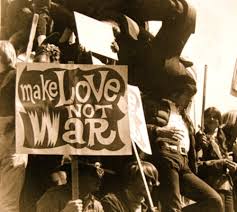
I’m old enough to remember the 60’s and, unlike some of my contemporaries who find the era’s fashions, language, and music a bit dated, I have no desire to distance myself from that connection. It was a great time. We’d run around in our tie-dyes and bell bottoms waving protest banners with what now seem to be quaint phrases such as:

makelovewarnothealthygivepeace

Perhaps the most naive of them all was this one:

whatifwarThis is the one most likely to make people cringe. On the surface, it’s seems so naive, almost childishly optimistic. It sounds so crazy. To quote Steely Dan, “Only a fool would say that.”

But what if it really happened?

It did.

For a very short span of time during World War I (the conflict ironically called “the war to end all wars” – talk about naive optimism!) both sides refused to play the game of killing each other for the benefit of absentee generals and politicians.

Over the years, I’d heard stories about the so-called “Christmas Truce” of 1914. This past week I read a thorough history of the events in a book called “Silent Night” by Stanley Weintraub. A movie about the truce was made in 2005. “Joyeux Noel” creates a compelling composite of the actual events by centering on a single group of combatants on the Western Front.

Both book and movie are excellent works, but the truce itself is the amazing tale. Bands of enemies mingled with each other, singing Christmas carols, playing soccer, burying their dead, trading keepsakes, sharing food and drink, and generally getting to know one another. Guns were laid down and differences forgotten. Nearly a million people had already given up their lives for this mindless standoff. Beginning on Christmas Eve that year, a hundred thousand suddenly came to their senses and grasped at the outrageous opportunity to celebrate Christmas with Peace on Earth, if only for a couple of days.

When word of the impromptu truce got back to the powers-that-were-but-no-longer-are, all ensconced in luxurious digs and downing fine food and drink for the holidays, they were incensed. Threats of transfers, court-martials, and even firing squads were brought down on the lowly servicemen who were bogged down in frozen or muddy trenches.

The high ranking officers and politicians thought it insane for the soldiers to drop their weapons and spend Christmas getting to know the enemy who had been painted by each opposing nation as barbaric, evil, less-than-humans who deserved to be and must be eradicated. Those same elites saw nothing crazy about throwing young lives at each other in a futile attempt to move their lines a few yards either way in the pointless and protracted conflict. After all, they were out of harm’s way themselves. Some things never change.

As the groups of enemies fraternized on the few hundred feet of No Man’s Land that separated them, they actually became friends, sometimes making plans to get together after the war. By meeting their foes, British and French troops came to realize that Germans weren’t monsters who crucified children as they had been told. The Germans learned that their foes were just like them, with the same dreams and desires, most with families they missed.

Some people objected. One member of the German army who was alarmed by the actions of the soldiers said:

Such things should not happen in wartime. Have you Germans no sense of honor left at all?

If you find this man’s opinion resonates with yours, be aware that his name was Cpl. Adolf Hitler.

In 1914, everyone thought the end of the war was imminent. It ended up dragging on for another four years, causing millions of casualties. Worse yet, it planted the seeds that grew into the next and even greater conflict, World War II. Author Weintraub in his book makes the compelling case that, had the perpetrators of the war followed the lead of its victims toward peace, we might have not only avoided the second Great War, but the Bolshevik Revolution might never have occurred, thus eliminating more conflict from the world in ensuing years.

Today, armed conflicts seem to be ubiquitous. Once more, it’s not quite clear what people are fighting about, but it’s usually the same thing: enemies are demonized as evil fundamentalist (or atheist – take your pick) demons who want to take away our precious way of life. If you were to talk to most of those enemies, you’d find, just like those men in the trenches in 1914, that they are human beings like ourselves who only want to live their lives in peace.

In the next war, could we have all the leaders – political, military, and religious – slug it out among themselves while the rank-and-file watch from a safe distance? It would make great reality TV.

The more common motivation for war today is to give the big weapons manufacturers an opportunity to showcase and sell their wares. If a few thousand kids are killed in the process, that’s a price the stockholders of said companies are willing to pay. I’m reminded of the opening scenes of a rare good superhero movie, “Iron Man”, when Tony Stark, between bedding women and sipping champagne, sells a gazillion dollars worth of killing machinery to everyone in sight but misses the downside until he becomes a victim of his own products.

Jesus – He’s the guy that started this whole Christmas thing – says, “Love your enemies.” I’m pretty sure, as the saying goes, killing them isn’t what He meant. Is there a better way to celebrate the day than to refuse to kill the people Jesus said we should love?

That is what would happen if they gave a war and nobody came. Maybe it’s not so childish after all.

(For more reading, here’s a fascinating article from nine years ago.)

Pop the thought stack!

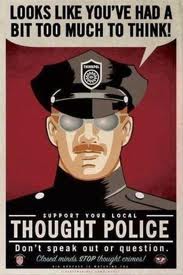
think2muchI’ve said it before and I’m likely to say it again. I think too much.

I’d be aware of this fact even if the people around me didn’t regularly remind me. (Yeah, it’s that obvious.) Thinking too much is way-wicked better, though, than the more typical American attitude of thinking too little or the almost pandemic not-thinking-at-all. Thinking is Good.

Still, thinking too much has its own set of drawbacks.

One negative is that I get stacks and stacks of ideas to write about for blogs, articles, fiction, and scripts – more than I’d ever be able to get around to in this lifetime.

pop1To cut down on that pile, allow me to pop the stack with a random dump of topics here. With sufficient thought (of which, as I’ve mentioned, I have an overabundance) and time (of which I have precious little) some of these might justify an entire post of their own. Who’s got time for that? I’m too busy thinkin’.


Have you noticed that, as movies get shorter*, credits get longer? You’d think the equation “shorter movies = less to do = less credit” would apply, but you’d be wrong. There are more people getting credit for doing whatever they do. It bucks the whole business trend of “doing more with less.”

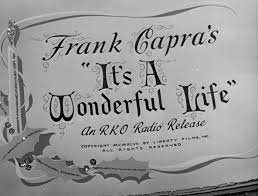
IAWLcreditsLook at a classic film like the seasonally appropriate “It’s a Wonderful Life”. The credits list only the major acting roles, director, screenwriter, costume designer, and a few others. Buried in the eight or nine minutes of credits today, you’ll find the insurance company underwriting the movie, five drivers, the caterer(s), several assistant background colorists, and a seemingly infinite number of other obscure jobs. (Key grip, lock grip, best boy, worst girl, mediocre pet.) No exaggeration: Today’s trailers list more credits than did entire films from the 40’s.

[*They are getting shorter in general, with the obvious exception of “Interstellar“. If movie length affected credit length, the credits for that epic-in-its-own-mind would roll longer than an average romantic comedy runs in its entirety.]

Speaking of classic movies, does anyone else see a problem with the current practice of labeling a newly released film an “instant classic”? Is that legit? It seems to me that a little passing of time is required to test whether something is truly classic. Otherwise, why not have brand new antiques? Anyone who can explain all this will become an instant legend.

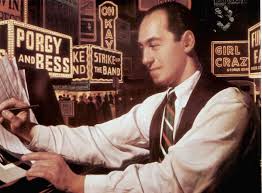
gershwinWhen Robin Williams died before his time, it reminded me how much I grieve when an artist dies, not only for the loss of life, but at the loss of the great works that will never be. My most painful example is George Gershwin, possibly the greatest musical genius in American history, who died at age 38. Those first 38 years produced a wealth of memorable music. How many more great musical creations went to his grave with him? Another “Porgy and Bess” perhaps? An entire rainbow of Rhapsody’s? That’s something to mourn.

I called the doctor the other day and was greeted with a recording that said, “If this is a life-threatening medical emergency, hang up and dial 911.” I don’t even know where to begin on that one. First of all, do we need to say “hang up”? That would seem obvious. Anyone who calls the main switchboard of a hospital during a “life-threatening emergency” does indeed have serious problems, but even 911 won’t help. I seem to get this same message no matter what kind of medical practice I call. Do you suppose there are a lot of people with life-threatening emergencies calling their optometrist?

The good news: Black Friday sales were down 7%. The bad (actually, tragic) news: Sales on Thanksgiving Day were up 24%. It’s official. America has completely lost its sense and moral compass.

watchesThere’s a watch store at the mall. Are enough people still buying watches to justify dedicated stores? Why is anyone buying a watch? Everyone and their pets carry cell phones that prominently display the time. Besides, clocks are everywhere now, in everything. From where I sit, I can see the time on a radio, cable box, toaster, TV, DVD player, microwave, and phone. The bathroom is the only safe place from the invasion of the timepieces. Maybe that’s where people need their watches. I hope not. To paraphrase Brian Regan, if you gotta check your watch in the john, you’re booking yourself too tight.

And in spite of all those clocks, most people are still late.

I keep hearing people complain about getting phone spam even though they’re on the do-not-call list. What do these folks think, criminals check the DNC list before making their illegal robo-calls? Do they suppose murders would cease overnight if we had a do-not-kill list? Heck, let’s give it a try. I’d sign up.

Have you been in a sporting goods store lately? The floor space in these places is taken up by about 5% sports equipment and 95% clothes. It appears that no one is actually playing any sports these days, but if one breaks out, we’ll be ready.

Back here, I listed some things that have disappeared in my lifetime. I keep thinking of new ones:

  • searsCRTs
  • Fotomat (Remember those short-lived dinosaurs?)
  • film
  • All-encompassing catalogs such as Sears, JC Penney, and Montgomery Wards

Actually, all catalogs have outlived their usefulness as much as slide rules, Yellow Pages, and unfoldable road maps, but the individual retailers keep sending them out, especially around Christmas. I’m getting catalogs from companies I last did business with over ten years ago. Others are from companies I never even heard of. My recycling bin could have a field day if it had an internet connection.

Driving down the road recently, I was cut off by a guy whose car sported a “coexist” bumper sticker. He wants all races and religions to coexist peacefully but he can’t even coexist with the next car.

That’s a load off…

World Toilet Day

WTDhurryHere’s a joke that’s not funny:

Q: How can you tell a developing nation from a first world nation?

A: First world nations flush drinking water down their toilets.

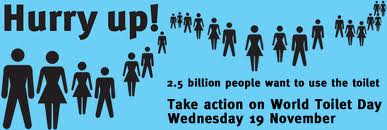
Another thing that sounds funny but is deadly serious is World Toilet Day, today November 19. A family member first told me about WTD and I’m glad he did.

Now that you know, too, you can no longer plead ignorance. You must chose: Be part of the solution or part of the problem.

Here’s some great background on the day, courtesy of the Gates Foundation. For more details just Google “World Toilet Day”.

WTD

[I posted this on my other blog (Limping in the Light) too, because it’s that important.]

Where did that come from?

3dogcyan

(This isn’t a post-day, but this hit me out of the blue.)

Just minutes ago, during a football game I was watching, a commercial came on for very large bank – you know, one of those that’s too big to fail. Serving as sonic backdrop to the inane activity in the ad was a 41-year-old pop song: “Shambala” by Three Dog Night.

Wow.

I already ranted about this phenomenon in a previous post on my other blog, so I won’t do it again, but each time one of those old songs pops me into the Wayback Machine, I’m amazed.

And grateful. 🙂

Ice cream murderer

That’s me. I’m an ice cream murderer. (Not to be confused with a cereal killer.) We’re not talking murder metaphorically, as in, “I just murdered a pint of Ben and Jerry’s.” No, I actually kill off products. Think: missing persons, but the person is an ice cream.

My MO is simply to become obsessed with a flavor or treat. As soon as I do, you can count on that item disappearing from the face of the earth. Think I’m kidding? Here’s the evidence against me, admissible in a court of frozen dairy law:

  1. kempsIC-MIAMy first victim was a flavor from Kemp’s called “Northern Exposure”. Really, really good. Mint ice cream (a particular favorite of mine in general) with dark chocolate chunks and a brittle ribbon of fudge undulating throughout the ice cream. That ribbon was what set this flavor apart from every other ice cream I’ve had.
    While Kemp’s is not always the purveyor of the finest ice creams, Northern Exposure was the real deal. Where is it now? Gone. I’ve checked every supermarket from hither to yon (more hither than yon, I admit) and it’s nowhere to be found. I even contacted Kemp’s corporate headquarters. They said it was out there and even pointed me at a few stores. They lied. It’s dead. I should know. I killed it.
  2. doveIC-RIPNext victim: Dove “Give in to Mint”. Another minty selection. The best mint-based IC I’ve ever had. Fabulous Dove dark chocolate chips throughout and a luscious (yes, I said luscious and I meant luscious) chocolate ganache coating the top of the ice cream. That topping alone was worth the price of the pint. Not satisfied with doing away with just this one flavor, the entire line of Dove ice creams, all made with the ganache topping, are gone, finito, vamoose, sayonara, hasta la vista, baby. I’m nothing if not thorough.
  3. "naked" (unchipped sides) Hoodwich

    “naked” (unchipped sides) Hoodwich

    Latest in a long line of late, lamented treats: the Hoodwich. You know what I’m talking about: Hood ice cream sandwiched between two chocolate chip cookies, rolled in a coating of mini-chocolate chips all around the side. These were a tradition for me to consume at a local minor league baseball park. Alas, the Hood Corporation responded to my pleas about where to find these delectables with the unfeeling statement, “We apologize but we no longer produce the novelty Hoodwich.” Little do they know that I’m responsible for their lack of production. They can’t produce them. They’re all dead!

Who will be next? I hesitate to eat ice cream now. I don’t want anyone to know about the peanut butter cup flavor at Ben and Bill’s. That will go down for sure. Dare I continue to eat the Moose Tracks at Sully’s? I’m surprised at the resilience of Ben & Jerry’s Chocolate Chip Cookie Dough, which I’ve feasted on ever since its introduction. Could it be invulnerable? Maybe it’s from Krypton.

Beware! I may start eating your favorite ice cream next!

Remember the future

obsoleteNo one needs to be reminded of the transitory nature of this life. Today is a memory before we have a chance to make sense of it. Those times we breathlessly look forward to become vague memories while they are still echoing in our minds.

I’ve written on this topic before, which gives you some idea of how close to my heart it is. The speed at which the highly anticipated future becomes the distant path can be downright frightening. How desperately we want to hold onto those moments in a more tangible form than an elusive and fleeting memory.

Even the title of this blog, “Scribbling in the Sand” speaks to the futility of trying to extend ourselves beyond ourselves. Those scribbles are washed away with the next tide, in whatever form its breakers take.

Look no further than the mundane articles of our daily lives to demonstrate this concept in the most concrete manner possible. Every day, some of our most wonderful innovations are relegated to the scrap heap of history (which is shipped to China to be recycled into future scrap heap candidates).

Here is just a tiny percentage of those once-precious items that have disappeared in my years:

  • Slide rules – Remember those? They were indispensable before they were obsoleted by calculators. Oops! Remember those?
  • Encyclopedias – Not the democratic virtual kind. I’m talking about the honkin’ multi-volume, sold-door-to-door beasts that still sit in the basements of people who can’t imagine tossing such storehouses of knowledge, regardless of how useless and outdated they might be.
  • Dial and corded phones – First we had the hefty black monstrosities that could double as weapons that – in many a noir film – would be used to knock the bad guy into the middle of next week. Can you imagine doing that with your iPhone? Goodbye “Princess” phone, knots in the cord, “Dial M for Murder”, and yanking phones off tables as we reached for a pen to write down the number of the person calling. (Another unnecessary action due to caller ID.)
  • Station wagons – Before the minivan and the (God help us) SUV, extended families cruised the country in comfort in these beauties.
  • Phone booths – What’s a Superman to do? The empty chrysalises of countless phones now unbound can be seen across the land.
  • Civility in public discourse – This is a whole ‘nother story. Let’s hope it isn’t a permanent scrap heap dweller, though I harbor little hope for that in my lifetime.

pocketNo small amount of technology has come and gone over the same period: acoustic modems (I’m old enough to remember when 9600 baud was screamin’ fast), 8-tracks, cassettes, and videotapes all had their brief flicker of utility. In fact, all “tape” is gone – except that of the duct, masking, and Scotch varieties – but the name lives on as we talk about taping TV shows, with no tape is involved.

A few things out there are barely hanging on or have been relegated to the role of novelty. Vinyl records refuse to give up, but they’re only a niche. Virtually all media except various forms of computer memory (increasingly of the solid-state species, though all bets are off if “the cloud” has its way) have no real raison d’etre anymore.

The same can be said of watches, books, newspapers, and writing in cursive. A day may come when the only people who see such relics do so as they scratch their heads walking by museum exhibits.

drive-inAlthough most of them have become land for low income housing, strip malls, and office parks, here’s hoping that a remnant of drive-ins survive into the future. They’d be missed at least as much as any extinct species.

In the “we hardly knew ye” category, you’ll find flash-in-the-pan technologies such as laser discs, Betamax, HD-DVD, and PDA’s.

It’s hard to say goodbye to some things. The GPS, itself now a dispensable technology in its standalone form, eliminated the need to give directions. I say “need” not so much for the recipient of those directions as for the giver. We all know folks who live to provide detailed directions of the best possible route(s) to our destination. When I recognize that craving, I generally allow the speaker the opportunity to give vent to his passion. Then I return to Google Maps or a GPS and find the best route for myself. No endless discussion of the best shortcut, most scenic route, or least traffic.

While I don’t miss LP’s so much, I do mourn the loss of album packaging. Some of that album art was suitable for mounting and hanging on your wall. (I have just two words for you: Roger Dean.) A few releases contained enough junk to overflow a fan’s scrapbook, e.g. The Who, “Live at Leeds” or “Chicago at Carnegie Hall”. Sure they were extravagant and pompous, but so was the music and we loved it.

CD’s never offered such wit and variety. And downloads? Fuhgeddaboudit.

I don’t wish to live in the past, but it would be nice if some of the past still lived here.

[By the way, if you’re paying attention, you’ll notice that the smartphone (beginning with the iPhone) is the perpetrator of many in these untimely demises. Not that it’s wrong, just saying is all.]

What’s *your* story?

storyI love Jesus. Not just because He loves me and died for me, although that’s pretty cool and would be enough. I also love the fact that He’s a master storyteller. When people ask Him profound theological questions, He usually tells a story. It’s almost as if He’s trying to evade the question. Rather, I think, He’s getting to the heart of it.

Ask a theologian to tell you what the Kingdom of God is and you’re bound to get a tedious multi-volume treatise on the ins and outs of Jewish culture, a summary of a couple millennia of church history, and a detailed exegesis of Greek New Testament passages. Ask Jesus and you get a story about one of the following:

  • Some sad old woman who spends the whole night looking for her spare change in the sofa.
  • A farmer who’s having mixed success with his crops.
  • A sleazy middle manager who makes good by cheating his old boss.

legoparableThe parables (fancy theological word for stories) of the Prodigal Son and the Good Samaritan are more than tales that have become part of the nerve fiber of our culture. They’re great stories.

Why does He tell stories? Because people listen to stories. Sermons? Not so much. Even those of us who listen to sermons don’t always listen. If you know someone who’s heard a sermon recently, ask her what it was about. You’re more likely to hear about the joke the preacher told or the simple family anecdote that illustrated a forgotten moral lesson.

We’re wired to listen to stories. No matter what the era or the dominant philosophy thereof, people love and crave stories. They used to be told around campfires and now they’re seen on a phone or in a cineplex. No difference. It’s the story, the people, the ups and downs of fortune, the clawing after the goal, the battle of good vs. evil, the boy-meets-girl, the life-and-death struggle.

cleaversOne reason I believe stories resonate so well with us all is that we somehow, without even thinking about it, realize we’re in our own story. You might not be a writer, but you’re writing your life story. You’re the lead, the hero. That doesn’t mean you have to be Indiana Jones or Aragorn. It might be enough to be June or Ward Cleaver.

Most of our stories are pretty boring. They’d make lousy movies. Hitchcock was quoted as saying, “Movies are real life with the boring parts cut out.” By that criteria, most lives would make brief movies indeed, more like music videos or even commercials.

It doesn’t have to be that way.

What if your life was interesting enough to be made into a miniseries? Or a sitcom that runs 20 (or more) seasons? What’s to stop it? You’re the writer. You might have no pen, pencil, laptop, or vintage Underwood, but every day you’re writing the story of your life with your words, your loves, your priorities. Some day this volume of that story will end. (Lord willing, there will be a sequel.) Meanwhile, make it interesting, something worth telling. Something people want to hear.

Including you.

Random late summer thoughts

random3My favorite writer, Mark Helprin, once adjured an audience, of which I had the privilege of being a part, to pay attention to the world around us. This is critical for writers. The topic was touched on with respect to dialog in a previous post.

Paying even a modicum of attention to what’s happening in your family, town, or on the news will supply fodder for countless stories. Market Basket, a lowly supermarket chain, has in recent weeks given us enough storylines, characters, and sub-plots to fill several books, a few movies, and at least one mini-series. Just watch; they’re coming.

What to do? asks the humble scribe of blog posts. With so much to comment on, there isn’t time to do justice to every one. My solution to the problem is to do an occasional dump of thoughts rattling around in this mostly empty skull. This is the first in this blog, although it tends to be a regular ploy in my other blog, Limping in the Light, e.g. here.

Here are a few things backed up in my mental septic system:

Here’s a fun question for you literati: When you go to a bookstore, what section do you go to first? Your answers should lead to a lot of fascinating follow-up discussion.

I recently read a best-selling novel with a couple of egregious problems. This wasn’t mass market pop lit such as “Twilight” or some transcribed TV-show passing itself off as literature. This was a highly regarded, serious novel. Two things stood out to me. One was the author’s obsession with using the word “impossibly” to modify an adjective (e.g. “impossibly large”). I have no problem with that in principle. The aforementioned Helprin will use it occasionally. But this author used it five times in the one book! (Don’t ask me how I noticed this. It’s a curse.)

Another sentence read: “…each <whatever> was more perfect than last.” Some things can be more perfect than others? How does that work?

Although the book received mixed reviews, it won awards and was on the NY Times best-seller list for several weeks. Yet I can’t get anyone to even read my book. It must not be as perfect as that one. ((sigh))

parking-lot1Off the book topic: What’s with people endlessly circling parking lots looking for the closest space? In spite of sky-high gas prices and rampant obesity and the supposed busy-ness of everyone, they waste what’s in scarcity – time and fuel – to avoid what they desperately need: exercise. Just park the stinkin’ car!

Have you noticed that owning chickens is hot?

100_0403CVSIn CVS (a firm already infamous for its extravagant waste of receipt paper, q.v. photo) yesterday, I bought one item that came in a bag. The clerk at the counter put it in one of their plastic CVS bags. I asked her why I needed a bag to put the bag in. She had no answer, perhaps because there is none. Punch in folks, it’s time to bag the bags. We don’t need a bag to carry one item… unless you’re hiding something.

I usually ask for no bag, but the checkout people, who must be on the payroll of the bag manufacturer, sometimes beat me to it. When I ask them (kindly) to keep their bag, more often than not, they stuff it in the trash. Someone’s missing the point.

Living on a busy street, my front lawn serves as de facto trash dump for passing cars. We can learn a lot about the kind of person who has no regard for other people’s property or the cleanliness of the town they live in or drive through. The following items make up 90% of the trash strewn across my lawn:trash

  • losing lottery tickets
  • beer cans
  • fast food containers
  • cigarettes

Who are the slobs who trash our neighborhoods? The list speaks for itself. It makes me think of the old Disney cartoon. It’s cute, but painful.

bob&rayA word to the wise: Today’s phones, whether cell or landline, have the annoying trait of inserting a brief delay between the time the phone is answered and when it will register your voice. Thus, you call someone and they generally respond, “…lo!” My advice: answer the call and count to 2-1000 before speaking.

Reminds me of the old Bob and Ray routine with the fictional reporter Wally Ballou starting his on-the-spot reports by saying, “…ly Ballou here.”

When I was a kid and when my kids were kids, punishment usually meant being sent to your room. A more appropriate form of discipline today would be, “That’s it, I’ve had it with you. Come out of your room and stay out all afternoon!” Much more effective.

 That was an impossibly easy post…

Life is long… and short

Is it possible for two seemingly opposite statements to both be true? On the face of it, the answer would be no, but not so fast. We deal with such incongruities all the time.

Absence makes the heart grow fonder. There’s plenty of anecdotal evidence supporting that as a true statement. Yet, we’ve all experienced the veracity of “out of sight, out of mind.”

Christian theology is filled with such contradictions. God is one but God is three. We have free will, but God is sovereign and predetermines our eternal fates.

When it comes to one particular adage, I can’t disagree with one of my favorite characters from another of my favorite under-appreciated movies: Lamarr from “That Thing You Do” says:

"Slow down, young squire. Life is long."
“Hey, hey, hey! Slow down there, young squire. Life is long.”

Lots of folks say life is fleeting and you have to squeeze as much into every moment as possible. But if Lamarr says life is long, who am I to disagree? He’s one of my heroes and he’s never steered me wrong. Think about the last time you were in the dentist chair. Did life go by fast? Or when you’re waiting for the results of a job application or medical test? Or for the writers out there, how about when you’re waiting for a response to a query letter?

In those cases, and in many others, life is indeed looooooooooooooooooong.

At the same time, life is way too short. If you have kids, you know exactly what I’m talking about. One day, they’re potty-training, seemingly the next, they’re finishing a doctoral thesis on string theory (or string cheese; I can never tell the difference). Life couldn’t go any faster than that.

I’m not the first and I won’t be the last to declare how life speeds up as you age. The more years behind you, the shorter the ones ahead. A classic example: When I was in school, summer lasted forever. Those two months, after all, were a significant percentage of my life. Now they represent a miniscule fraction of the whole and the season’s gone before I’ve had time to make vacation plans.

None of this is new; everyone pays lip service to it. But few behave any differently in the face of the increasing velocity of life. Ironically, Lamarr’s advice applies here as well, “Slow down, young squire.” Appreciate the fleeting moment. Get off the information superhighway.

Instead of giving more and creating more, we (myself included) bury ourselves, our gifts, and our talents in a jumble of iDevices, sports, lame TV and movies, innumerable tweets, and more added to the mess every day.

To once more quote the incomparable Lamarr, “Now where I come from, that just ain’t right.”

Special edition*: Grass roots

If you live anywhere in New England, you can’t help hearing about the Market Basket soap opera. In fact, you can’t help hearing about it no matter where you live. I’ve seen articles in Time and the Wall Street Journal, as well as newspapers as far away as New Zealand covering this tawdry debacle.

I’ll declare my sentiments up front. I’m a huge fan of the old MB. I shop there and have for the past thirty or so years. The DeMoulas family is clearly dysfunctional, but the ASD side of it (if you’ve been studying the cast of characters in your program) is delusional, stupid, and possibly even evil. (The distinction is subtle, one I plan to discuss in a future post.) The employees, the customers, and even local pols have made it clear by the proverbial overwhelming majority, that the current board of directors of the company needs to put the old CEO, ATD, back into power.

So what’s this all about? Money? Clearly not. MB is losing ten million dollars a day. That’s $10,000,000 US. Every day. Now I’ve lost money in my day. Quarters slip behind the couch cushions, dollars stick together, and that kind of thing. But $10,000,000? As forgetful as I am, I can’t even imagine that. (“Honey, have you seen my ten million bucks? I had it in my jacket pocket this morning.” This concept deserves its own post.)

newsiesThe more I hear about this grass roots movement of a bunch of employees, the more I think of what I consider the single most underrated movie of all time, “Newsies”. The critics trashed the movie mercilessly when it was released 22 years ago, but I’ve never met a viewer who didn’t like it. I’m among them. To remind myself of how terrific the movie is, and to capture the parallels with the MB fiasco, I watched it again tonight.

It’s still great.

The songs will bounce around my head for at least a week, so catchy are they. The live musical version of the movie went on to win 2012 Tony Awards® for Best Score and Best Choreography. So I guess it’s not just me. This is a case where the self-proclaimed “experts” are simply wrong.

The connection to MB is best summarized in the following (slightly abridged) exchange between two of the striking newsies (kids who sell papers on the street) and Joseph Pulitzer, publisher of the NY World.

PULITZER: Anyone who doesn’t act in their own self interest is a fool.

DAVID: Then what does that make you?

PULITZER: What?

DAVID: You talk about self interest, but since the strike, your circulation’s been down 70%. Every day you’re losing thousands of dollars just to beat us out of one lousy tenth of a cent. Why?

JACK: You see, it ain’t about the money, Dave. If Joe gives in to nobodies like us, it means we got the power. And he can’t do that, no matter what it costs. Am I right, Joe?

If the current Board of Directors (who, to replace ATD, appointed co-CEO’s – now there’s a formula for success – one of whom was named one of the five worst CEO’s in 2012) cared about money, they’d give in to the employee’s demands yesterday. But that’s not what the fight is about. It’s about bitterness, power, revenge, hatred, and all sorts of other petty nonsense. Are these really adults?

Give me back my Market Basket!

*This is five days before my next scheduled post, but I couldn’t resist. The whole situation could change any minute.